


0514 anatomy of knee joint medical images for powerpoint




Try Before you Buy Download Free Sample Product
 Impress Your
 Audience
 100%
100% Editable
 Save Hours
 of Time


Well begun is half done. Our 0514 Anatomy Of Knee Joint Medical Images For PowerPoint make it easy for you.
People who downloaded this PowerPoint presentation also viewed the following :
0514 anatomy of knee joint medical images for powerpoint with all 11 slides:
Our designers are sensitive to the needs of the presentation community. Our collection of 0514 Anatomy Of Knee Joint Medical Images For PowerPoint has been carefully designed with your needs in mind.



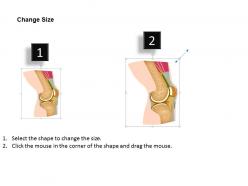
FAQs for 0514 anatomy of knee joint medical
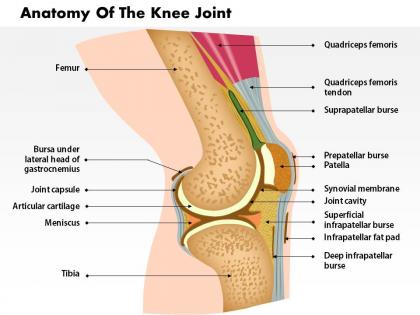
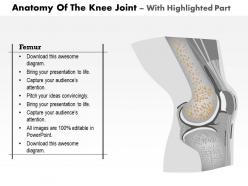
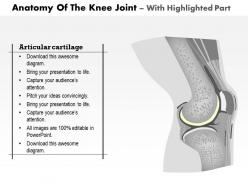
So basically your knee has four main parts - the bones (femur, tibia, patella), cartilage pieces, ligaments, and all the muscles around it. The meniscus is like little shock absorbers which is pretty cool. Then you've got your ACL, PCL, MCL, LCL keeping everything from falling apart when you move. Your quads and hamstrings do most of the heavy lifting. Oh and there's articular cartilage too but that's getting into the weeds. Point is, when you understand what each piece does, you'll be way better at explaining to patients why their knee hurts and why treatments focus on specific areas.
Your knee's actually this crazy hybrid between a hinge and ball-socket joint. Strong ligaments (ACL, PCL, MCL, LCL) keep everything locked down for stability. Meanwhile the menisci work as shock absorbers and give you that little bit of rotation when you're pivoting or whatever. Those rounded condyles on your femur can roll and slide on the tibia - honestly pretty amazing when you think about it. Your quads and hamstrings help with dynamic stability too through muscle tension. Oh, and when you're checking out knee injuries, figure out if it's stability (ligament) or mobility (meniscus/cartilage) first.
Your knee ligaments are what stop it from going completely haywire when you move. You've got four main ones - the ACL and PCL handle front-to-back stability, while the MCL and LCL keep things from wobbling side to side. The ACL tears you always hear about in sports? Yeah, there's a reason that one gets so much attention. Without these working together, you'd basically have no control over your knee at all. Walking would be a nightmare. If something's bugging your knee, figuring out which ligament might be the problem really helps narrow down what treatment you'll need.
Your menisci are like little shock absorbers in your knee - they're C-shaped and basically keep your thighbone and shinbone from grinding together. Pretty important stuff. They spread out the weight when you walk and help with balance too, especially when you're pivoting or doing sports. The tricky part is they don't heal great once torn since blood flow there kinda sucks. I learned this the hard way playing basketball in college, but anyway - if your knee's been bugging you or feels like it's catching, don't wait around. Small tears can definitely get worse over time.
So that synovial membrane thing? It's like your knee's oil factory. Lines the joint and pumps out fluid so bones don't scrape together - which honestly sounds horrible. It also feeds the cartilage since cartilage can't get nutrients on its own. Pretty clever setup. When this membrane gets pissed off and inflamed, you get that swelling and pain everyone complains about with arthritis. If someone's dealing with knee issues, synovial inflammation is usually part of the problem. Worth checking out.
So basically your knee muscles work in pairs - quads in front straighten it, hamstrings in back bend it. Quads are clutch for getting up from chairs and stuff. Your calves help with the bending too. Here's what most people don't realize though - your glutes are actually huge for knee stability. Weak glutes mess up your whole chain and cause knee problems. Oh, and your hip muscles matter way more than you'd think since everything's connected up there. If your knee's bugging you, don't just work the knee. Check if your glutes are actually firing properly during movement.
So basically, the biggest thing is bone structure and how the joints handle weight. Our kneecaps move totally different since we walk upright - way more complex than dogs and cats who just have that simple hinge thing going on. Horses are wild though, they've got these huge condyles to support all that weight. ACL placement changes a ton between species too, depending on how they move. Oh and pigs are surprisingly close to us, which is kinda weird but explains why researchers use them. Just think about what each animal's knees actually need to do - that'll make sense of all the structural differences you're seeing.
Yeah so basically your knee cartilage just gets worse as you age - it thins out and becomes way less stretchy. The collagen breaks down and loses water, which makes everything more brittle and cracky. Plus your body makes less of that synovial fluid that keeps things lubricated. My mom always complains about that grinding feeling now, and it's probably this whole process leading to arthritis. Kind of wild how our bodies just... fall apart, right? But doing strengthening exercises early can actually slow it down quite a bit.
ACL tears are huge - that pivot-and-plant thing in basketball kills people. Meniscus injuries happen when you twist under load, though honestly getting older means sometimes just standing up wrong can tear it (fun times). Runner's knee is patellofemoral pain syndrome hitting the kneecap area. MCL sprains come from getting hit on the outside of your knee. Always look at how the injury happened first - it tells you which part probably got messed up. Makes the whole exam way easier when you know what you're looking for.
Your knees take a beating during workouts - we're talking 2-8 times your body weight in force. Cartilage acts like a little sponge, compressing and bouncing back to spread that load around. Meanwhile your ligaments and menisci are working overtime to keep everything stable. Squats and jumping? Your kneecap joint really feels those. Here's the thing though - this stress isn't all bad. It actually strengthens bones and keeps cartilage healthy over time. Sure, there's some wear and tear too. But honestly, don't just avoid activities because you're scared of joint stress. Focus on moving properly instead.
For basic bone stuff, X-rays are fine but they don't show soft tissue at all. MRI is honestly what you'll use most - it's amazing for ligaments, cartilage, all that. Ultrasound's pretty handy for tendons and checking fluid, plus it's super quick. CT scans? Really just for gnarly fractures when you need crazy detail. Start with whatever fits what you're thinking - X-ray if there's trauma involved, MRI for tears or that ongoing pain that won't quit. Most knee problems end up needing MRI anyway.
Yeah, surgeries definitely mess with your knee's original setup. ACL reconstruction? They're literally drilling holes through your bones to thread a new graft - could be from your own patellar tendon, hamstring, or even a donor. Meniscus work changes how weight gets distributed around the joint. And don't even get me started on total replacements - that's your whole joint getting swapped for metal and plastic parts. Honestly, the results are usually great, but your knee won't ever be exactly like it was before. That's why physical therapy is so huge afterward.
Dude, your knees take such a beating. Walking upstairs puts like 3-4x your body weight on them - kinda crazy right? So the cartilage between your thighbone and shinbone slowly breaks down over years. If you've got wonky alignment or old injuries, it happens faster. Those meniscus things (they're like little cushions) can tear and make everything rougher inside. Honestly, I'd say get an MRI if your knee's been bugging you for a while. Better to catch this stuff early before it gets really bad, you know?
Your knee anatomy totally affects how you perform in sports - it's wild how much it matters. Things like your Q-angle and how your kneecap tracks can make you better at certain activities. Wider Q-angles? You'll probably crush lateral movements but might be more prone to ACL tears (which sucks). Where your tibial tuberosity sits changes your jumping mechanics too. Even your ligament tightness plays a role in running efficiency. I honestly think more athletes should get this stuff checked out. Once you know your specific setup, you can train smarter and pick injury prevention strategies that actually work for your body.
Dude, the knee research happening right now is wild. We're finally seeing cartilage microstructure details that were totally invisible before - honestly took long enough. This stuff is pushing regenerative therapies in crazy new directions. Meniscus research is absolutely blowing up too. Better imaging means you'll probably see diagnostic protocols shift pretty dramatically over the next couple years, so worth keeping tabs on. The ligament insertion research is cool because it's leading to surgeries tailored to each patient's specific anatomy rather than one-size-fits-all approaches.
-
Editable templates with innovative design and color combination.
-
Excellent template with unique design.