

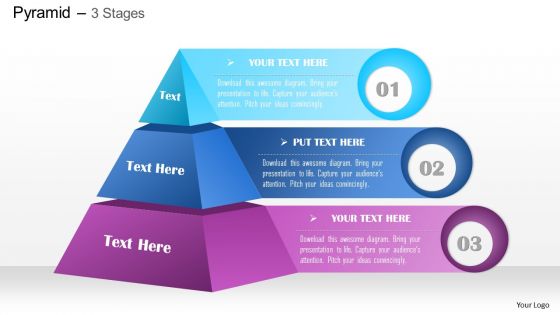
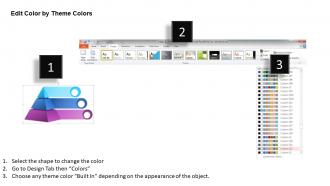
0614 business consulting diagram 3 staged pyramid design powerpoint slide template




Try Before you Buy Download Free Sample Product
 Impress Your
 Audience
 100%
100% Editable
 Save Hours
 of Time


Bringing the facts together across the table in a presentable way without compromising on image quality or the presentation of ideas all you need is a creative and professional PPT visual. Concept based diagram not only help to convey a meaningful message but also help to arrange facts in a chronological order to keep consistency in the working with the use of PowerPoint slide template featuring business conducting diagram sales lead generation model. An easy and effective way to manage the business working and create a visually impressive mind map – is all the easier with the use of presentation slide show diagram that brings with it a mix of art graphic and text. With the newest means of communication coming up daily and bring of process or action plan to reality, while communicating the same in a professional and effective manner needs the support and use of presentation layout, which is colorful and ensures special art graphics use in slide. Display your cards clearly with our 0614 Business Consulting Diagram 3 Staged Pyramid Design Powerpoint Slide Template. They help bring about a dialogue.
People who downloaded this PowerPoint presentation also viewed the following :
0614 business consulting diagram 3 staged pyramid design powerpoint slide template with all 5 slides:
Handle any event with our 0614 Business Consulting Diagram 3 Staged Pyramid Design Powerpoint Slide Template. They are conducive to any activity.

FAQs for 0614 business consulting diagram 3 staged pyramid design
So analytical thinking and communication are huge - being able to break down messy problems and actually explain your solutions without confusing everyone. Adaptability too since projects change constantly. Project management is obvious but emotional intelligence? That's where most people mess up honestly. You're dealing with difficult stakeholders all the time. Oh and curiosity - like really digging into what's actually happening, not just surface level stuff. I'd focus on whatever feels like your biggest weakness first, then build from there.
Look, bring in a consultant when your team just doesn't have the right skills for something big. Or when you've been banging your head against the same problem forever and getting nowhere - sometimes you're too deep in it to see what's actually wrong. An outside perspective helps tons with strategy stuff too. Major changes like going digital or breaking into new markets? Yeah, that's consultant territory. The math is pretty simple though - if screwing up costs way more than hiring help, get the help. I learned this the hard way at my last job.
Dude, market research is literally everything in consulting. Without it, you're just throwing darts blindfolded. Your clients need you to understand their competitors, customers, all that messy stuff before you can give decent advice. Think about it - how can you recommend strategy changes when you don't even know what's happening in their space? The data backs up your recommendations too, which is huge when clients start questioning your ideas. I've seen consultants get torn apart because they couldn't support their suggestions with real numbers. Plus you'll catch trends and opportunities they're totally missing. Always dig into market dynamics first thing - saves you from looking like an idiot later.
Definitely research each industry's pain points and regulations before you walk in there. Healthcare is all about compliance and patient outcomes. Tech companies? Speed and scalability obsess them. Manufacturing wants cost cuts and efficiency. I totally bombed once using retail terms in a B2B software meeting - so cringey! Your frameworks need to speak their language and focus on metrics they actually care about. Industry reports are gold for this stuff. Also try chatting with people who work in that space - they'll tell you what's really keeping everyone awake at 2am.
Ugh, where do I start? Clients will fight you on every change - even ones they desperately need. Scope creep is brutal and kills your profits if you're not careful. Everyone wants results yesterday, which is just unrealistic. Internal politics are the worst though - you'll have like five different people telling you five different priorities. Being the outsider who's supposed to magically "get" their company culture overnight? Good luck with that. And then there are clients who pay for advice and completely ignore it. Sets my teeth on edge. Just set super clear boundaries from day one and actually invest time in relationships early.
Honestly, you've gotta nail down your KPIs before you start anything - otherwise you're basically guessing. Pick metrics that actually matter to your client's bottom line. Revenue growth, cost savings, whatever moves the needle for them specifically. I always measure where they're starting from first, then check in monthly. Oh and don't just look at numbers! Talk to people too - sometimes those "feel good" wins matter more than you'd think. Set up some basic dashboard so you can track everything easily. Then do quarterly reviews to see what's actually working and what needs fixing.
Honestly, the main things are keeping client stuff confidential, dodging conflicts of interest, and not overpromising what you can do. Never share client info - like ever, even years later. Skip projects where you're working with competitors or have skin in the game financially. Trust me, that gets weird quick. Don't oversell yourself just to get hired either. I've watched people promise crazy results then barely deliver anything useful. Be straight up about your methods, what could go wrong, and how long things actually take. Oh and document everything from the start.
Honestly, get yourself a solid project management tool first - Asana or Monday work great. Clients eat up that real-time progress tracking stuff. For presentations, ditch the boring spreadsheets and grab Tableau or Power BI. Makes your data actually look impressive. Obviously you need good video calls, but here's what most people miss - screen recording software for quick async updates. Way easier than scheduling another meeting. Oh, and don't sleep on a decent CRM to track all your client conversations. I'd start with just one tool though, get really good at it, then add more. Otherwise you'll just confuse yourself trying to manage everything at once.
Honestly, just be brutally clear from the start about what you can actually do. Write down timelines, what you're delivering, how you'll measure success - all that boring stuff matters. I totally bombed a project last year because I skipped this step lol. Weekly check-ins save your ass too. Better to underpromise than scramble later explaining why you're behind. And scope creep? It's gonna happen. Soon as the client asks for "one tiny thing," have that budget conversation immediately. Oh, and email summaries after every call. Trust me on this one - people forget what they agreed to.
Think of it like triage - stop the bleeding first, but don't lose sight of the big picture. Quick wins should actually support your long-term goals, not just slap band-aids on everything. Say cash flow's urgent - you might restructure payment terms while building a real pricing strategy behind the scenes. Be honest with clients about what's temporary vs. permanent fixes. Some clients only want the quick stuff anyway (which is super frustrating). But always show both timelines and explain how short-term moves will either help or mess up the bigger vision.
Honestly, prep some good open-ended questions that get at real problems, not just what they think sounds right. Give yourself 45-60 minutes tops - anything longer and people zone out. Make sure they feel safe being honest without worrying about office politics or whatever. I usually take notes on themes rather than trying to write down every single word they say. Oh, and this part's huge - always loop back with a summary of what you think you heard. Can't tell you how many times I thought I understood something perfectly and was completely off base. Better to double-check than build the wrong thing, you know?
Lead with your main point, then dive into details. Use that pyramid thing - conclusion first, then back it up. Honestly, most presentations are just text walls nobody actually reads. Skip that mess. Simple visuals work way better - charts, diagrams, whatever connects to your audience's experience. I always practice transitions between ideas so it doesn't feel choppy. Oh, and pause to check if people are following along. You're not trying to sound genius-level smart here. You just want them to actually get what you're saying, which is harder than it sounds.
Dude, culture is everything with consulting projects. I've watched amazing strategies just die because teams wouldn't trust outsiders or hated change. Leadership has to actually want it to work, you know? But when companies are genuinely open to learning and working together, consultants can do incredible things instead of just burning money. Here's what I'd do - figure out if they're culturally ready before you even start. If not, work on getting people on board first. Otherwise you're just throwing good ideas into a black hole.
Honestly, start small with some cross-department brainstorming sessions - gets people actually talking instead of staying in their silos. Set up a pilot program where they can test stuff without blowing the budget (I've seen too many companies just talk about innovation without putting real money behind it). Maybe create an idea submission system so employees don't feel like their suggestions disappear into a black hole. The trick is making it feel organized, not just another corporate buzzword thing. Oh, and definitely pick one tiny pilot project first to show some quick wins. Builds momentum way faster than trying to revolutionize everything at once.
Honestly, it's all about making learning a habit instead of just winging it. I set aside like 30 minutes every morning to read industry stuff - publications, case studies, whatever's relevant. Conferences are huge too, maybe 2-3 good ones per year in your niche. LinkedIn is actually pretty solid for following smart people in your field, though you have to wade through some garbage posts about "crushing it." Professional associations help with networking and they usually have decent resources. Oh, and webinars are clutch when you can't travel. The trick is being consistent about it rather than cramming when you realize you're behind.
-
Colors used are bright and distinctive.
-
Unique and attractive product design.