

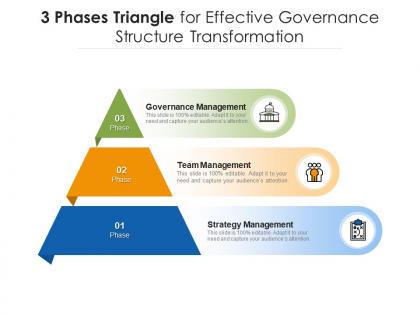
3 phases triangle for effective governance structure transformation




Try Before you Buy Download Free Sample Product
 Impress Your
 Audience
 100%
100% Editable
 Save Hours
 of Time


Our 3 Phases Triangle For Effective Governance Structure Transformation are topically designed to provide an attractive backdrop to any subject. Use them to look like a presentation pro.
People who downloaded this PowerPoint presentation also viewed the following :
3 phases triangle for effective governance structure transformation with all 2 slides:
Use our 3 Phases Triangle For Effective Governance Structure Transformation to effectively help you save your valuable time. They are readymade to fit into any presentation structure.
FAQs for 3 phases triangle for effective
Honestly, it comes down to speed and transparency. Everyone wants real-time decisions now - your employees, customers, all of them. Digital natives expect instant access to everything, including governance stuff. Remote work threw a wrench in how boards actually collaborate too. Regulatory compliance is getting messier (data privacy laws are brutal), so you need frameworks that can pivot fast. My take? Look at where your decision-making gets stuck first. Then figure out which digital tools could help without making accountability a nightmare. That's probably your best starting point anyway.
Track your hard numbers first - decision speed, satisfaction scores, compliance mess-ups, cost savings. The soft stuff matters too though. Survey teams about whether processes actually feel clearer (not just look good on paper). Check if meetings are productive, decisions stick, people know what they're doing. Honestly, don't expect miracles right away. Set up quarterly check-ins with key people and watch trends for like 12-18 months. That's where you'll see if it's really working.
Honestly, stakeholder engagement can make or break everything. I've watched so many transformations crash because people didn't get buy-in from the start. Map out who matters - board level down to frontline workers - then bring them into the design process early. Don't just tell them what's happening after you've decided. Create multiple feedback loops throughout. The people living with these changes daily? They need to feel heard, not steamrolled. Otherwise you'll face resistance at every turn and wonder why nothing's sticking.
So basically, tech makes everything way more visible - which is what you want. Digital dashboards let people see what's happening in real time, and collaborative platforms help stakeholders actually participate instead of just watching from the sidelines. Data analytics can show performance stuff publicly too. AI's pretty neat for catching blind spots you might miss. But honestly? Don't just throw information at people - pick platforms that actually get them involved. Map out where you're losing visibility right now, then start small with one area. Way less overwhelming that way.
Oh man, rushing is the absolute worst mistake. Teams try changing everything at once and just completely burn out - I've seen it happen so many times. Getting stakeholders on board early saves you massive headaches later. Communication falls apart too because leadership thinks everyone gets why they're doing this stuff (spoiler: they don't). Start with a solid roadmap and actually involve people in planning. Keep talking about what's working and what isn't. Celebrating small wins keeps everyone motivated instead of feeling like they're drowning in endless change.
Your biggest wins will come from ditching those endless approval chains. Push decisions down to smaller cross-functional teams instead. Give them clear boundaries and let them run with it - trust me, micromanaging every choice kills momentum. Weekly check-ins work way better than those monthly board meetings that drag on forever. Honestly? Most teams just need solid success metrics and the freedom to figure out their own path. I'd start by finding your worst bottlenecks first. Once you fix those, everything else flows better. It's really about shifting from controlling everything to enabling smart risks.
Look, governance transformation is basically rewiring how your whole organization thinks. People get way more accountable when they actually know who's responsible for what - no more finger pointing. Those awful rigid hierarchies? They start crumbling, which honestly is about time. Your teams collaborate better since the new structure pushes cross-functional work instead of everyone staying in their little silos. But here's the real kicker: employees finally trust leadership when they see fair, consistent processes actually happening. My advice? Figure out which behaviors you want to change first, then build your governance around making those shifts stick.
Honestly, data analytics is a game-changer here because it shows you exactly what's broken instead of making you guess. Track your performance metrics and look for where decisions get stuck - you'll start seeing patterns in how stakeholders actually behave vs. how you think they do. The best part? You can test different scenarios before rolling anything out, which saves you from those "oops, that was expensive" moments. I'd start by figuring out what data you already have, then pick metrics that actually connect to what you're trying to change. Way better than crossing your fingers and hoping.
Honestly, map out every single person who'll be affected - not just the big names. Get the skeptics involved early too, they'll point out blind spots you'd miss otherwise. Some people hate speaking up in meetings, so give them other ways to share feedback. Skip the corporate speak when explaining changes. Oh and here's the thing - listening to concerns isn't enough if you don't actually do something about them. I've seen too many leaders treat this like a one-time thing instead of checking in regularly. You don't want to realize halfway through that you've lost half your team.
Yeah so regulatory changes basically force you to act - can't just ignore new compliance stuff and hope it disappears. Your current governance setup becomes outdated pretty much overnight when regs shift. Creates gaps everywhere - oversight, reporting, risk management. Honestly it's probably the biggest reason I see transformation projects kick off. You'll need to redesign processes and update how decisions get made. Sometimes means completely restructuring who's accountable for what. The smart move? Start mapping your current governance against what's coming now instead of panicking when deadlines hit. Trust me on that one.
Transparency's your biggest hurdle, plus making sure everyone actually gets a voice - not just the usual suspects. Data privacy will bite you hard during restructuring, trust me on that one. Don't let existing power holders steamroll the process either. The transition phase is where things get messy and people fall through cracks. Honestly, most places totally botch the stakeholder input part. Build ethics check-ins right into your timeline from day one. Oh, and fair representation across groups isn't negotiable - learned that the hard way myself.
Set up "innovation sandboxes" - basically safe spaces where teams can mess around with new ideas without breaking rules. Figure out which regulations you absolutely can't touch vs ones that have wiggle room. Give your people clear boundaries upfront, then let them go crazy within those limits. Works like a fenced playground, honestly. Kids can run around but won't fall off a cliff. The trick is getting your innovation people and compliance folks talking regularly so you catch problems early. Way better than building something cool that'll never see daylight because it violates some obscure regulation you forgot about.
Honestly, your leadership style can totally make or break the whole thing. Autocratic leaders get people to follow rules, sure, but nobody actually cares about making it work long-term. Collaborative approaches work way better - people buy into changes they helped shape. Transformational leaders are amazing for this stuff since they get everyone excited about the vision (though good luck finding one). Hands-off management usually just watches everything fall apart. My old boss tried that once and... yeah, disaster. Match what you're doing to what the situation needs - tight control for quick fixes, team involvement for bigger cultural changes.
Training is honestly make-or-break for governance changes. People can't just magically know how to work with new processes and decision frameworks - you'd be setting them up to fail. It's like switching game rules halfway through without explanation (total disaster waiting to happen). Map out skill gaps early and build training right into your transformation plan. Don't treat it as something you'll figure out later. The whole thing falls apart without proper capability building. I've seen too many organizations skip this step and then wonder why nothing's working.
Getting outside partners speeds things up big time - they've already solved whatever mess you're dealing with. You'll get fresh eyes on your processes plus expertise you probably don't have sitting around. Honestly, sometimes stakeholders listen better to outsiders than they do to us. First figure out where your biggest gaps are, then find someone who's actually fixed that specific problem before. They can show you what good looks like and help sell changes internally. Way faster than trying to reinvent everything yourself.
-
Thanks for all your great templates they have saved me lots of time and accelerate my presentations. Great product, keep them up!
-
Commendable slides with attractive designs. Extremely pleased with the fact that they are easy to modify. Great work!
-
Informative presentations that are easily editable.