


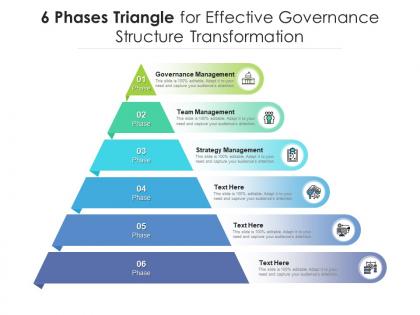
6 phases triangle for effective governance structure transformation




Try Before you Buy Download Free Sample Product
 Impress Your
 Audience
 100%
100% Editable
 Save Hours
 of Time


Our 6 Phases Triangle For Effective Governance Structure Transformation are topically designed to provide an attractive backdrop to any subject. Use them to look like a presentation pro.
People who downloaded this PowerPoint presentation also viewed the following :
6 phases triangle for effective governance structure transformation with all 2 slides:
Use our 6 Phases Triangle For Effective Governance Structure Transformation to effectively help you save your valuable time. They are readymade to fit into any presentation structure.
FAQs for 6 phases triangle for effective
Honestly, start by mapping out who actually makes decisions right now - you'll be shocked at the gaps. Get your structure, people, and processes talking to each other instead of working in silos. Someone needs to own each decision, and governance teams need people who can actually say yes or no. Oh, and ditch the spreadsheets for real tech - email chains are where good ideas go to die. Change management is make-or-break since you're rewiring everything. Set up feedback loops so you know what's bombing early. The whole thing falls apart without proper monitoring.
So digital tools can automate a lot of your governance stuff and make everything way more transparent. Workflow platforms help streamline approvals, plus you get real-time dashboards for better oversight. The data visibility is honestly the biggest game-changer - you can track performance and engagement as it happens instead of waiting around for quarterly reports. AI's pretty useful for policy analysis and risk stuff too, though it won't write policies for you (yet). Oh, and you'll have actual digital audit trails that make sense. I'd start with just one process first and build up from there.
Dude, stakeholder engagement can literally make or break your whole transformation. Get everyone involved early - board members, front-line staff, whoever's gonna be affected. They're the ones who'll actually use your new processes, so if they feel excluded, they'll just find ways to work around everything you built. I've watched so many perfectly designed frameworks completely flop because leadership thought they could just design everything in isolation and roll it out later. That never works. Map out who you need on board and give them real input, not just status updates. People want to help shape the solution, not just hear about it.
Honestly, start with baseline measurements before changing anything - that's crucial. Track the obvious stuff like decision speed and compliance rates, but don't ignore the cultural side. Are people actually engaged or just pretending to care? I'd survey teams about role clarity and accountability regularly. Meeting effectiveness is huge too, plus whether you're spotting risks sooner. Policy adherence matters. Here's the thing though - pick maybe 3-5 solid KPIs instead of measuring everything under the sun. You'll just overwhelm yourself with data. Check progress quarterly and focus on stakeholder satisfaction scores too.
Honestly, the biggest pain you'll deal with is people just flat-out resisting change. Even when current processes are totally broken, folks get comfortable and don't want to budge. Accountability gets messy too - nobody knows who's actually responsible for what. Your data systems are probably a nightmare since they weren't built to work together like governance needs them to. Departments barely talk to each other, which makes everything harder. Start with small pilot programs though. Get some quick wins first - that's way better than trying to fix everything at once and overwhelming people.
So governance changes basically flip how decisions get made in your company, which totally changes the vibe. People go from waiting for orders to actually collaborating on stuff. There's way more transparency too - like, people can finally see what's happening behind closed doors. Honestly, the biggest thing is whether leadership actually walks the walk or just talks about change. My take? Start by figuring out how decisions currently flow (it's usually messier than you think), then get your team involved in building the new system. When people help design it, they're way more likely to embrace the culture shift that comes with it.
Honestly, just treat governance like any other agile project - break it into small sprints instead of those massive changes that take forever. Pick one area (risk management works well) and run 2-week tests on new processes. Get cross-functional teams involved from the start - IT and business people together, not in silos. The feedback loops are everything here. Most governance moves at glacial speed, so even basic agile feels like you're moving at lightspeed. Set up dashboards for transparency and do regular retrospectives. Once you've got something that actually works, then scale it up. Start small though - pilots first, then expand.
Dude, literally every industry is scrambling to keep up with the same stuff right now. Digital transformation means everyone's trying to make decisions faster with actual data instead of just winging it. Then you've got ESG breathing down everyone's necks - suddenly transparency isn't optional anymore. Climate change hits manufacturing differently than healthcare, but they're all dealing with it somehow. Cybersecurity's a nightmare for everyone too. The cool thing? Industries are stealing good ideas from each other now. Figure out what's hitting your sector hardest, then see how others handled similar problems. It's like governance plagiarism but legal.
Honestly, most of these governance things crash and burn because executives just dump it on someone else and vanish. Start by connecting your changes to actual business goals - not just doing governance because you're "supposed to." Get leadership to define what winning looks like upfront. Then measure stuff that actually moves the needle for your business, not random compliance boxes. I'd set up regular check-ins too since strategies shift all the time. The whole point is making governance help your business perform better. Otherwise you're just creating busy work that runs alongside the real priorities.
Honestly, don't treat risk management like some add-on feature you'll figure out later. Map out your risk appetite first, then build your new governance around it - way easier than trying to squeeze it in afterward. I've watched so many companies crash and burn doing it backwards. Every process you design needs built-in risk checkpoints. Make your decision frameworks super clear about who handles what level of risk. The trick is making it feel normal, not like extra paperwork people will dodge. Trust me, your future self will thank you for getting this right upfront instead of scrambling to fix it later.
Dude, leadership buy-in is literally everything for governance changes. Without it, you're screwed from the start. Good leaders put their money where their mouth is - they give you actual resources and explain why everyone should care. The worst part? I've watched so many projects die because executives said all the right things in meetings but then did nothing. You need people at the top who'll stick with it when things get messy. Oh, and they should actually believe in what they're selling, not just recite corporate talking points.
Honestly, data analytics is like having x-ray vision for your whole transformation project. Instead of guessing what's working, you can actually see progress happening in real-time. Stakeholders love this stuff because you're showing them concrete numbers instead of vague updates about how things are "going well." Bottlenecks become super obvious before they tank everything. I'd say pick maybe 3-5 metrics that actually matter to your people (not just vanity numbers) and throw together some basic dashboards. Way better than those painful quarterly check-ins where everyone's just hoping for the best.
Honestly, regulatory changes are your best friend for getting governance stuff done. They create those hard deadlines that suddenly make everyone care - especially the board and budget folks. GDPR, ESG reporting, financial compliance rules... whatever it is, it forces people who usually ignore governance to actually pay attention. Here's the thing though - don't just check the compliance boxes and call it done. Use that momentum (and the money they finally allocated) to fix other governance issues you've been wanting to tackle. It's basically free political capital since everyone's already bought into the "we have to do this" mindset. Works way better than trying to sell governance improvements on their own merits.
Honestly, you can't just slap together a team of the usual suspects and call it inclusive. Get people from different departments, different levels - anyone who's gonna deal with this mess later. The "leadership echo chamber" thing is so real and so frustrating to watch. Create actual safe spaces where people won't get steamrolled for speaking up. Mix it up with surveys, focus groups, whatever works. But here's the key part - show them how their feedback actually changed something. Otherwise it's just theater. Start by figuring out who all your stakeholders are, then commit to really listening to each group.
Honestly, the companies that actually pull this off do a few things right. First - get your executives really backing it, not just giving lip service. Quick wins early on keep people motivated while you tackle the heavy lifting. Oh, and training is huge. Don't assume people will magically understand new processes because they won't. What really matters though is treating this like you're changing how people work together, not just updating some policies nobody reads anyway. Start with getting your key players genuinely excited about it before you touch anything else.
-
Commendable slides with attractive designs. Extremely pleased with the fact that they are easy to modify. Great work!
-
Really like the color and design of the presentation.
-
Easily Understandable slides.
-
Amazing product with appealing content and design.