

Governance structure framework powerpoint graphics





Try Before you Buy Download Free Sample Product
 Impress Your
 Audience
 100%
100% Editable
 Save Hours
 of Time


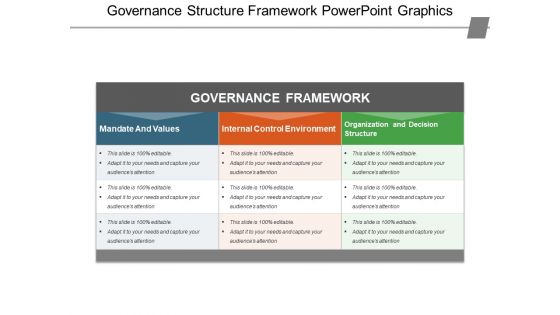
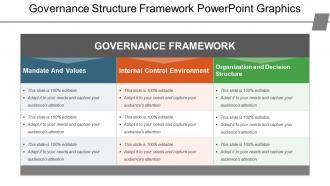
Now structure the process for efficient direction of your company keeping the interest of all stakeholders in mind with the aid of our governance structure framework PowerPoint graphics. This PPT slide of governance structure framework graphics has been designed by our professional team members to create accountability right of stakeholders, fairness and responsibility. This business governance framework PPT presentation is a three stage process. The processes in this PPT presentation template can be used for management, service implementation, service planning, service assessment, governance, PMO, knowledge management, governance processes. This governance process aligns it requirements PowerPoint layout can be used to enhance performance of companies, better allocation of resources and to reduce the risk of financial crisis. Our good corporate governance and objectives of corporate governance PPT slide can be used to display corporate strategy in your presentations. This PPT presentation layout will help you focus on organizations especially in relation to public relations to enhance the quality of your presentations. Bring about amendments that improve functioning with our Governance Structure Framework Powerpoint Graphics. It helps institute changes.
People who downloaded this PowerPoint presentation also viewed the following :
Governance structure framework powerpoint graphics with all 5 slides:
Guard against errors due to hurried action with our Governance Structure Framework Powerpoint Graphics. Be able to curb the impatient.



FAQs for Governance structure
So you'll want to nail down who does what first - that's honestly the foundation of everything. Map out your decision-making process and how info actually moves between teams. Accountability stuff matters too, plus you need some way to track performance and manage risks. Transparent reporting is clutch (learned that one the hard way). Don't skip stakeholder engagement - people need to feel heard or they'll fight you on everything. Oh, and build in compliance checks and regular reviews so nothing gets stale. The trick is connecting all these pieces instead of having them work against each other.
So governance framework is basically your strategic guardrails - keeps all your decision-making and policies actually supporting what you're trying to accomplish. It's like GPS for strategy execution, honestly. Without proper alignment, you get governance that either blocks progress or becomes total busy work nobody cares about. Your framework should reinforce strategic priorities through performance metrics, risk management, accountability structures - that kind of stuff. I'd start by mapping current governance activities against your goals. You'll probably spot some obvious gaps that need fixing. Makes the whole thing way more useful than just checking boxes.
Look, stakeholders are honestly what make or break your governance framework. Get them involved early when you're figuring out roles and decision-making processes - employees, board members, customers, regulators, whoever matters to your situation. They're living with these rules daily, so they'll spot risks you'd totally miss. Plus you want their buy-in or good luck getting anything done. I'd start by mapping out your key players first. Then set up regular ways to get their input - maybe quarterly check-ins or something. Way better than building some perfect-on-paper system that crashes in reality.
Honestly, tech can save you so much headache with governance stuff. Start with automating your compliance tracking - no more chasing people down for updates. Real-time dashboards beat those useless monthly reports that are already old news by the time you see them. AI's getting pretty good at catching problems early too, which is wild. Your auditors will actually thank you for digital audit trails since everything's traceable. But don't go crazy - just pick your biggest pain point first and fix that. I learned this the hard way when we tried changing everything at once.
Honestly, I'd focus on three main things: how fast you're making decisions, whether people are actually participating, and if you're following your own rules. Track resolution times compared to before - that's a big one. Also check participation rates in meetings and whether folks are sticking to policies. The risk prevention piece is critical too - like, are you stopping the fires you meant to prevent? Survey people quarterly about whether processes make sense to them, because their perception is half the battle. Oh, and don't go crazy with metrics - stick to 3-5 max or you'll drown in data you won't use anyway.
Start with compliance - it's your foundation and you can't mess around with that stuff. Map out what regulations actually apply to your company first (lots of places assume way more than they need, which is exhausting). Build your governance framework on top of those requirements. SOX, for example - total pain but you gotta work with it. Design processes that hit multiple compliance boxes at once if you can. The trick is making all these legal requirements feel natural in day-to-day work instead of some separate thing everyone dreads. Get the audit done early so you're not scrambling later.
Honestly, the biggest pain is people just hate change - they'll fight new processes tooth and nail. Getting exec buy-in is brutal too. You'll deal with tons of "that's not my department" BS when roles aren't crystal clear. Oh and good luck getting enough resources, because governance stuff needs actual people and time to work (shocking, I know). Most places try to do everything at once which is a disaster. Start with something small first. Get your leadership to actually show they care about it. Define who's responsible for what right away or you're screwed.
So governance frameworks are basically your safety net for risk stuff - gives you actual structure instead of just winging it. You get clear processes, defined roles, regular check-ins with leadership. Honestly, it's way better than the "hope nothing explodes" approach most places use. Instead of random panic responses, you'll have standardized ways to spot risks, figure out how bad they are, and decide what to do. Plus you're making real decisions about what risks are worth taking vs. avoiding completely. Oh, and it keeps you compliant without just mindlessly checking boxes. Start by figuring out who currently owns what risks in your setup.
Honestly, culture is everything when it comes to governance. You can write the most beautiful policies in the world, but if nobody actually cares about doing the right thing, they're useless. I've seen companies where leadership talks a big game about ethics but then cuts corners when it's convenient - that stuff trickles down fast. People need to feel safe calling out problems without getting their heads chopped off. Short version: if your team culture doesn't match what your governance rules are trying to do, you're basically screwed. The policies become window dressing while the real decisions happen based on what people actually value.
Honestly, quarterly health checks are your best bet here. Get feedback from different people in the org and track stuff like how fast decisions actually get made. Most companies do these reviews then completely ignore the results - don't be that company. Compare yourself to what others in your industry are doing too. Your governance thing needs to change as your business grows, so treat it like it's alive, not some dusty document nobody touches. Oh, and actually schedule your first review this quarter. Pick 2-3 areas you want to dig into.
Look, it really depends on what industry you're in - the rules are totally different everywhere. Banks have to deal with SOX and Basel III compliance, which is honestly a nightmare. Tech companies worry more about data privacy stuff and staying flexible. Healthcare's got patient safety and HIPAA breathing down their necks. Manufacturing focuses on safety protocols and environmental regs. Nonprofits? They're all about transparency and staying true to mission. My advice - figure out your biggest risks and regulations first. Then build around those instead of copying some random template online.
Look, transparency and accountability are huge for any governance setup. People need to know what's happening and why - otherwise they'll just stop trusting you. When things go sideways (and they will), accountability means someone actually takes responsibility instead of hiding behind corporate speak. Honestly, I've seen too many teams skip this part and regret it later. Build in regular reporting from the start, plus clear ways to escalate issues. Your stakeholders will stay engaged, you'll make better decisions, and you can actually learn from mistakes instead of making them again.
So basically, a governance framework stops you from making random decisions every time something comes up. You get clear rules about who decides what, plus escalation paths when things get messy. It's like having a GPS instead of driving around totally lost (been there). The framework makes sure you're looping in the right people and actually documenting stuff - honestly, that part alone saves so much drama later. Plus you've got built-in checkpoints to catch problems before they explode. I'd start by figuring out where decisions currently get stuck - that's your biggest pain point right there.
Honestly? Leadership makes or breaks the whole thing. They set the vibe and decide if people actually follow through or just ignore it. I've watched so many frameworks turn into paperwork nobody cares about because the leaders talked a good game but didn't back it up. Your executives need to put their money where their mouth is - fund it properly, follow the rules themselves, and keep reminding people why it matters. Otherwise you're just wasting everyone's time. The worst part is when they act surprised that nobody's taking governance seriously when they clearly don't either.
So basically you're setting up guardrails for when tough ethical stuff comes up. You'll want clear policies, decision-making processes, and someone who's actually accountable when things get messy. Codes of conduct are huge, plus whistleblower protections and regular training. Honestly, I've seen too many companies skip the training part and regret it later. Build in audits to catch problems early - way better than dealing with a crisis. Start by figuring out where your blind spots are now, then create specific policies to tackle each one. The structure keeps everyone on the same page.
-
Unique and attractive product design.
-
Out of the box and creative design.