


Corporate governance model governance structure hierarchy chart ppt example





Try Before you Buy Download Free Sample Product
 Impress Your
 Audience
 100%
100% Editable
 Save Hours
 of Time


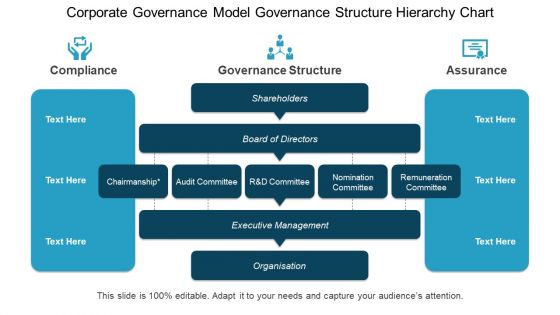
Document your governance framework with our corporate governance model governance structure hierarchy chart PPT slide design. It will work as a communicating tool which helps in directing the roles and responsibilities of all board members and other governance parties involved in the same. You can define the compliance model or structure of your organization with this governance structure PowerPoint slide template. Define the benefits of the same for any business entity with this organizational structure PPT layout template diagram. It allows the management to allocate and use all its limited company resources in an effective manner as per the defined organizational hierarchical model. It also helps in managing all your operational business functions which simply helps in managing your business efficiency. It will also help in enhancing your company’s continuous growth rate model. Thus, simply click on the download link given below to start working over this governance operating model PPT design. If you want to connect with your audience as you present then you need something that is visually engaging. Our Corporate Governance Model Governance Structure Hierarchy Chart Ppt Example are exactly there for that.
People who downloaded this PowerPoint presentation also viewed the following :
Corporate governance model governance structure hierarchy chart ppt example with all 5 slides:
Enable your team with our Corporate Governance Model Governance Structure Hierarchy Chart Ppt Example. Give them a base they can build upon.




FAQs for Corporate governance model governance structure hierarchy
Honestly, start with your board - that's where most companies mess up. You want independent directors who'll actually push back on management instead of just nodding along. Set up proper audit and compensation committees too. Executive roles need to be crystal clear (nobody wants that "wait, whose job is this?" drama). Oh, and solid risk management is huge - we learned that lesson the expensive way at my old place. Financial reporting should be transparent, obviously. The whole setup needs to encourage people to do the right thing while protecting shareholders. Check your current board independence first though, that's usually the biggest red flag.
Look, good corporate governance is basically like having solid ground rules - it makes everyone more accountable and helps with smarter decisions. Investors and employees trust you more when they can actually see what's happening behind the scenes. It's kinda like sports, you know? Players perform better when there's fair refs and clear rules. Companies with strong governance attract better people and get funding easier too. Honestly, I'd start by checking out your board setup first - that's where most trust issues come from. Better transparency there usually fixes a lot of downstream problems.
So the board of directors? They're basically running the whole show when it comes to big decisions and keeping an eye on management. You know how there's all these compliance hoops we jump through at work? Yeah, that usually comes from them deciding what risks the company can handle. They hire and fire CEOs, approve major stuff, and make sure nobody's doing anything shady. Honestly, they're like the middleman between shareholders and the executives actually running things day-to-day. All those governance policies that affect your department probably started in some boardroom meeting where they were trying to cover their bases legally.
First thing - you gotta actively recruit from underrepresented groups instead of just using the same old networks everyone defaults to. Set actual diversity targets and track them publicly, because honestly I've watched too many boards just talk a big game without doing anything real. Once you get diverse members, create an inclusive vibe where different perspectives actually matter and everyone gets equal speaking time. Oh and think about practical stuff too - like meeting times that work for people's schedules. The whole thing needs to be a strategic priority, not just surface-level box checking.
So those regulatory frameworks are basically your bare minimum - like SOX making CEOs certify stuff, or exchanges wanting independent board members. Pain in the ass sometimes, but here's what I've noticed: good companies don't just meet requirements, they actually build on them. The rules push you toward transparency and better risk management anyway. Honestly, that stuff strengthens your governance whether you like it or not. My take? Don't treat it like a checklist. Use those regulations as your starting point, then figure out how to make your board decisions actually work better. Makes the whole thing less painful too.
ESG isn't just nice-to-have anymore - it's basically required now. Boards are also done with fake cybersecurity expertise; they want people who actually know what they're doing. Stakeholder capitalism is everywhere too. Companies are measuring how they impact employees and communities, not just profit margins. Diversity requirements? They're getting real teeth with actual disclosure rules. Remote meetings stuck around after COVID, which honestly changed everything about how boards work. If you're helping clients, I'd nail down their ESG metrics first and get genuine cyber people on their boards. Those two areas are getting hammered with scrutiny right now.
Honestly, the real game-changer is giving people instant access instead of making them wait for those boring quarterly reports. Dashboards and digital board portals let stakeholders see meeting minutes, financial stuff, and how decisions get made in real-time. Blockchain's pretty cool for this - creates records nobody can mess with later. Digital voting makes it way easier for shareholders to actually participate too. Don't just digitize the same old paperwork though, that's pointless. Figure out what your stakeholders actually want to see first, then find tools that make that info accessible. Oh, and automated compliance tracking saves you tons of headaches down the road.
Start with rock-solid conflict policies - make board members and execs disclose everything upfront. Get independent directors who don't have skin in the game. Training helps people spot stuff they'd normally miss. Anonymous reporting works great since nobody wants to be the whistleblower with their name attached. Disclosure is honestly your biggest weapon here - transparency cuts through most BS right away. Oh, and don't forget actual consequences in your policies. Otherwise you're just waving around a useless piece of paper that nobody takes seriously.
Yeah, it's wild how different governance can be depending on where you are and what industry. Banks and pharma companies have crazy strict board oversight because they're so regulated. Tech startups? Way more relaxed. Europe does this weird two-tier board thing while we just stick with one board - took me forever to understand that difference honestly. Asian companies often have families or governments calling the shots, which is totally different from here. I'd definitely look into the specific rules and cultural stuff for whatever sector you're dealing with before giving advice.
SMEs get hit with three big governance headaches: money, know-how, and red tape. Your budget's already tight, so hiring independent directors or compliance people? Good luck with that. Most founders I know are already wearing like fifteen hats - adding governance expertise on top is brutal. The regulatory stuff feels massive when you're just trying to keep the lights on. Board meetings are probably happening over coffee rather than in some fancy boardroom. Here's what actually works though: get some board independence going, nail down regular financial reports, and create clear decision processes. Don't overthink it initially.
Look, when everything goes sideways, good governance is basically your lifeline. You've got clear roles so nobody's standing around wondering who calls the shots. Communication flows to stakeholders without chaos. Those risk management processes you built? They become your actual playbook instead of just paperwork collecting dust. Having board oversight means someone makes the hard decisions without getting too emotional about it - which honestly saves you from so many stupid mistakes. Set this stuff up while it's quiet, because scrambling during a crisis never works out well.
So transparency and fairness are your big ones here. Your board needs to actually challenge management instead of just rubber-stamping everything - independence is key. Watch out for conflicts of interest, and honestly, executive pay is where companies always mess up. Tie it to real performance, not just attendance. Protect your minority shareholders and think beyond just profits - employees and communities matter too. Financial reporting has to be solid, obviously. Focus on long-term value instead of chasing quick wins. I'd start by looking at who's actually on your board right now and spotting any red flags there first.
Look, with strong governance you're not just throwing money at stocks and crossing your fingers anymore. You actually get real voting power on big decisions and way better access to company info. Honestly, the institutional investors do most of the heavy lifting here - they're the ones demanding transparency that helps everyone. It's pretty much about being an actual owner instead of just watching numbers go up and down. But here's the thing - you've got to use these rights. Show up to meetings, vote your shares, don't just collect dividends and zone out.
So governance is basically your safety net for catching risks before they mess you up. You need clear lines - like who's actually responsible for different risks and how they report back. Board committees, risk limits, that whole setup. Here's the thing though - most companies think they have this figured out but their structure is actually pretty messy. Without it, nobody knows who owns what risk or how to escalate problems. The real key? Don't just write policies. Actually map out who's handling each risk type and make them give you regular updates on what's happening.
So basically, your board and executives decide what CSR stuff actually matters and where the money goes. They're the ones setting sustainability goals and tying executive pay to social impact metrics. Without real governance oversight, CSR becomes total BS - just fancy marketing with no substance behind it. Good governance means committees actually track ESG reporting and make sure leadership follows through. Honestly, I've seen too many companies talk big about social responsibility while their boards couldn't care less. When you're checking out CSR programs, always dig into whether there's genuine board-level accountability or if it's just window dressing.
-
Graphics are very appealing to eyes.
-
Informative presentations that are easily editable.