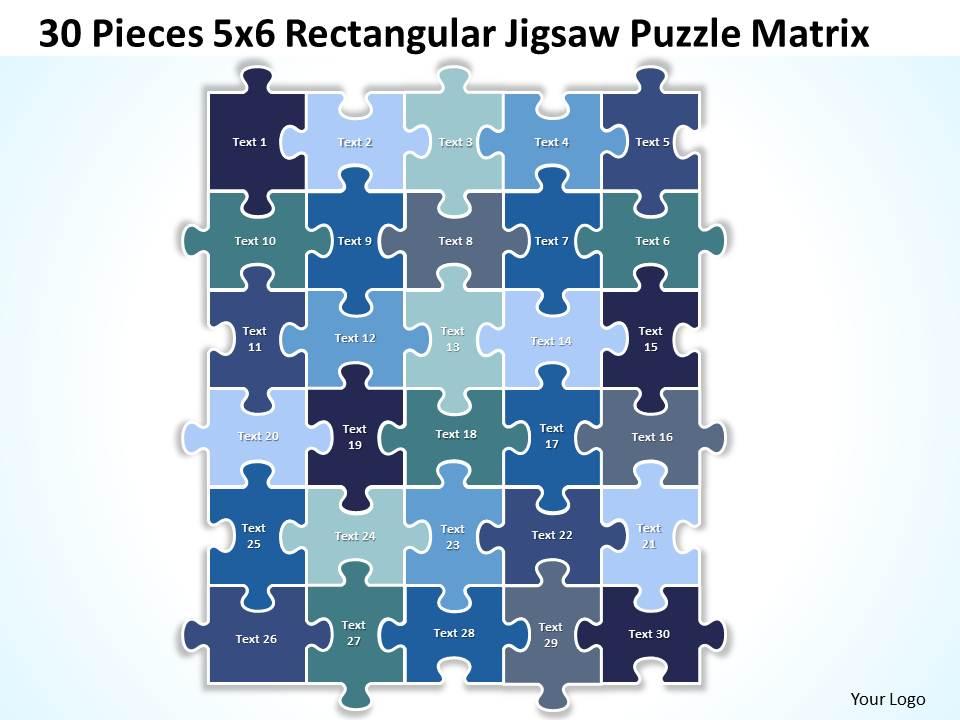
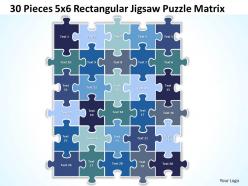
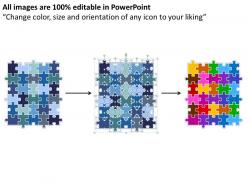
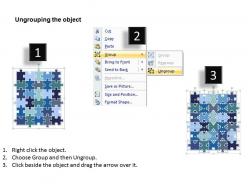
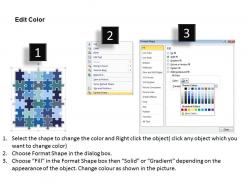
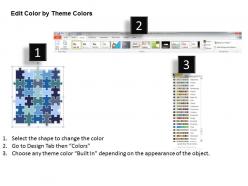
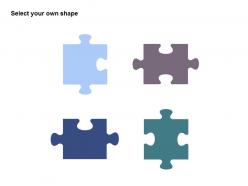
30 pieces 5x6 rectangular jigsaw puzzle matrix powerpoint templates 0812
Try Before you Buy Download Free Sample Product
Audience
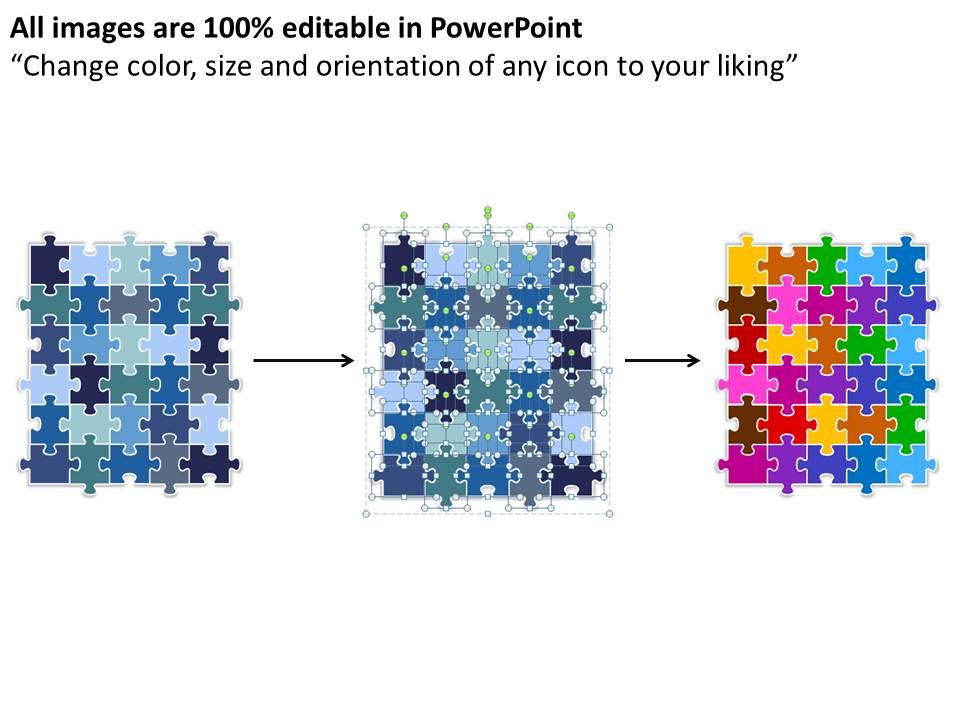
Editable
of Time
Your message paves the way to success. Let our 30 Pieces 5x6 Rectangular Jigsaw Puzzle Matrix Powerpoint templates ppt presentation slides 0812 be the rungs of your ladder.
People who downloaded this PowerPoint presentation also viewed the following :
30 pieces 5x6 rectangular jigsaw puzzle matrix powerpoint templates 0812 with all 7 slides:
Get cozy with our 30 Pieces 5x6 Rectangular Jigsaw Puzzle Matrix Powerpoint templates ppt presentation slides 0812. They really love your warm thoughts.
FAQs for 30 pieces 5x6 rectangular jigsaw puzzle matrix
Educational jigsaw puzzle templates require careful consideration of age-appropriate piece counts, clear visual hierarchies, relevant subject matter integration, and progressive difficulty levels. These design elements enhance learning by promoting problem-solving skills, visual recognition, and knowledge retention, with many educators finding that well-designed puzzles significantly improve student engagement and comprehension across subjects.
Jigsaw puzzle templates enhance engagement by transforming static content into interactive visual challenges, encouraging active participation, collaborative problem-solving, and memorable knowledge retention. These templates enable presenters to break complex concepts into digestible pieces, with workshops and training sessions finding that participants demonstrate higher engagement levels, improved information recall, and stronger team collaboration when concepts are presented through puzzle-based learning formats.
Adobe Illustrator, Canva, PowerPoint, Inkscape, and GIMP offer robust capabilities for creating custom jigsaw puzzle templates. These tools streamline design workflows by providing vector editing, precise cutting patterns, and scalable formats, with many educators, game developers, and marketing teams finding that custom templates enhance engagement, reduce production costs, and deliver memorable interactive experiences.
Different puzzle piece shapes and sizes significantly impact difficulty levels, engagement duration, and completion satisfaction by influencing visual pattern recognition, sorting strategies, and assembly flow. Larger pieces with traditional interlocking shapes enhance accessibility for presentations and team workshops, while smaller, irregular pieces create more challenging experiences, with many organizations finding that varied piece complexity helps maintain audience attention and creates more memorable interactive sessions.
Jigsaw puzzle templates can be customized for marketing campaigns, patient education materials, team-building exercises, product launch strategies, and compliance training across various sectors. Healthcare organizations use them for explaining treatment processes, while marketing teams leverage them for campaign planning and customer journey mapping, ultimately delivering enhanced engagement and clearer communication of complex concepts.
Accessibility strategies for jigsaw puzzles include larger piece sizes, high-contrast colors, tactile elements, magnetic backing, and simplified designs with fewer pieces. These adaptations enable individuals with visual, motor, or cognitive challenges to enjoy puzzle-solving by reducing frustration, enhancing grip and placement, and delivering inclusive recreational experiences that promote cognitive engagement across diverse ability levels.
Jigsaw puzzle templates enhance team-building activities by creating collaborative problem-solving experiences, encouraging communication through shared objectives, and building trust as members contribute unique pieces to complete solutions. These interactive formats work particularly well in corporate retreats, onboarding sessions, and cross-departmental workshops, ultimately delivering stronger workplace relationships and improved group dynamics.
Digital jigsaw puzzle templates offer enhanced flexibility, instant customization, unlimited reusability, seamless integration with learning management systems, and cost-effective scalability compared to physical puzzles. These digital solutions streamline classroom preparation by enabling teachers to modify content instantly, accommodate different learning styles simultaneously, and track student progress in real-time, ultimately delivering more personalized educational experiences.
Color psychology enhances jigsaw puzzle template design by using warm colors to stimulate engagement, cool colors to improve focus, and high contrast combinations to aid visual processing and memory retention. Educational institutions and training organizations leverage strategic color schemes to reduce cognitive load, highlight key information pathways, and create emotional connections with content, ultimately delivering faster comprehension and improved knowledge retention rates.
Innovative jigsaw puzzle templates in corporate training include team-building exercises, process mapping workshops, strategic planning sessions, problem-solving simulations, and knowledge retention activities. These interactive tools enhance collaboration by breaking complex concepts into manageable pieces, encouraging cross-departmental communication, and creating memorable learning experiences, with many organizations finding that puzzle-based training significantly improves engagement and information retention rates.
Jigsaw puzzles enhance visual storytelling by breaking complex narratives into interconnected pieces that audiences can follow sequentially, creating suspense and engagement as each element reveals part of the larger story. This approach helps presenters in marketing, training, and strategic planning build compelling narratives that demonstrate how individual components unite to form complete solutions, ultimately delivering memorable experiences and improved audience retention.
Cultural sensitivity in jigsaw puzzle templates requires careful consideration of religious symbols, cultural representations, color meanings, historical contexts, and inclusive imagery that respects diverse audiences. Designers must research cultural significance across different regions, avoid stereotypical portrayals, and test designs with multicultural focus groups, ultimately ensuring templates celebrate diversity while preventing unintentional offense in global markets.
Aligning jigsaw puzzle templates with learning objectives requires careful mapping of puzzle components to desired outcomes, incorporating relevant content themes, assessment criteria, and skill-building elements within each piece. Through strategic design, educators can create engaging activities that reinforce key concepts, promote collaborative problem-solving, and measure comprehension effectively, ultimately delivering enhanced learning experiences that support curriculum goals.
Effective feedback incorporation methods include user testing sessions, analytics tracking, iterative design reviews, stakeholder surveys, and performance metrics analysis. These approaches streamline template refinement by identifying usability gaps, enhancing visual clarity, and optimizing puzzle complexity, with many educational institutions and corporate training teams finding that systematic feedback integration ultimately delivers more engaging presentations and improved audience comprehension.
Design jigsaw puzzle templates with varying piece counts, sizes, and complexity levels to accommodate different developmental stages, using larger pieces and simpler images for younger children while incorporating intricate details for adults. Consider themes like animals for kids, landscapes for teens, and abstract patterns for adults, with many educators and puzzle manufacturers finding that adjustable difficulty levels enhance engagement across age groups.
-
Amazing product with appealing content and design.
-
Editable templates with innovative design and color combination.