6 Months Dissertation Timeline Structure For Research Project
Try Before you Buy Download Free Sample Product
Audience
Editable
of Time
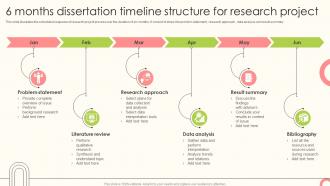
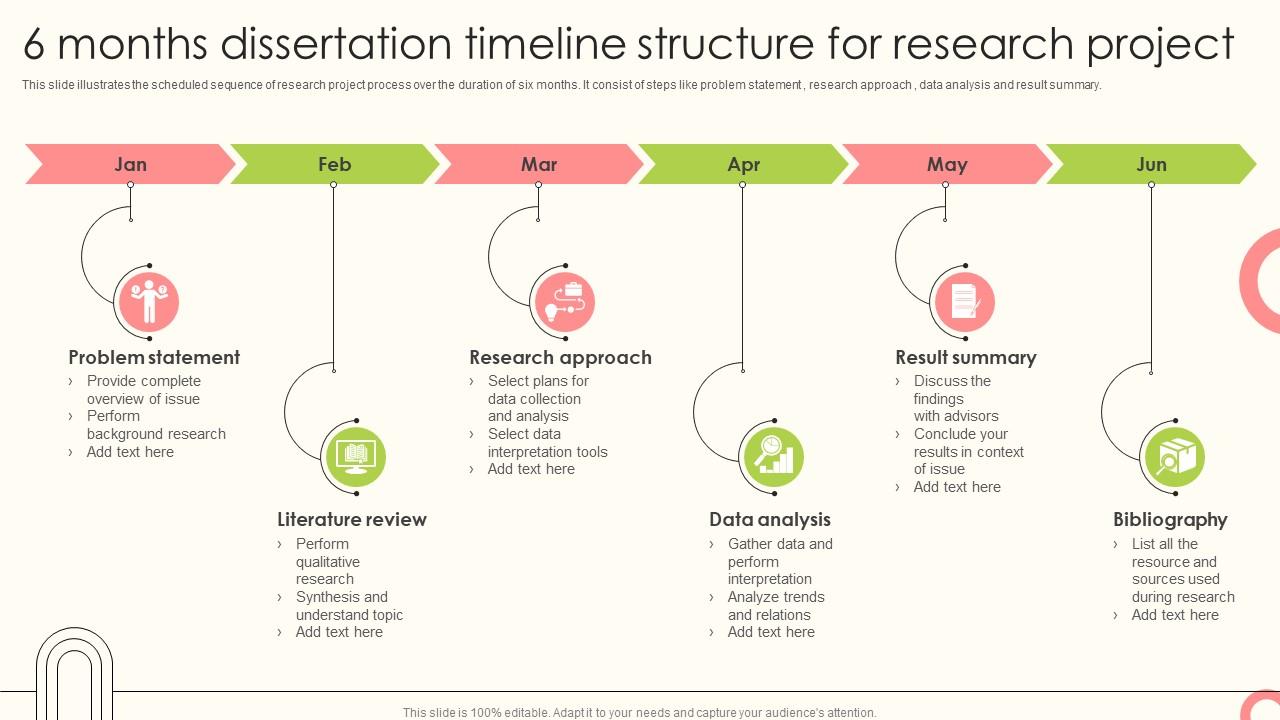
This slide illustrates the scheduled sequence of research project process over the duration of six months. It consist of steps like problem statement, research approach, data analysis and result summary.
People who downloaded this PowerPoint presentation also viewed the following :
6 Months Dissertation Timeline Structure For Research Project with all 6 slides:
Use our 6 Months Dissertation Timeline Structure For Research Project to effectively help you save your valuable time. They are readymade to fit into any presentation structure.
FAQs for 6 Months Dissertation Timeline Structure
Okay so basically you're looking at 6 months to nail down your topic and get approval, then another 6 for lit review and figuring out your methodology. Data collection is usually the 12-18 month mark - though honestly this part can be a nightmare if people don't cooperate. First draft writing happens around months 18-24, but here's the thing everyone warns you about: revisions take FOREVER. Like, way longer than you think. Defense prep is another 3-6 months on top of that. My cousin just went through this and kept saying she wished she'd padded her timeline more, especially for writing. Definitely map this out with your advisor early!
Work backwards from your defense date and map out the big stuff - research, writing, revisions, committee rounds. Everything will take twice as long as you think, so add buffer time everywhere. Weekly writing goals work better than monthly ones (trust me on this). Your advisor's gonna take forever to respond, and good luck getting your committee together. Be real about how you actually work, not how you wish you worked. Life's gonna mess with your timeline anyway. Check in monthly to see how off track you are and adjust from there.
Honestly, start by figuring out how complex your research is gonna be and how fast you actually write (not how fast you think you write lol). Work backwards from your program deadline, but give yourself way more time for analysis and writing than the initial research part. Your advisor's definitely gonna have feedback, so build in buffer time for revisions. Literature reviews are such time sucks too - they always take longer than you expect. Break everything into mini-deadlines so you don't end up doing three months of work in the last three weeks. Also factor in your job, family stuff, whatever else you've got going on.
Oh totally, your field makes a huge difference! STEM takes forever - like 4-6 years because experiments fail and you're stuck waiting for data. Meanwhile humanities people are usually done in 3-5 years since it's mostly research and writing. Social sciences depends on what you're doing. Honestly, ignore whatever timeline your department tells you. That's always BS. Talk to people who just graduated from your actual program - they'll give you the real deal about how long it actually takes.
Honestly, I'd start with something simple like Trello or Notion - they're perfect for breaking chapters into bite-sized tasks. Gantt charts are weirdly satisfying too (I know, I'm a nerd), and you can make them in Google Sheets if you don't want to pay for Monday.com. But like, don't overthink it. Sometimes a basic Excel sheet or wall calendar works just as well. The trick is actually using whatever you pick consistently. List your big milestones first, then work backwards to set smaller deadlines. Oh, and make them realistic - nobody writes a chapter in two days despite what your brain tells you at 2am.
Honestly, treat your dissertation like a real class - block out specific hours each week instead of doing it "whenever." I'd say 2-3 hours twice weekly to start. Most people don't realize how much coursework mentally drains you, so try writing in the mornings when your brain actually works. You can use random free time for easier stuff like reading or organizing notes. Oh, and set tiny weekly goals - even 500 words keeps momentum going. Way better than those marathon sessions that never happen.
Dude, you NEED regular advisor feedback or you'll waste months going in circles. Mine saved me from so many dead ends - they've seen tons of dissertations fail and know exactly what committees want. Monthly check-ins are perfect. Don't be that person who vanishes for half a year then dumps 100 pages on them expecting miracles. Small fixes along the way beat rewriting entire chapters later (learned that one the hard way). Honestly, advisors can smell a trainwreck dissertation from miles away. Schedule those meetings now before you get too deep into research.
Okay so here's what actually works - break everything down into tiny pieces. Like "write one paragraph today" instead of "finish chapter 2" (which is just setting yourself up to feel like crap). Set fake deadlines a week early because you'll procrastinate anyway, we all do. Time-blocking is clutch - pick specific hours for dissertation work and stick to them. I'm obsessed with the Pomodoro thing lately: 25 minutes writing, 5-minute break, repeat. Honestly the hardest part is just starting, so tomorrow pick one small thing and do it first thing. Even if it's just opening the document.
Okay so first thing - chunk that beast into tiny pieces and celebrate literally everything. Got through one section? That counts. Write daily even if it's garbage for 30 minutes. Momentum beats perfection every time. Also get yourself an accountability person because going solo will crush your soul. Some days you'll genuinely despise your entire topic (been there) but show up anyway. Maybe keep a note somewhere about why you picked this mess in the first place? Oh and track your progress somehow visual - spreadsheet, calendar, whatever. When you're convinced you're failing, you'll actually see you're not.
Honestly, just pad your timeline with like 25-30% extra time right from the start. Things will go sideways - that's just research life. Don't freak out and try cramming everything when delays hit. Step back and figure out what you actually need vs what would just be cool to include. Sometimes switching up your whole approach works way better than forcing the original plan anyway (I've seen this save people so many headaches). Oh, and talk to your advisor early when you see trouble coming. Don't wait hoping you'll magically catch up because... you probably won't.
Oh man, definitely get your ethics approval sorted ASAP! I made the mistake of waiting and it delayed everything by two months - total nightmare. The IRB process takes forever, especially if you're dealing with human subjects or sensitive data. Submit that application the second your methodology is locked down, even if you're still working on other chapters. Trust me, waiting until you're "ready" for data collection is way too late. The whole process can drag on for months and you don't want that stress when deadlines are looming. Start early or you'll hate yourself later!
Okay so definitely work backwards from your defense date and give yourself way more time than you think. Data collection? Double whatever timeline you're thinking - I learned this the hard way lol. Right after you collect stuff, immediately dive into analysis while it's all still fresh in your head. Do a pilot study first to test if your methods actually work. Weekly check-ins with yourself are better than monthly ones because you'll catch problems faster. Oh and have a backup plan ready because your main data source might totally fall through. Trust me on that one.
Dude, you absolutely cannot skip proper revision time - I'm talking 3-4 weeks minimum, maybe more if you're picky about details. This isn't just fixing typos either. You're basically rebuilding arguments, filling in logical gaps, making your analysis actually strong. Trust me, your advisor will spot rushed work from a mile away. Your first draft? It's gonna suck, and that's totally normal. What really screws people over is not planning these revision cycles early enough. Always build in extra buffer time too because you'll definitely find sections that need complete overhauls. Oh, and your defense will go way smoother if you don't rush this part.
Honestly, schedule your breaks like they're actual deadlines, not something to feel guilty about. I totally crashed halfway through chapter three because I didn't do this. Take 2-3 days off after finishing big sections, maybe a full week between chapters. The trick is picking your return date before you even start the break - otherwise you'll just keep scrolling Netflix forever. And seriously disconnect from your research during downtime. Your brain can't recharge if you're still thinking about footnotes. I know it feels counterintuitive, but those breaks actually speed up your writing in the long run.
Honestly? Everyone thinks they can predict how long their thesis will take. You can't. Research rabbit holes will swallow weeks, and revisions are brutal - like way worse than you expect. I learned this the hard way lol. Your advisor isn't checking email every day either, so factor in their slow response times. Pack in 20% extra time for everything major. Those massive monthly goals look impressive on paper but they'll crush your soul. Break things down weekly instead, and don't be that person writing 3000 words daily because you procrastinated.
-
Colors used are bright and distinctive.
-
Commendable slides with attractive designs. Extremely pleased with the fact that they are easy to modify. Great work!