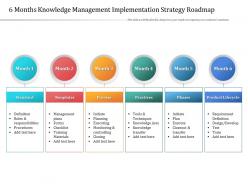
6 months knowledge management implementation strategy roadmap
Try Before you Buy Download Free Sample Product
Audience
Editable
of Time
A well thought out action plan makes execution easier and increases the possibility of success significantly. Ensure hitting all the milestones within the deadlines by introducing our fully customizable 6 Months Knowledge Management Implementation Strategy Roadmap. Streamline the work related information, budget, timeframe, key deliverable, landmarks, and major steps involved, all in one place to give an organized overview of the project by utilizing our PowerPoint theme. Minimize time lag and increase work efficiency by providing insight into the process with our comprehensively researched roadmap PowerPoint layout. Color coding helps in highlighting the process and grabs the attention of the audience. Download our handy 6 Months Knowledge Management Implementation Strategy Roadmap to identify the possible problem areas in a much shorter time and propose solutions. Have a productive brainstorming session with your workforce by utilizing our action plan visualization tool.
People who downloaded this PowerPoint presentation also viewed the following :
6 months knowledge management implementation strategy roadmap with all 2 slides:
Give your audience a fulfilling experience. They will find our 6 Months Knowledge Management Implementation Strategy Roadmap elevating.
FAQs for 6 months knowledge management
Okay so for your KM roadmap, start with a knowledge audit - figure out what you've got, what's missing, and where those gaps are actually causing problems. Map your tech setup and governance next. Here's the thing though - most of these projects fail because people ignore the human element. Change management and training are huge. You can't just build it and expect them to come, you know? Also set up metrics from the beginning so you can show ROI down the road. Oh and definitely pilot this with just one department first before going company-wide. Learned that lesson the hard way at my last job.
Look at where knowledge gaps are actually costing you money first. Start with the easy wins - like getting critical info from people who are about to retire. Teams that need to share knowledge but aren't talking? That's your next priority. Honestly, skip the AI stuff for now, it's overkill. Focus on silos that slow down real projects. Quick ROI beats perfect solutions every time. Run small pilots instead of some massive rollout - I've seen too many orgs try to fix everything at once and fail. Where's the biggest pain point that you can actually solve in a few months?
Tech is what makes knowledge management actually scalable - otherwise you're just drowning in info. AI search lets people find stuff instantly instead of digging through folders for hours. Collaborative platforms capture all that tribal knowledge before Bob retires and takes everything with him. Automation keeps your knowledge base fresh so it doesn't become another graveyard wiki. Honestly, most teams already have decent tools but they don't talk to each other. Start with what you've got, figure out where people are wasting the most time hunting for answers, then fill those gaps. The best system is whatever your team will actually use.
Track the hard stuff first - how long it takes people to find info, onboarding speed, whether teams are duplicating work. Usage stats on your knowledge base matter too. But honestly? The softer stuff is where you'll really see if it's working. Are people naturally sharing knowledge or does it still feel awkward and forced? I'd survey folks quarterly about whether they actually feel more informed. Don't go crazy with metrics though - pick 3 or 4 that align with what you're trying to accomplish and stick with those. Oh, and search success rates are surprisingly telling about whether your system actually works.
People hate change - that's your biggest problem right there. They'll hoard info and stick with whatever crappy system they're used to. Data quality becomes a mess when nobody cares enough to input things properly. Plus you'll get zero support from executives who don't see the point. Everyone's "too busy" which is code for "this seems annoying." Oh, and good luck getting different platforms to play nice together - technical nightmares are pretty much guaranteed. Honestly? Find a few people who actually want this to work and prove it's worth it before you try convincing everyone else.
Don't overthink this - just build it into what you're already doing. Set up Slack channels or shared docs for different topics and get people documenting decisions right there. The trick is making it dead simple to contribute because honestly, if there's any hassle people will just skip it. Find where your team's best conversations are happening naturally, then create super lightweight ways to capture that stuff. Make it searchable obviously, and maybe grab someone who's naturally good at organizing to help sort through the gems. Way easier than trying to force some whole separate system on everyone.
So basically, you want to map out how ideas actually move around your company - or more likely, where they get stuck and die. Most brilliant stuff just disappears into random email chains or stays trapped in one department. Your roadmap should focus on capturing those "holy shit, we figured something out" moments and making them findable later. Connect people who should be talking but aren't. Document what worked (and what bombed). Start by finding where your best insights go to vanish - fixing that one thing will probably unlock more innovation than any fancy new process.
Dude, culture is everything when it comes to KM. Seriously. I've watched companies dump tons of money into fancy systems that nobody uses because people are scared to share info or worried it'll make them look replaceable. Your team needs to actually trust each other first. Leadership has to reward people for collaborating instead of just being individual rock stars. Oh, and don't get me started on places that say documentation is "busy work" - those KM platforms turn into digital wastelands real quick. Before you buy anything expensive, figure out if people actually want to share knowledge or if they're gonna hoard it.
Honestly, focus on what each group actually gets out of it - their specific problems getting solved, not just cool features. I'd bring key influencers into planning early so they're invested from the start. Quick wins through pilot programs work way better than asking for everything upfront. The tech stuff matters obviously, but I've watched so many of these crash because people got obsessed with the system instead of showing real benefits. Regular updates are huge. Celebrate the small stuff too - keeps people engaged. Definitely lock in those stakeholder meetings while you've got their attention.
Honestly, you've gotta get people actually talking to each other - that's where the real knowledge sits. Mentoring programs work great, or try lunch-and-learns where experts can tell stories about how they figured stuff out. Cross-team shadowing is clutch too. Sure, writing things down helps, but most of this knowledge transfer happens through conversations and literally watching someone work through problems. Oh, and definitely record quick videos when people solve weird issues - future you will thank you. Start by figuring out who's got critical stuff only in their head, then build ways for them to share it before they retire or whatever.
Honestly, you gotta bake in those review cycles from the start - I do quarterly check-ins and they're lifesavers. Get feedback from everyone, especially IT (they'll have strong opinions anyway). Your usage data will humble you real quick - people ignore half the stuff you think they need. Set up automatic triggers too, like when regulations change or the org restructures. Oh, and don't wait until something breaks to review everything. Schedule those sessions now while you're thinking about it. Making it routine instead of scrambling later has saved my butt more times than I can count.
So analytics totally changes how you handle company knowledge - it spots patterns you'd miss otherwise. Your team probably has huge knowledge gaps you don't even realize. Instead of dumping docs somewhere and crossing your fingers, you can see what people actually use and how info moves around. Honestly, it's pretty wild when you can predict what your team needs before they ask. The automatic expertise matching is clutch too. I'd start by just tracking your current knowledge base usage. Those numbers will tell you everything about where to go next.
Oh man, training is everything. Seriously, I've seen so many companies build these incredible knowledge systems that just die because nobody knows how to use them. People need to learn the actual tools AND buy into the whole sharing culture thing - which is honestly the harder part. Start with your most engaged users first, then spread it out from there. Don't do some massive one-day training and call it done though. You'll want ongoing sessions, maybe some cheat sheets people can reference later. I learned this the hard way at my last job - one workshop doesn't stick.
Ugh, department silos are the worst! Start by mixing people up - create project teams with folks from different areas. Those regular show-and-tell sessions actually work pretty well where teams share what they're doing. Wiki or some shared platform helps too, though honestly half the problem is just people not knowing who the hell to even ask. Job shadowing's huge - once you see how other departments actually function, everything clicks better. Oh and definitely tie knowledge sharing into reviews somehow, reward the people who actually help others out. I'd pilot it with just two departments first rather than going crazy company-wide.
Dude, remote teams really need this stuff mapped out because you lose all that random knowledge sharing that happens in person. People can't just walk over and ask quick questions anymore. Your roadmap should focus on getting everything documented properly - searchable databases, async processes, the works. Think of it as recreating those casual office interactions digitally. Start by figuring out what info only exists in people's heads right now. That's usually more than you'd expect. Then build systems to get it all written down somewhere everyone can find it. Otherwise you'll end up with these weird knowledge silos where nobody knows what anyone else is doing.
No Reviews