


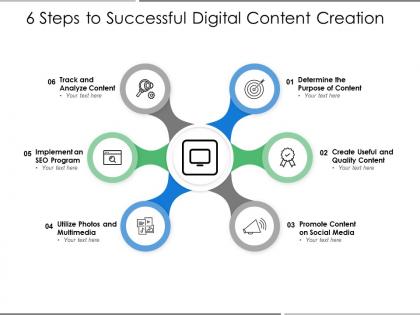
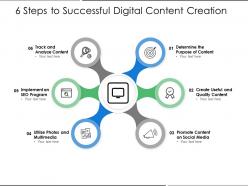
6 steps to successful digital content creation




Try Before you Buy Download Free Sample Product
 Impress Your
 Audience
 100%
100% Editable
 Save Hours
 of Time


Drive attempts to improve in every field with our 6 Steps To Successful Digital Content Creation. Be the cause of inspiration.
People who downloaded this PowerPoint presentation also viewed the following :
6 steps to successful digital content creation with all 5 slides:
Inspire improvement with our 6 Steps To Successful Digital Content Creation. Be the cause of developments in your field.
FAQs for 6 steps to successful
Know your audience really well first - that's huge. Then focus on solving their actual problems with your content. Consistency matters too, but honestly? Good visuals can save even boring posts. Instagram needs different stuff than LinkedIn, so don't just copy-paste everywhere. Your brand voice should feel like... well, you. Not some corporate robot. Oh, and always tell people what to do next - clear calls-to-action work. Maybe start by looking at what you're already doing right? Some of this stuff you're probably nailing already.
Templates are lifesavers because they keep your audience focused on what you're actually saying instead of getting distracted by wonky design choices. Think of them like a good editor for your visuals - they create flow between sections. Honestly, they'll save you hours of messing around with fonts and colors (trust me on this one). The really smart templates have built-in story structures like problem-solution layouts that actually push you toward better storytelling. Pick something that matches your story's vibe, then tweak it just enough so it doesn't look generic.
Okay so audience analysis is like your cheat sheet for making content people actually care about. You gotta figure out who you're talking to - what bugs them, what they love, where they scroll all day. I learned this the hard way after posting stuff nobody engaged with lol. Once you know your audience, picking the right tone and topics becomes way easier. Short videos? Long posts? Twitter or Instagram? It all depends on them. Just dig into your current analytics to see what's hitting, then build from there. Way better than randomly posting and hoping for the best.
Honestly, just start with whatever's free and see what sticks. Canva's great for graphics, Google Docs for writing (though Grammarly will catch your typos). Video stuff? DaVinci Resolve is free and pretty solid - way better than I expected when I first tried it. Adobe's expensive but worth it if you're serious. The thing is, I've seen people create killer content with the most basic tools while others waste money on fancy software they barely touch. Don't overthink it. Pick something simple, use it consistently, then upgrade when you actually know what you need.
Honestly, SEO can make a huge difference for getting your presentations found. Start by researching what keywords your audience actually types into Google - that's your goldmine right there. Then work those terms naturally into your titles and descriptions. File names matter way more than people think too - "Q3-Sales-Strategy-2024.pdf" is so much better than some generic name. I'd also throw your presentations on SlideShare or embed them in blog posts with good content around them. The metadata and tags help search engines understand what you've got. It's not rocket science, but most people skip these basics and wonder why nobody finds their stuff.
Dude, first thing - don't cram everything onto one slide. I learned this the hard way lol. One main point per slide, lots of white space, and make your font at least 24pt so people can actually read it from the back. High contrast colors are your friend too. Honestly? The worst presentations I've sat through had slides packed with text that I just ended up reading instead of listening. Stick to bullet points or visuals that back up what you're saying, not repeat it. Oh, and definitely test your slides on a different screen first - formatting gets weird sometimes and you'll want to catch that beforehand.
Honestly, multimedia stuff is a game-changer for presentations. Nobody wants to stare at endless bullet points - that's just torture. Mix in some visuals, maybe a quick video clip, and people actually pay attention. Different folks learn different ways too. Some need to see it, others have to hear it. I learned this the hard way after watching people zone out during my first work presentation lol. Don't go crazy though - you're not making a movie. Just swap out one boring text slide with an image or chart and you'll notice the difference immediately.
Ugh, the worst thing you can do is post randomly whenever you remember to. Pick one or two platforms max - spreading yourself thin is exhausting and honestly pointless. Don't obsess over analytics every day but also don't ignore them completely, you know? Batch your content when inspiration strikes instead of scrambling daily. Quality beats quantity always. Oh, and actually know who you're talking to before creating stuff - sounds obvious but people skip this all the time. Set a posting schedule that's realistic, not ambitious. Start by fixing one thing this week instead of overhauling everything.
Okay so getting feedback is seriously a must for digital content. Other people spot stuff you totally miss - like when something sounds clear to you but makes zero sense to anyone else. I'm awful at cutting unnecessary words on my first try, so revision saves me there. The whole process shows you what actually connects with people vs what you assumed would work. Oh and sometimes the feedback that annoys you most is the most helpful (learned that the hard way). Just grab 2-3 people you trust for a quick review cycle. Don't ignore what they tell you.
Honestly, color psychology is huge for getting people to actually stop scrolling. Red and orange? They scream urgency and get people hyped. Blue builds trust - like, have you noticed literally every bank uses it? It's wild. Cool greens feel calming but also suggest growth. The thing is, you've got to match your colors to what you're trying to say AND what your audience expects. Banks can't use hot pink, you know? Test different combos and see what actually works for your people.
Make a brand voice guide first - write down your tone, what words you use (and avoid), how casual you are, all that stuff. Honestly, most brands just wing it and wonder why they sound scattered. Share it with anyone making content for you. Short sentences work. Longer ones should flow naturally when you read them out loud. Pick someone to check everything before it goes live. Your Instagram captions shouldn't sound totally different from your emails, you know? People should recognize your voice whether they're reading a tweet or your newsletter. Oh, and actually USE the guide - don't just make it and forget about it.
Honestly, just don't be a dick about it lol. Get permission before using people's stuff or putting them in your content. Be upfront about sponsorships - people can smell fake from miles away. Kids might be watching, so maybe don't traumatize them? Also avoid being that creator who pushes harmful stereotypes. Copyright matters too, so give credit. I always do this weird gut check before posting anything - like, would I cringe if this ended up on the news? Sounds dramatic but it works. Your content reflects who you are, so make it something you'd actually watch yourself.
Honestly, it's just tech driving everything. Better phone cameras? Boom - Instagram and TikTok exploded. Now AI lets regular people make stuff that looks super professional without any design background, which is kinda wild. VR and AR are getting interesting for storytelling but still feel pretty experimental to me. The cycle's always the same though. New tech makes creating easier, then people use it in ways nobody expected. I'd watch what platforms your audience is actually using - that's where you'll find your next move. Mobile changed everything once, and something else will too.
Look at your best-performing stuff first. Chop up blog posts into Instagram quotes, infographics, whatever works. Or do the reverse - smash a bunch of related posts together into one big guide. People talk about this constantly but never actually do it (drives me crazy). Your LinkedIn crowd wants totally different angles than TikTok users, right? Same core message, just switch up how you present it. I block out like 30 minutes every week to go through my content and brainstorm 3-4 ways to reuse each piece. Game changer.
Dude, working with others on content is a game changer. You'll catch stuff you'd totally miss on your own, plus everyone brings something different to the table. Like maybe one person's killer at writing hooks while another has an eye for design. Brainstorming sessions are where the magic happens - I swear some of the weirdest ideas turn into gold. Multiple people reviewing from the start makes everything smoother too. Oh and those random hallway conversations? Pure content inspiration sometimes. Set up regular idea sessions where people can just throw stuff out there.
No Reviews