

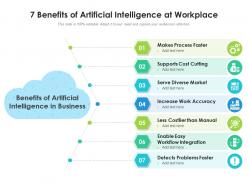
7 benefits of artificial intelligence at workplace





Try Before you Buy Download Free Sample Product
 Impress Your
 Audience
 100%
100% Editable
 Save Hours
 of Time


Our 7 Benefits Of Artificial Intelligence At Workplace are topically designed to provide an attractive backdrop to any subject. Use them to look like a presentation pro.
People who downloaded this PowerPoint presentation also viewed the following :
7 benefits of artificial intelligence at workplace with all 2 slides:
Use our 7 Benefits Of Artificial Intelligence At Workplace to effectively help you save your valuable time. They are readymade to fit into any presentation structure.
FAQs for 7 benefits of artificial
Honestly, AI has been a game-changer for getting stuff done at work. I started by automating the boring stuff - scheduling, data entry, sorting through emails. Saves me like 3-4 hours weekly, no joke. The data analysis part is pretty cool too - it can crunch through spreadsheets and spot patterns way faster than I ever could. Oh, and chatbots handle most of our basic customer questions now, which frees up our team for actual problem-solving. My advice? Don't go crazy trying to AI everything at once. Just pick one annoying task you do all the time and find a tool for that first.
Honestly, you're probably doing so much stuff manually that AI could just knock out for you. Meeting scheduling, data entry, sorting through emails - it adds up fast. I've been using Zapier to connect apps so invoices automatically jump from email into my accounting software (saves me like 20 minutes a week). ChatGPT's actually decent for drafting those boring status emails too. Your HR team can use AI for screening resumes. Customer service bots handle the basic "what are your hours" type questions. Reports get generated from data without you touching them. Just pick one thing that's eating your time and find a tool for it - don't try to automate everything at once.
So AI basically figures out how each person learns and tracks their progress automatically. Pretty neat stuff. You can set up interactive simulations, automate assessments, and build custom learning paths for different roles. The coolest part? It spots knowledge gaps without you having to dig through reports. Honestly, I'd start with just one department - see how it goes before rolling it out everywhere. Oh, and AI chatbots answer questions 24/7, which is a lifesaver when people need help outside office hours. Saves everyone time.
So companies are using AI for hiring now and it's actually pretty crazy how far it's come. They're having bots screen resumes, schedule interviews, even analyze video responses. The speed is insane - AI can churn through thousands of applications while we're still on coffee number two. Plus it picks up on hiring patterns humans might miss. But here's where it gets tricky: you can't just let AI make the final call. These systems can be biased as hell, honestly. If your company's thinking about trying this stuff, definitely dig into how the algorithms work first and test for bias issues.
Honestly, AI is pretty amazing at catching patterns we'd never see - stuff like weird customer behaviors or where your operations are getting stuck. It'll churn through huge amounts of data super fast and give you solid predictions for planning ahead. The best part? It does all the grunt work so you can actually think about the big picture stuff. Just make sure your data isn't a mess first - messy data gives you messy results, obviously. I'd check out Tableau since it has built-in AI features, or maybe start with some basic automated dashboards. Pick one specific thing to test it on first, then expand from there once you see how it works.
Honestly, start with bias - your AI will pick up whatever wonky patterns were in the training data. Audit that stuff regularly or you'll have problems later. Be transparent about what the AI actually does because people hate mystery algorithms making decisions about their jobs (learned this the hard way). Job displacement is tricky too - figure out if you're eliminating roles or just shifting them around. Privacy matters since you're handling employee info. Oh, and definitely get an ethics committee together with different viewpoints before rolling anything out. Trust me, it's way easier than dealing with the mess afterward.
Honestly, it's all about how your company rolls it out. Good implementation means AI handles the boring stuff while you get to do more interesting work - which is pretty sweet. But if they just throw new tools at you without training or being upfront about job security? Yeah, that's gonna stress people out. My advice is to get involved early if you can. Ask questions about how it'll actually affect your day-to-day. Push for proper training so you're working *with* the tech instead of worrying it's gonna replace you. Communication from leadership makes or breaks this whole thing.
Honestly, the main thing I'd worry about is bias creeping into the algorithms - like you could accidentally discriminate in hiring without even realizing it. AI also totally misses workplace dynamics and all that interpersonal stuff that actually matters. Performance reviews are tricky too since the software won't catch those subtle things about how your team really operates. Oh, and there's this tendency to just trust whatever patterns the data shows, even when the situation is way more complicated than that. My take? Use it for insights but don't let it make the final calls on important decisions.
Honestly? Just pick one thing that's annoying you right now and find a cheap tool for it. ChatGPT's great for writing stuff, Grammarly catches typos I always miss. Zapier can connect your apps so they actually talk to each other - game changer. Don't go crazy trying to automate everything at once though, that's how you end up overwhelmed and broke lol. Maybe start with a chatbot for customer questions or auto-posting to social media. Test it out for a few weeks, see if it actually helps. Then you can add more tools once you know what works.
Okay so first thing - get super diverse training data and check regularly for bias across different groups. We learned this the hard way when our old system kept rejecting resumes with "foreign" names, which was mortifying. Make sure you can actually explain how decisions get made because black box stuff is awful for hiring. Get HR and legal involved early for testing, and honestly? Be upfront with candidates that you're using AI. Oh and this should go without saying but always have humans review before final decisions. Document everything you find during testing - you'll thank me later.
So basically AI handles all the boring repetitive stuff - chatbots answer common questions 24/7, smart routing gets tickets to the right people, some systems even predict what customers want. Your support team gets to actually solve real problems instead of copy-pasting the same answers all day. Honestly the speed of this change has been crazy. I'd start with just a simple chatbot for your most frequent questions and see how much time it frees up. Your agents become more like consultants than ticket-closers, which is way more interesting work anyway.
Look, some jobs will definitely get automated - the boring, repetitive stuff especially. But new roles are popping up too, just different ones that need creativity and problem-solving skills. Most workplaces will probably end up being human-AI teams rather than robots taking over completely. It's like when Excel came out and everyone freaked that accountants would disappear, but they just... do different things now? Stay flexible and figure out what parts of your job only humans can handle. Then lean into those skills hard.
Track the obvious stuff first - time saved, fewer errors, cost cuts, productivity bumps. Those numbers actually matter to bosses. But honestly? The survey feedback is where you'll spot problems before they blow up. Ask your team if they're even using the tools and if workflows feel smoother. I'd set up monthly check-ins to compare before/after performance. Oh, and focus on metrics tied to real business goals, not just flashy numbers that look good in presentations. The qualitative feedback often tells you more than spreadsheets do anyway.
Netflix bumped viewer engagement 80% with AI recommendations. JP Morgan's tool shrunk 360,000 hours of lawyer work down to seconds - wild, right? John Deere's got AI tractors doing precision farming now. IBM Watson helps doctors with cancer treatment plans too. Amazon's probably the most obvious example with their warehouse robots and inventory predictions. Healthcare and retail seem to be crushing it with this stuff. My advice? Don't try to overhaul everything at once. Pick one repetitive task your team already nails and start there. Way less overwhelming.
Be straight with your team about what AI actually does vs doesn't do - nobody wants corporate BS. Let them help pick the tools and mess around with them first. Honestly, once people see it crushing their most tedious work, they get it. Set up training where they can actually experiment without feeling judged. Oh, and make a big deal when someone nails it with AI - other people notice that stuff. Give them space to figure it out at their own pace. You'll be surprised how quickly they come around when there's no pressure.
-
Wonderful templates design to use in business meetings.
-
Perfect template with attractive color combination.
-
Easily Understandable slides.
-
Great quality slides in rapid time.
-
Editable templates with innovative design and color combination.
-
Unique research projects to present in meeting.
-
Visually stunning presentation, love the content.
-
Good research work and creative work done on every template.
-
Content of slide is easy to understand and edit.