

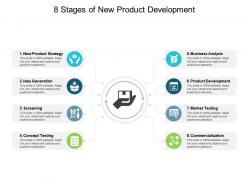
8 stages of new product development





Try Before you Buy Download Free Sample Product
 Impress Your
 Audience
 100%
100% Editable
 Save Hours
 of Time


Enhance audience belief in your ability. Our 8 Stages Of New Product Development will help generate confidence.
People who downloaded this PowerPoint presentation also viewed the following :
8 stages of new product development with all 5 slides:
Our 8 Stages Of New Product Development enhance entertainment. They generate a lot of applause.
FAQs for 8 stages of
Okay so you basically start with brainstorming ideas, then pick the best ones and turn them into actual concepts. Next comes the reality check - figuring out if it's doable technically and won't bankrupt you. Build prototypes after that, then test with real people. Honestly, the testing part will blow your mind because users do the weirdest things you'd never expect. Don't rush from testing to launch though - you'll need time to fix stuff based on feedback. Oh and seriously, budget extra time for all the back-and-forth tweaking.
Honestly, market research is like having a cheat sheet before you build anything. Skip it and you'll probably end up with something nobody actually wants - I've watched that happen way too many times. Talk to 10-15 people in your target market first. You'll figure out their real problems, not what you think they need. Also helps you see where competitors are failing (or crushing it) so you can price things right and build features people actually care about. Way better than sitting around guessing what might work. Even just some quick surveys or phone calls beat brainstorming sessions every time.
Honestly, customer feedback is like having a cheat sheet for your product roadmap. It shows you what to build next and what's actually broken. Get it however you can - surveys, quick calls, beta tests, even casual chats work. Here's the thing though: what people say they want isn't always what they actually need. I learned that the hard way with my last project. Use their input to test your ideas and spot problems before you ship. Short surveys work better than long ones, by the way. Just start collecting something now if you're not already.
Honestly, mind mapping around customer pain points is where I'd start - that stuff is pure gold. The "worst possible idea" thing sounds dumb but actually works because it kills the pressure to be perfect. Customer interviews are solid too, plus looking at what competitors aren't doing. Oh, and try flipping industry assumptions upside down - sometimes the "rules" everyone follows are total BS. Mix a few methods together and grab people with different backgrounds. Timer for each round helps, and don't shoot down ideas while you're brainstorming. Just capture everything first, then filter later.
So first thing - map your features against what users actually need and what'll move the business forward. I do this impact vs effort matrix thing that's super simple but honestly works every time. Tackle the must-haves that fix people's biggest headaches first. After that, nice-to-haves can fill in based on what your dev team can handle. Oh, and don't ignore technical stuff - sometimes you need boring foundation work before the cool features. Here's what I'd really do though: lock everyone in a room to rank things together. Those email threads back and forth are brutal.
Dude, cross-functional teams are honestly a lifesaver for product development. Instead of playing telephone between departments, you get everyone's input right from the start. Marketing spots what customers actually want, engineering tells you if it's even possible, and finance... well, they're the ones who crush your dreams with reality checks lol. But seriously, catching those issues early saves you from expensive disasters later. Decision-making gets way faster since nobody has to schedule a million meetings just to get approval. The products end up better too because each team brings their expertise throughout the whole process instead of just at the end. Get your key people involved from day one, not as an afterthought.
Honestly, most people mess up by not talking to actual customers first - they just assume their idea is brilliant. Feature creep is deadly too. You know how it goes, "oh let's just add this one tiny thing" and suddenly your app does everything but badly. Bad timelines wreck everything. I've seen so many projects die because someone promised the impossible. What works? Stay obsessed with user feedback, even when it hurts. Start ridiculously small and test constantly. And yeah, sometimes you gotta completely change direction when the data smacks you in the face. Shipping something decent beats perfecting something nobody wants.
Dude, seriously don't skip prototyping and testing - I've watched so many teams try this and it always blows up in their faces. You'll catch design problems early instead of discovering them when it's expensive to fix. Testing with real users is huge because they'll use your product in ways you never imagined (and probably break it too lol). Even rough prototypes work great for getting feedback. Manufacturing mistakes are brutal if you don't test first. Honestly, the stuff users tell you will completely change how you think about your design. Get their input ASAP.
Start with the basic stuff - age, income, where they live. But psychographics are honestly way more important these days. What problems are they trying to solve? How do they actually behave? Figure out where they spend time online and IRL, plus how they make buying decisions. I always think it's crazy how many people skip the research part and just guess. Create like 2-3 detailed buyer personas first. Then actually test your assumptions with surveys or interviews before you sink money into development. Trust me on this one.
Okay so definitely track your sales numbers and revenue - that's obvious stuff. But also look at customer satisfaction and how many people actually stick around after buying. Support tickets are huge too, honestly they'll show you problems before anyone else notices. Social media mentions give you the real unfiltered truth about what people think. I'd probably set up maybe 4-5 key things to watch and check them monthly. Oh and retention rates! Super important because one-time buyers don't really mean much if they never come back. That way you can change direction fast if something's clearly not working.
Dude, tech has seriously changed the game for product development. Everything's faster now - you can prototype digitally, let AI handle market research, test stuff virtually before building anything real. Teams iterate crazy fast compared to like 5 years ago. But here's the thing - customers expect that same speed from you now, so you're always chasing the next thing. Honestly feels exhausting sometimes. My take? Use automation for the boring stuff and put your brain power into features people actually want. Don't get caught up trying to automate everything though.
Okay so first thing - actually figure out what your business is trying to do. Sounds basic but seriously, so many teams just skip this part entirely. Then map your roadmap to those goals, like revenue or whatever they're focused on. I make this simple chart showing how each feature connects to business stuff. Check in with leadership regularly too because their priorities change constantly - last thing you want is building something cool that nobody ends up caring about. Oh and track metrics that actually matter to the business, not just how many people clicked your button.
Dude, seriously - do your homework first. Research the hell out of your market and run some pilot tests before you go big. I can't tell you how many people I know who skipped this step and got burned later. Get feedback from actual customers throughout the whole process, not just when you're done. Oh and bring in your sales and marketing teams early so everyone's on the same page about messaging. You'll want a good risk plan too - like what happens if things go sideways? Start with a small launch first. Test it out, see how it performs, then scale up based on real data.
Look, just bake sustainability into your design process right from the start - don't tack it on later. Pick recycled or biodegradable materials when you can. Build stuff that actually lasts and can be fixed instead of tossed. Customers genuinely give a shit about this now, way more than even two years ago. Think through the whole lifecycle too - manufacturing, packaging, shipping, disposal. My advice? Run those sustainability checks alongside your normal feasibility studies. It's honestly so much easier than trying to go back and make everything green afterward. Trust me on this one.
AI's everywhere now - companies are using it for everything from brainstorming to product testing. Customers want stuff that's actually sustainable AND personalized just for them, which honestly makes sense. Everyone's doing agile development these days too. The old waterfall method? Pretty much dead. Remote tools have totally changed how teams collaborate - my friend's team is spread across three time zones and they make it work somehow. I'd pick one area to focus on first though. Don't try to do it all at once or you'll burn out.
No Reviews