


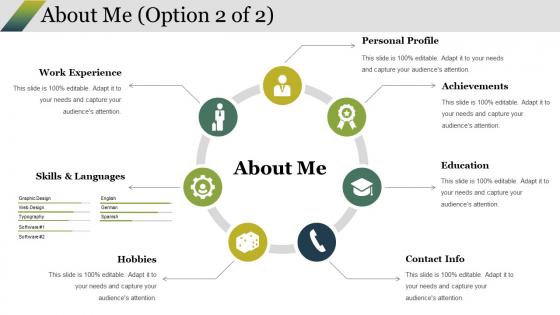
About me ppt styles example introduction




Try Before you Buy Download Free Sample Product
 Impress Your
 Audience
 100%
100% Editable
 Save Hours
 of Time


Identify fixed impressions with our About Me Ppt Styles Example Introduction. Encourage folks to be amenable to change.
People who downloaded this PowerPoint presentation also viewed the following :
About me ppt styles example introduction with all 5 slides:
Our About Me Ppt Styles Example Introduction avoid all gibberish. They contain essential aspects.
FAQs for About me ppt
Okay so you need four main things: a hook, your background, what you offer them, and a strong finish. Open with something that grabs attention - maybe a quick story or just genuine enthusiasm (honestly that matters more than people think). Then talk through your relevant experience, but don't just recite your resume. Explain how what you've done actually helps *them*. I'd practice the timing too because everyone rushes through these. End with what excites you about the role or what you want to contribute. Keep it conversational and you'll be fine.
Dude, trust me on this - people remember stories way better than random facts about you. Like when you share how some random childhood thing led to your whole career path? That hits different than just saying your job title. Everyone's brain switches off during those boring "Hi I'm Sarah from accounting" intros anyway. Stories give people something to actually grab onto emotionally. Here's what works: start with some problem or moment you faced, then what you figured out from it, and boom - connect it to what you're doing now. Way more interesting than listing your credentials, you know?
Dude, body language is SO much more important than people think! Like, you could have the perfect intro written out, but if you're slouching and staring at your shoes, nobody's gonna care. Make eye contact with different people - not just one spot on the wall (I used to do that and it's weird). Stand up straight, use your hands naturally when you talk. Smile when it makes sense, not like a creepy robot. Honestly, practice in front of a mirror first because you'll catch stuff you didn't realize you were doing. I've watched people totally bomb great content just because their body language was off.
Honestly, your visuals can totally make or break the whole thing. Clean templates show you've got your act together and help people actually follow what you're saying. I'd go with some photos or simple graphics - makes you way more memorable. Just don't be that person with the crazy distracting background! Keep it simple so they're focused on you, not whatever's happening behind you. Find something that fits your vibe but isn't too much. Oh, and definitely test it out first - you don't want any surprises when you're up there.
Ugh, don't info-dump your whole life story - seriously, people's eyes glaze over. Focus on maybe 2-3 things that actually matter to whoever you're talking to. I've watched people bomb by being either super robotic OR way too casual for the room. Practice saying it out loud first (trust me on this one). Skip the random personal stuff nobody cares about. Don't just wing it and ramble through every job you've had. Make it about them, not you. Oh and honestly? Most people decide if they like you in the first 30 seconds anyway.
Oh man, this is so important! Asian cultures usually want you to be way more modest - talk about your team instead of bragging about yourself. But Western places? They expect you to sell yourself hard. Japan and Germany are super formal with titles and stuff, while other places are totally chill with first names. Even handshakes and eye contact rules change everywhere. I totally bombed a Tokyo presentation once because I didn't get this. Honestly, just research their culture first and adjust your whole approach. Trust me on this one!
Honestly, you've gotta read the room first. Executives? Hit them with results right away - they don't have time for fluff. Academic types want to hear about your credentials and how you did things. But at casual networking stuff, I go way more personal. Maybe mention a weird hobby or something that makes me memorable. I've seen people give the exact same pitch to everyone and it's so awkward. Do a little homework on who's gonna be there. What problems are they dealing with? Then just talk like you actually understand their world and might be able to help. Way better than sounding like a robot.
Honestly, lean into being an introvert instead of fighting it. Write out your main points beforehand and practice the transitions between sections. Having a clear structure helps tons - like a roadmap you can follow when your mind goes blank. Ask the audience questions too, gives you little breaks from talking constantly. Oh and prepare specific examples ahead of time, way better than trying to think of stuff on the spot. People actually prefer genuine over super energetic anyway - that fake bubbly thing is exhausting to watch. Start by practicing with just one friend first. You've got this!
Honestly, stick to like 2-3 minutes max. Maybe 4 if it's some fancy work thing, but that's pushing it. People zone out so fast these days - I swear everyone has the attention span of a goldfish now. Hit the basics: who you are, what you do, throw in something interesting so they actually remember you later. Oh and definitely practice timing yourself beforehand! Nothing worse than realizing you've been talking for 10 minutes while everyone's eyes glaze over. Also keep a super short version ready just in case.
Honestly? Humor's risky but totally worth it when it works. People remember you more and think you're actually fun to be around. Just gotta read the room first - what kills at a tech company might crash and burn at some stuffy corporate place. I always go with self-deprecating stuff rather than roasting others. Oh, and definitely run it by someone you trust first! If you're naturally serious though, don't force it. That's way worse than just being yourself. Have a backup ready in case it bombs.
Honestly, ditch the small talk for remote intros - it's super awkward on video. Structure works way better. Do the whole "where I started, big moment that changed things, where I'm at now" thing. People's attention is basically nonexistent on Zoom calls, so get visual with it. Maybe show something from your desk or do a quick screen share. I always feel weird staring at everyone's faces in those little boxes! The structure keeps you from rambling though. Oh, and end with something specific they can actually ask you about later - makes it easier for people to start conversations in breakouts.
Okay so basically you want to weave in what makes YOU different - like your specific skills or weird experiences that actually matter. Tell a quick story that shows your strengths instead of just listing them (nobody cares about generic bullet points anyway). Keep your language consistent with who you are - analytical, creative, whatever. But here's the thing - don't just ramble about yourself. Connect it back to how you'll help them or why it matters for that specific situation. Oh and skip the boring accomplishment parade. People remember stories way better than résumé speak.
Here's what I'd do - the "failure resume" thing is solid, where you talk about a real mistake and what it taught you. Or maybe that "three objects" approach? Bring stuff that shows different sides of yourself and explain why they matter. I've actually seen people crush this by getting weirdly personal with their picks. The "day in the life" snapshot works too if you want something simpler. Shows your actual routine. "Before and after" is another angle - pick an experience that shifted how you see things. Honestly though, whatever you choose has to feel like YOU. Forced creativity just comes off awkward and fake.
Go chronological - background first, then where you are now, wrap up with future goals or what makes you valuable. Creates a story people can actually follow. I've watched way too many people bounce around randomly and completely lose everyone. Connect each part smoothly with phrases like "This experience led me to..." or "Building on that..." Practice those transitions beforehand because honestly? They make or break the whole thing. End with something memorable about what excites you most or your unique angle. Makes you stick in their mind after.
Okay so first thing - lead with something that'll make them actually listen. A weird fact about yourself, a quick story, whatever hooks them right away. Then just go past/present/future to keep it organized. Here's the thing though - don't just rattle off your resume. Tell them about one specific moment or challenge that actually changed you somehow. Stories stick way better than boring qualifications, trust me. Keep it conversational and throw in something quirky that's just... you. Practice the timing so you don't ramble forever. Oh and end with something that basically begs for a follow-up question.
-
Out of the box and creative design.
-
Unique research projects to present in meeting.