


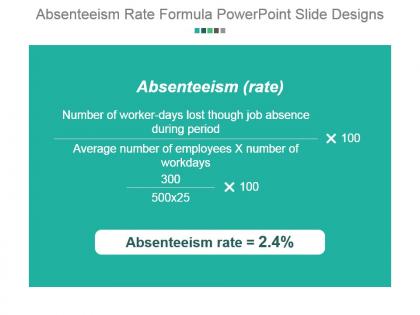
Absenteeism rate formula powerpoint slide designs




Try Before you Buy Download Free Sample Product
 Impress Your
 Audience
 100%
100% Editable
 Save Hours
 of Time


Always follow the correct course with our Absenteeism Rate Formula Powerpoint Slide Designs. They help you handle the helm.
People who downloaded this PowerPoint presentation also viewed the following :
Absenteeism rate formula powerpoint slide designs with all 5 slides:
Get them clear about what to do with our Absenteeism Rate Formula Powerpoint Slide Designs. Delegate duties effectively.



FAQs for Absenteeism rate formula
So the formula's pretty simple: (Total absent days ÷ Total scheduled work days) × 100. Like if your team missed 50 days out of 1,000 scheduled, you've got a 5% rate. Just add up all the sick days and unplanned absences - but don't count vacation or holidays since those are approved time off. Divide that by how many days everyone should've worked. Basic math really. I'd check it monthly so you catch problems early. Once it hits 3-4%, something's probably going on that needs attention. Could be anything from burnout to management issues, honestly.
So tracking absenteeism is actually pretty smart - you'll catch patterns before they spiral out of control. Maybe people are burning out, or your managers suck, or honestly it could be something random like everyone getting the flu. High rates usually mean deeper problems with how happy people are at work. You can also use the numbers to figure out staffing and budget for when you need extra coverage. I'd calculate it monthly so you're not scrambling to fix issues that have been brewing for months. It's one of those metrics that reveals way more about your workplace than you'd think.
Ugh, absenteeism is the worst - it just snowballs out of control. Your remaining staff ends up covering for everyone who's out, which burns them out fast. Nobody wants to constantly do two jobs for one paycheck, you know? Productivity drops because you're either short-staffed or training temps who don't know your systems. Morale goes down the drain when people feel overworked. Then stressed employees start calling out more, making everything worse. I'd track it monthly so you can catch patterns early. Way easier to fix root causes before they spiral into a bigger mess.
Honestly, it's usually the obvious stuff - people get sick, burn out, or just hate coming to work. Transportation problems happen too, though that's tougher to fix. I'd start by looking at your absence patterns first. See what's actually happening before you throw solutions at everything. Flexible schedules help a ton. So does not having a toxic workplace culture (shocking, I know). Check in with people regularly instead of waiting for their annual review. Good sick leave policies and mental health support make a real difference too. Fix the biggest problems first - don't try tackling everything at once or you'll just overwhelm yourself.
Yeah, so healthcare workers call out way more - like 4-6% compared to retail's 2-4%. Makes total sense though, they're dealing with sick people all day, crazy shifts, and honestly the job just burns you out faster. Retail has its own mess with seasonal hiring and part-time people not showing up, but the rates stay lower overall. Oh, and when you're looking at your numbers, make sure you're not comparing your office job to like, an ER or something - different industries have totally different reasons for people calling out sick.
Dude, there's actually solid data on this - engaged employees call out sick 41% less than disengaged ones. Makes total sense when you think about it. People who feel valued and connected to their work just want to be there more. Better mental health, higher job satisfaction, all that good stuff translates directly to better attendance. Oh, and if you're dealing with high absenteeism right now? Start with an engagement survey. That's usually where you'll find what's really going wrong. Sometimes it's not about the work itself but how people feel about management or company culture.
Look at your absenteeism data over 6-12 months - way better than just checking month-to-month. Spikes in certain departments or times? That's where your policies are probably falling short. High absence rates usually mean your sick leave is too strict (people drag themselves in sick, ugh) or flexible work options suck. I'd start with your worst areas first and test new policies there. Makes it easier to sell changes to leadership when you've got solid data backing you up. Monthly snapshots don't tell you much honestly.
So flexible work helps tons - remote days or adjustable hours cut down sick leave like crazy. Recognition programs matter too, plus regular team check-ins. Most people skip work when they're burned out or feel ignored, honestly. I'd track attendance patterns first to spot trends, then have real conversations with whoever's missing a lot. Wellness programs are solid but don't expect miracles right away. Pick one thing and see how it goes - you can't fix everything at once anyway.
Yeah, seasonal stuff totally throws off absenteeism data. Winter's always worse because of flu season and snow days, then summer hits different with vacation time and kids being home. Holiday periods are brutal too. The tricky part? You might freak out looking at monthly numbers thinking your team's falling apart when it's just December being December, you know? Better approach is comparing this January to last January instead of January to February. Rolling averages help smooth out those expected bumps too. Trust me, I learned this the hard way when I thought we had a major attendance crisis last winter.
Yeah, high absenteeism can really mess you up legally. Watch out for discrimination patterns - if you're targeting protected groups, you'll get hit with EEOC complaints or wrongful termination suits. FMLA stuff gets tricky too when people miss work for medical reasons. Each state has different sick leave laws that'll catch you off guard if you're not tracking absences right. Documentation becomes your lifeline in these situations - honestly, it's boring but crucial. I'd audit your absence policies now and make sure managers actually understand the rules. Way better than dealing with a lawsuit later.
Honestly, HR software is a game-changer for this stuff. Set up automatic tracking that flags people when they hit certain absence thresholds - saves you from scrambling later. Most systems calculate absenteeism rates on the spot and send alerts. What's really helpful is spotting weird patterns, like everyone mysteriously getting "sick" on Mondays (we've all seen that one). Apps where employees can easily request time off actually cut down on surprise no-shows too. I'd start with basic tracking software and maybe do weekly check-ins with your team leads to review the data.
Oh yeah, there's totally a connection there. People who call out sick all the time? They're usually already halfway out the door mentally. It's like they're testing the waters before actually quitting - honestly, I've seen this play out so many times at different companies. Departments with absenteeism over 5-6% almost always see way more turnover within the next year or so. Your chronic no-shows are basically waving red flags that they're disengaged or dealing with stuff that makes work feel unbearable. So if you're seeing patterns, don't ignore them. Have those awkward conversations now before they just ghost you entirely.
Check out the Bureau of Labor Statistics first - they break down absence rates by industry pretty well. SHRM also puts out solid benchmarking reports annually. Your industry association might have data too, though sometimes those reports are kinda dry. Mercer and Payscale have comparison tools if you don't mind paying for access. Just make sure you're comparing similar companies - same size, region, that sort of thing. Calculate your current rate first using the standard formula. Then you'll have something to actually compare against when you find the benchmark data.
Look, your management style directly affects who shows up and who doesn't. People actually want to come to work when you're supportive and offer flexible schedules - crazy concept, right? But toxic bosses or micromanagers? That kills attendance fast. Good communication makes employees feel valued, so they're less likely to fake being sick. I've seen it happen too many times. Trust matters huge here. Show your team you care about them as people, not just their output. Recognition for good work goes a long way too. It's really about creating a place people don't dread walking into.
Honestly, just ask them directly through surveys. Anonymous ones work best - people actually tell the truth when they're not worried about getting in trouble. Ask about stress levels, workload, whether they like their manager, that kind of stuff. I've heard of companies finding out their "sick days" were really just burnout days, which is kinda sad but makes total sense. The key is being specific with your questions about job satisfaction and personal stuff affecting work. Then you can match up survey answers with your absence patterns. Makes it way easier to figure out what's actually going on and fix the real problems instead of just guessing.
-
Excellent Designs.
-
Visually stunning presentation, love the content.