5 year financial plan cumulative inflation ppt powerpoint presentation templates
Try Before you Buy Download Free Sample Product
Audience
Editable
of Time
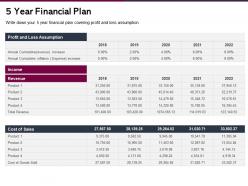
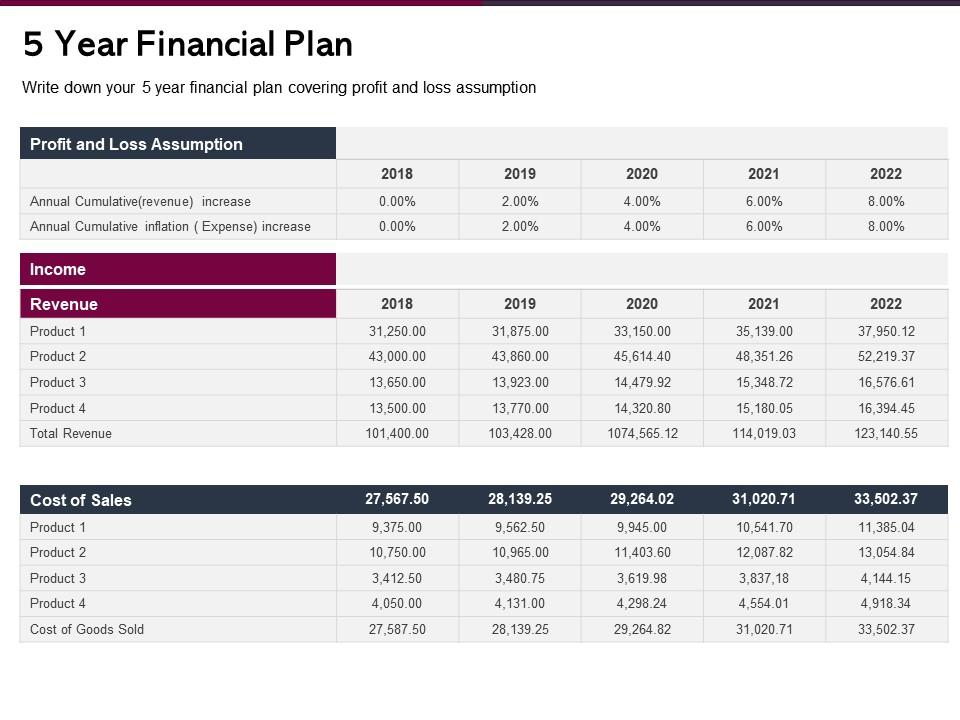
Write down your 5 year financial plan covering profit and loss assumption.
People who downloaded this PowerPoint presentation also viewed the following :
5 year financial plan cumulative inflation ppt powerpoint presentation templates with all 2 slides:
Use our 5 Year Financial Plan Cumulative Inflation Ppt Powerpoint Presentation Templates to effectively help you save your valuable time. They are readymade to fit into any presentation structure.
FAQs for 5 year financial plan cumulative inflation ppt
So you need six main things for a solid financial plan. Budget and cash flow first - that's your foundation. Then build up 3-6 months of expenses as an emergency fund. After that, tackle debt payoff, investment planning, insurance, and basic estate stuff (which honestly just means getting a will and naming beneficiaries). I'd also throw in specific goals with deadlines - like when you want to buy a house or whatever. The trick is making everything work together instead of doing random financial stuff. Start with budgeting and that emergency fund though. Once those are locked down, the rest gets way easier to figure out.
Honestly, budgeting apps are game-changers because they show you exactly where your money's going instead of just guessing. They'll categorize everything automatically and ping you when you're about to blow your grocery budget on takeout again. The gamification thing is kinda silly but I'm not gonna lie - those little progress bars actually motivate me. What really helps though is seeing your spending patterns over time. Like, you'll suddenly realize you're dropping $200/month on random subscriptions you forgot about. Try Mint or YNAB first since they're free and connect to your bank accounts. Makes the whole thing way less painful than tracking everything manually.
Think of risk management as your backup plan when everything goes sideways. Job loss, surprise medical bills, market tanking - you've gotta prepare for the stuff that could totally wreck your finances. Emergency fund is crucial, obviously insurance too. Diversify your investments so you're not putting all your eggs in one basket (my dad always said that, kinda cheesy but true). Look, nobody wants to dwell on disasters but honestly? One big hit without protection can undo years of saving. Just write down what scares you most financially and start there.
Honestly, you gotta be way more specific than just "save more money" - that's setting yourself up to fail. Try something like "save $5,000 for emergencies in 12 months." First thing though? Actually look at what you're making and spending (yeah, it's tedious but whatever). Work backwards from your big goal and start small. Like, nail that first $500 before you stress about hitting 10K. Your timeline needs to match reality too - can't save $1000/month if you only make $3000. Write it down somewhere you'll actually see it, then check in every few months.
Okay so basically don't put everything in one place - mix up stocks, bonds, real estate, maybe some commodities. With stocks, grab different sizes (big companies, small ones) and sectors like tech or healthcare. International stuff too, not just US. Dollar-cost averaging is clutch for smoothing out the crazy market swings. Here's the thing though - if everything you own moves the same direction, you're screwed anyway. I'd honestly just start with some broad index funds since they're dead simple. You can get fancy later once you figure out what you're doing.
Dude, inflation is such a silent killer for your money. That $100k you're saving for retirement? It'll buy way less stuff in 30 years - maybe like $50k worth of today's groceries and bills. I learned this the hard way watching my parents' savings get eaten alive. You gotta assume at least 2-3% inflation per year when you're planning ahead. Cash sitting in savings accounts is basically losing value every day. Focus on investments that beat inflation - stocks, real estate, those I-bonds are decent too. Your money needs to grow faster than prices rise or you're screwed.
Taxes are gonna hit you differently depending on your life stage, so you gotta plan ahead. Max out those 401(k)s and IRAs - seriously, the tax breaks are huge and they help you build wealth faster. Capital gains taxes on your investments matter too, plus your tax bracket will probably change once you retire. Different investments get taxed in weird ways, so where you put your money actually matters. My uncle learned this the hard way when he got slammed with taxes all at once. Build some tax diversification so you're not stuck with one massive bill later. Definitely talk to a tax pro though.
Honestly, your retirement game plan needs to totally change as you age. When you're young - like 20s, 30s - go crazy aggressive with stocks since you've got forever to bounce back from crashes. Hit your 40s and suddenly it's crunch time. You need to pump up those contributions because time matters way more than being risky now. I learned this the hard way lol. Then 50s roll around and you'll want to slowly move toward safer stuff to protect what you've already saved up. The real trick? Start early and dial back the risk as you get closer to needing the cash.
Honestly, once you start using financial apps, you'll wonder how you managed before. Budgeting apps automatically track your spending - no more spreadsheet hell. Investment platforms can rebalance your portfolio, and some AI tools help you run different scenarios. Tax software is pretty solid too, catches deductions I always miss. The cool thing is when everything syncs up, you get this real-time view of your finances. Oh, and robo-advisors handle the boring investment stuff based on your risk level. I'd pick whatever's currently driving you crazy and start there.
Honestly, most people mess up by setting super vague goals and having zero clue what they actually spend money on. Track your spending for a month - you'll be shocked where it goes. Emergency funds are boring but crucial (learned this the hard way when my car died). Don't be overly optimistic about raises or forget about random stuff like medical bills and house repairs. Oh, and paying off credit card debt before investing is way smarter than it sounds. Write down specific goals first though - "save money" doesn't count.
Okay so first things first - you need an emergency fund with like 3-6 months of expenses saved up. I know it sounds like a lot but trust me on this. Get some insurance too for the big stuff - health, disability, whatever. Check your plan every few months because life loves to mess with you when you least expect it. Oh and if you can swing it, try having multiple income sources so you're not screwed if one dries up. Don't make your budget so tight that buying new tires ruins everything. Build in some wiggle room everywhere.
Look, most of us don't know jack about tax optimization or retirement planning intricacies. A good advisor catches mistakes you'd totally miss and keeps you from making dumb moves when markets get crazy. They'll set up realistic goals instead of pie-in-the-sky nonsense. Honestly? The accountability factor is huge - I'd probably abandon half my financial plans without someone checking in. Plus they actually stay on top of law changes and market shifts that could screw up your strategy. Just make sure you find one who's upfront about fees (some are sketchy about that) and definitely interview multiple people first.
Okay so first thing - write down ALL your debts with interest rates and minimum payments. Attack the highest interest stuff first while paying minimums on everything else. Trust me, I wish I'd done this sooner with my credit cards instead of just throwing random amounts at them. If you need more motivation though, pay off the smallest balances first - seeing stuff disappear feels good. Also build up like a tiny emergency fund at the same time, even $500 helps. Otherwise you'll just rack up more debt when your car breaks down or whatever. The biggest thing is making debt payments automatic in your budget, not just using leftover money.
Dude, you've gotta check your financial plan regularly or it becomes totally useless. Life keeps changing - your salary goes up, rent increases, maybe you decide you don't actually want that expensive vacation anymore. I made this mistake where I kept saving for something I'd completely lost interest in, felt so dumb. Without updates, you'll either miss good opportunities or keep throwing money at stuff that doesn't matter to you anymore. Check it every few months for small stuff, once a year for big changes. Honestly, just put a reminder in your phone right now or you'll forget.
Honestly, just figure out your big goals first - like how much revenue you want or if you're hiring anyone. Cash flow is where everyone screws up though, because stuff always takes way longer than expected (learned that the hard way). Work backwards from your goals to see what money you'll actually need. I'd break everything into quarters so you can track if you're on target. Oh, and actually update the thing regularly - I've seen too many people create these elaborate plans then never look at them again. Pretty pointless if it's just collecting dust somewhere.
-
Enough space for editing and adding your own content.
-
Very well designed and informative templates.