


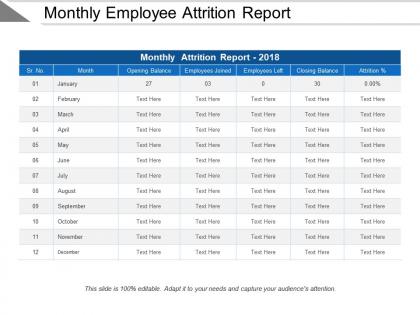
Monthly employee attrition report




Try Before you Buy Download Free Sample Product
 Impress Your
 Audience
 100%
100% Editable
 Save Hours
 of Time


Our Monthly Employee Attrition Report ensure good cheer is forthcoming. They are great for beginning festivities.
People who downloaded this PowerPoint presentation also viewed the following :
Monthly employee attrition report with all 5 slides:
Handle inflated egos with our Monthly Employee Attrition Report. Furnish the data for a factual assessment.



FAQs for Monthly
Honestly, it's usually the same stuff - people feel stuck with no promotion path, their boss sucks, or they're underpaid compared to what's out there. Remote work flexibility is massive now too. Work-life balance gets out of whack and suddenly they're browsing LinkedIn at lunch. But toxic culture? That's the real killer - I've seen people quit good-paying jobs just to escape nightmare coworkers. My advice would be to actually talk to your team members one-on-one about what's bugging them. Half the time it's something totally fixable that management just didn't notice.
Yeah, there's definitely a connection there. When engagement tanks, people start jumping ship way more - like 2-3x higher turnover rates. Which honestly makes perfect sense, right? Nobody wants to stick around feeling disconnected or unappreciated. The annoying thing is engagement usually drops months before someone actually quits, so you're always playing catch-up. I'd track your pulse survey results against who's leaving. You'll probably see some obvious red flags that could help you intervene earlier. It's one of those things that seems obvious in hindsight but catches everyone off guard.
Culture is everything, seriously. People will quit bad vibes faster than you'd think - like, who wants to spend 40+ hours a week somewhere that sucks? When your workplace actually matches what your team cares about, they stick around. It creates this sense of belonging that goes way beyond the paycheck. Plus people want to feel like they're part of something meaningful, not just collecting a check. My old boss used to say culture eats strategy for breakfast, which sounds cheesy but it's true. Listen to what your people actually value, then make sure you're walking the walk daily.
Exit interviews work way better when you focus on specific stuff - management issues, career growth, workload, culture vibes. Skip the basic "why are you leaving" and ask what would've made them stay instead. Most companies totally waste these opportunities, honestly. Have someone neutral run them, not their actual boss. Group the feedback into consistent buckets so you can spot trends. Like, are three people all complaining about the same manager? That's useful intel. Oh, and actually review the data every few months - don't just stick it in a file somewhere and forget about it.
Focus on engagement scores and absenteeism first - those are your biggest red flags. Performance trends obviously matter too. Manager-to-employee ratios are huge though, honestly most people quit bad bosses, not jobs. Track how long people wait for promotions and what themes keep coming up in exit interviews. Internal mobility is critical - when people can't move up or sideways, they'll just move out. Set up alerts for when these numbers hit certain thresholds so you can jump in before your best people start polishing their resumes.
Mentorship programs work because people quit when they feel disconnected and stuck. Pairing employees creates real relationships - suddenly they have someone invested in their success. The mentee gets career advice and skill building they wouldn't find elsewhere. Mentors feel more engaged too since they're actually helping shape someone's future. Honestly, I've seen this work way better than those generic "team building" events nobody wants to attend. If you're starting one, keep it voluntary and match based on career goals rather than just who's been there longest. Small pilot programs usually work best.
Honestly, there's some really good tech out there for this stuff. Predictive analytics can spot who's about to quit before they even know it themselves. Those pulse survey apps are clutch - way better than waiting for the annual review disaster. I'm actually impressed by how smart HR dashboards have gotten lately, they'll catch patterns you'd totally miss otherwise. Learning platforms keep people from getting bored (which is half the battle). Remote work tools show you actually trust your team instead of micromanaging them to death. My advice? Pick whatever addresses your worst retention problem first. Don't try to fix everything at once.
Honestly, bad managers are your biggest problem - they're turnover factories. Pay needs to be competitive or people will just bounce for better offers. Career paths matter too, so show them where they can grow and actually invest in training. Skip the exit interviews though, they're pretty useless. Do "stay interviews" instead - ask people what would make them leave before they actually do. I'd start with a quick survey to figure out what's bugging your team most. Each company's different, but those three things usually cover like 80% of why people quit voluntarily.
So here's the thing - companies with crazy turnover (retail, call centers, restaurants) usually pay less upfront but dangle sign-on bonuses to get people in the door fast. They're basically just trying to fill seats. Meanwhile, places where people actually stick around? They'll pay better base salaries and benefits because keeping you is cheaper than constantly hiring. Honestly, the high-turnover places end up spending way more on recruiting and training anyway - kinda backwards if you ask me. When you're looking at offers, don't just focus on that starting salary number. Job security matters too.
Yeah, remote work definitely helps with retention. Companies that offer it see way lower turnover - like 25-50% less people leaving. Makes sense honestly, since everyone loves dodging the commute and having better work-life balance. But you can't just throw people home and call it a day. Remote folks often feel left out or passed over for promotions if you're not thoughtful about keeping them connected. Oh, and virtual culture stuff actually matters more than I thought it would. Bottom line: do it right with good communication and equal opportunities, and it's honestly one of your best tools for keeping people around.
Honestly, mentorship programs are huge - people eat that stuff up. You'll also want clear career paths so they know where they're going next. Cross-functional training keeps things fresh too. Leadership development works great because everyone wants to feel ready for promotion. I'd throw in some skills training that actually relates to their job, maybe some stretch assignments. Don't do the same cookie-cutter approach for everyone though. Ask your team what they want to learn first - like, actually ask them - then build around that. Nobody wants to feel stuck forever doing identical tasks.
Honestly, people quit managers way more than they quit jobs. Micromanage someone or never give them feedback? They're gone. But when you actually trust your team and communicate like a normal person, they'll stick around forever. I've watched terrible managers completely empty out departments - it's wild how fast it happens. Good leaders invest in people's growth instead of just squeezing productivity out of them. The difference is night and day. You gotta be consistent though, can't just fake caring about your people's success.
Oof, yeah turnover is expensive as hell. Direct costs hit first - recruiting, interviews, training newcomers. But honestly? The hidden stuff hurts worse. Productivity tanks while seats stay empty. Knowledge walks out the door with departing employees. Your remaining team gets crushed picking up extra work, which ironically makes MORE people want to quit. Customer relationships take a hit too. The whole thing spirals fast - I've seen it cost anywhere from half to double someone's annual salary depending on the role. Track your actual turnover costs though, because then you'll know exactly how much it's worth spending on keeping good people around.
Honestly, pre-boarding is a game changer - get their laptop and schedule sorted before day one. Pair them with a buddy who isn't their boss, someone who remembers what it's like to feel clueless about where the bathrooms are. Don't overwhelm them week one with everything at once. Set up those 30-60-90 day check-ins so they know what's expected. Oh, and actually ask for feedback at each milestone - you'll catch issues before people mentally check out. The whole point is helping them see how their work connects to the big picture.
Dude, work-life balance is huge for keeping people around. I can't stress this enough - when your team feels like they actually have a life outside the office, they won't be constantly looking for the exit. Sure, flexible hours help, but it goes deeper than that. What's the workload like? Are you texting people at 9pm? Do they feel weird about using their vacation days? My old boss used to do this thing where he'd guilt trip anyone who took time off... anyway, companies that get this right see way less turnover. People want to feel human, not like robots. Just ask your team what's driving them crazy and fix that stuff first.
-
Topic best represented with attractive design.
-
Understandable and informative presentation.