

Acquisition Integration Plan Powerpoint PPT Template Bundles





Try Before you Buy Download Free Sample Product
 Impress Your
Audience
 100%
Editable
 Save Hours
of Time


Our Acquisition Integration Plan Powerpoint PPT Template Bundles are topically designed to provide an attractive backdrop to any subject. Use them to look like a presentation pro.
People who downloaded this PowerPoint presentation also viewed the following :
Acquisition Integration Plan Powerpoint PPT Template Bundles with all 32 slides:
Use our Acquisition Integration Plan Powerpoint PPT Template Bundles to effectively help you save your valuable time. They are readymade to fit into any presentation structure.
-

Acquisition Integration Plan
-

Synergy Plan Development for Successful Acquisition Integration
-

Steps of Post Acquisition Integration Process
-

Value Based Merger and Acquisition Integration Plan
-

Seven Step Action Plan for Acquisition Integration Methodology
-

Essentials of Acquisition Integration Planning Checklist
-

Post Merger and Acquisition Integration Plan
-
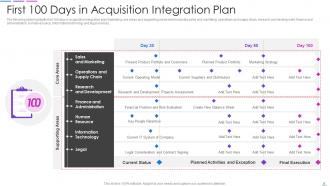
First 100 Days in Acquisition Integration Plan
-

Post Merger and Acquisition Integration Approach
-

Phases of First 100 day Merger and Acquisition Integration Plan
-

Business Merger and Acquisition Integration Cycle
-

Post Merger and Acquisition Integration Framework
-

Development of Operating Model in Acquisition Integration
-

Challenges and Success Factors for Acquisition Integration Planning
-

Digital Merger and Acquisition Integration Planning Framework
-

Vertical Integration Types after Acquisition and Process
-

Challenges and Opportunities of Vertical Integration Post Acquisition
-

IT Checklist of Merger and Acquisition Integration
-

Key Steps And Milestones in Acquisition Integration Planning
-

Merger and Acquisition Integration Planning Model
-

Timeline for Execution of Merger and Acquisition Integration Planning
-

Roadmap of Merger and Acquisition Integration Planning
-

Five Steps of Merger and Acquisition Integration Target Search
-

Post Acquisition Integration Plan Regulatory Compliances Icon
-

Icon of Merger and Acquisition Integration Planning Checklist
-

Acquisition Integration Performance Dashboard Icon
-

Thank You
-

-

-

-

-

FAQs for Acquisition Integration Plan Powerpoint
So you'll need to tackle cultural integration, IT system merges, org structure changes, and communication planning. Oh, and talent retention - can't forget that one. Honestly though? Communication is where most companies totally screw up. People freak out during acquisitions if they don't know what's happening. Map out which systems need combining and how reporting will change. Figure out what the new culture should actually look like too. I'd start with a solid 100-day plan focusing on quick wins first, then build your longer timeline from there.
Oh man, cultural stuff can totally tank your whole integration if you ignore it. I've literally watched deals get weird over something as stupid as how fast people respond to emails. Communication styles clash, meetings run differently - it gets messy quick. You gotta map this out during due diligence, not after everything's signed. Get your teams together for some cultural bridge-building sessions. Find people on both sides who can basically translate between the groups and smooth things over. Set up clear rules for how the combined culture's gonna work. Trust me, handle it early or you'll be putting out fires later.
Focus on the big stuff first - revenue gains, cost cuts, keeping customers happy, and not losing key employees. Timeline tracking is huge too because honestly, these deals never finish when they're supposed to. Employee satisfaction surveys matter way more than people think - I've seen mergers tank because leadership ignored the culture piece. Grab your baseline numbers before anything kicks off, then check in monthly. Pick maybe 6 metrics tops. Any more than that and you'll get lost in spreadsheets instead of actually managing the integration.
Honestly, you'll want to split up who you're talking to and when. Your employees are gonna freak about losing their jobs, so hit them with job security stuff first. Customers just need to know nothing's changing on their end. Investors? They want those synergy timelines and profit projections. Better to overcommunicate than go silent - I've literally watched deals implode because people started making stuff up. Mix up your channels: big all-hands for major news, smaller team meetings for details, then pull aside your top talent for one-on-ones. Oh, and stay consistent with your message but adjust the details for each group. Draft that communication calendar tonight if you can.
Oh man, leadership structure can totally make or break the whole thing. You've gotta figure out who's calling the shots before you even announce the deal - I learned this the hard way watching other companies mess it up. Set up your integration team with people from both sides who actually have power to make decisions. Otherwise you'll have endless meetings where nobody can agree on anything. Map out that org chart early so people aren't wandering around confused about who they report to. Honestly, the companies that nail this part usually see everything else fall into place way smoother.
Honestly, you've gotta over-communicate during acquisitions - like, way more than feels normal. Rumors spread crazy fast when people don't know what's happening. I'd do weekly email updates, regular all-hands meetings, and make sure your managers can actually answer questions (even if it's just "we don't know yet, but we'll update you Friday"). Anonymous surveys work well too. People get way less anxious when they feel like they have some input in the process. Oh, and don't forget the timing piece - always tell them when they'll hear more info next. Makes a huge difference in keeping everyone calm.
Don't rush the integration - that's the classic mistake everyone makes. You'll just freak out both teams and miss important stuff. Communication is huge too because people start panicking and spreading rumors when they don't know what's happening. Also, just because you bought them doesn't mean your processes are automatically superior, you know? Cultural fit matters way more than people think. Actually listen when the acquired team raises concerns - they usually know their business better than you do initially. Keep your key people happy or they'll bail. Oh, and build extra time into your timeline because something always goes wrong.
Honestly, just get everyone using the same messaging app first - you'd be shocked how much drama that alone solves. Then roll out shared project management tools and cloud-based stuff both teams can jump into right away. I'd set up some basic dashboards to track how things are going, but don't go crazy with complicated systems that need tons of training. Pick maybe two solid platforms and stick with them initially. Trust me, trying to deploy everything at once will make you want to tear your hair out. The automated data migration can come after people actually know how to talk to each other.
Honestly, I'd map out both companies' processes first to see where things clash or overlap. Don't just steamroll them with your way of doing things (even though that's way easier). Pick the best stuff from both sides. Start with the big workflows - customer onboarding, procurement, that kind of thing. Mix teams from both companies to redesign processes together. Way better buy-in that way, plus they'll catch problems you'd miss. Oh, and definitely test everything in one department before you go company-wide. Learned that one the hard way.
Look, you'll lose 10-30% of customers just from the chaos alone if you're not careful. That completely destroys your deal math. I've watched acquisitions implode because teams got obsessed with internal stuff while customers panicked in silence. Start planning retention before you even announce anything. Your customers don't give a damn about your org charts - they want to know their service won't get screwed up. Assign dedicated people to hand-hold them through it. Seriously, over-communicate everything. Leave them guessing and they'll start shopping around immediately. Trust me on this one.
Dude, bad integrations are deal killers. You're looking at losing like 30-70% of those synergies you banked on - which is insane since that's usually why people do these deals in the first place. Costs blow up because everything takes forever, you're running duplicate systems way too long, and your best people bail right when you need them most. Customers get pissed during messy transitions too, so revenue drops. It's honestly wild how fast this stuff snowballs. My advice? Map out your integration plan before you even close - seriously, don't wait.
Honestly, start getting feedback way earlier than you think you need to. Set up regular check-ins with everyone - employees, customers, suppliers, the whole crew. Surveys work, but I'd do focus groups and one-on-ones too since people are more honest face-to-face. Here's the thing though: you actually have to listen to what they're saying, not just go through the motions. Take their concerns and tie them back to your integration plan. Maybe you need to slow down timeline-wise or change your approach entirely. Don't make the mistake of waiting until everything's done to ask for input - by then you're basically screwed if something's wrong.
You're looking at 12-18 months realistically. Quick wins happen in the first 100 days, but major stuff takes 6-9 months to really click. Anyone saying under a year is either lying or hasn't actually done this before (learned that the hard way). Company size matters a ton - plus how different your cultures are. Tech integration is such a pain and takes forever. Break it into quarters so you don't go insane. Plan for 18 months but celebrate the small victories. Trust me, you'll need those wins to keep everyone motivated when things get messy.
Honestly, you can't just wing the risk stuff and hope for the best. Figure out your big risks upfront - talent jumping ship, systems crashing, customers bailing. Set up weekly risk meetings with different teams during those first 90 days (trust me, monthly won't cut it). Each risk needs an actual owner, not some committee that points fingers later. The integration team should be talking about what could go wrong constantly, not just when fires start. Oh, and build your backup plans now while you're thinking clearly, not when you're panicking at 2am.
Dude, first thing - audit both systems to see what overlaps and what you're missing. Don't want to pay for duplicate tools or accidentally lose something important. I'd tackle customer-facing stuff first since that's where downtime actually costs money. Honestly? The tech migration is the easy part. Getting people to change how they work is brutal, so spend serious time on training. Oh, and run everything in parallel for a while - hard cutovers are risky as hell. Make sure both IT teams collaborate early to map out dependencies. You'll want a dedicated team tracking this whole mess too.
-
I can always count on your designs for my professional needs. I believe I found a one-stop-shop for PPTs.
-
I looked at their huge selection of themes and designs. They appeared to be ideal for my profession. I'm sure I'll grab a few of them.