

Action plan for enhancing team capabilities powerpoint presentation slides




Try Before you Buy Download Free Sample Product
 Impress Your
 Audience
 100%
100% Editable
 Save Hours
 of Time


Enhancing team capabilities is the process that increases organizational productivity and team cohesiveness. Here is an efficiently designed Action Plan for Enhancing Team Capabilities template that incorporates various slides about the plan for the corporate team-building program. It also highlights the challenges faced by the organization while managing the team and showcases statistics of rising attrition rate, hiring cost, time spent on conflict resolution. It also contains a team skill capability assessment matrix that helps in giving scores to each member based on their current competency level. Additionally, it covers a dashboard that provides an overview of statistics related to recent team performance in the form of pie charts and bar graphs. You can also devise tactics and strategies for effective team building using the module that guides you about the days on which each activity would be performed. It also talks about building connections between team members and providing training for encouraging team collaboration. Also, it gives you the liberty to monitor the teams performance and the companys financial performance. There are different parameters on which the performance of team members can be evaluated using the customizable module. Download this 100 percent editable template now.
People who downloaded this PowerPoint presentation also viewed the following :
Content of this Powerpoint Presentation
Slide 1: This slide introduces Action Plan for Enhancing Team Capabilities. State Your Company Name and begin.
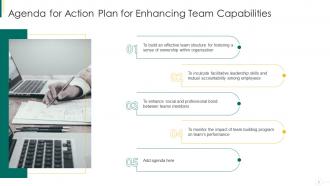
Slide 2: This slide shows Agenda for Action Plan for Enhancing Team Capabilities.
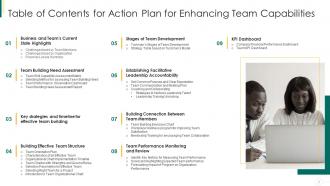
Slide 3: This slide presents Table of Contents for Action Plan for Enhancing Team Capabilities.
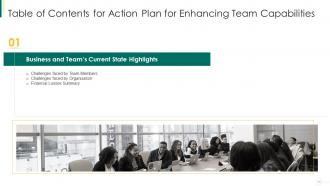
Slide 4: This slide shows Table of Contents for Action Plan for Enhancing Team Capabilities.
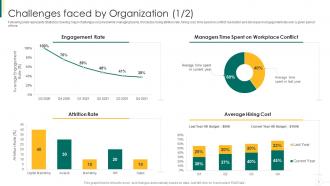
Slide 5: This slide displays Statistics covering major challenges occurred while managing teams.
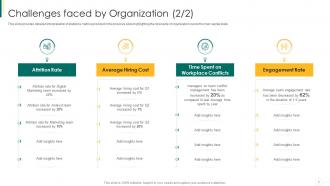
Slide 6: This slide represents interpretation of statistics metrics provided in the previous slide highlighting the downside of organization.
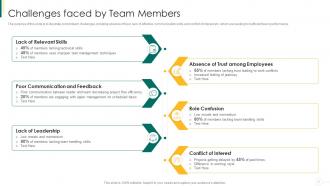
Slide 7: This slide shows current team challenges including absence of trust, lack of effective communication skills, etc.
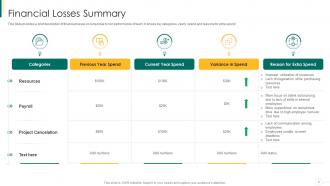
Slide 8: This slide presents brief description of financial losses occurred due to non performance of team.
Slide 9: This slide shows Table of Contents for Action Plan for Enhancing Team Capabilities.
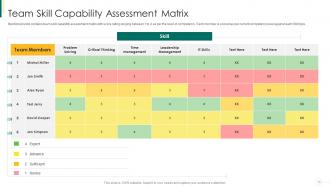
Slide 10: This slide displays team skill capability assessment matrix with score rating ranging between 1 to 4.
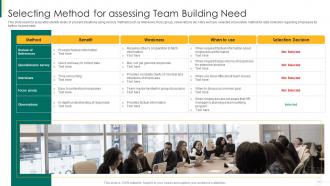
Slide 11: This slide represents Selecting Method for assessing Team Building Need.
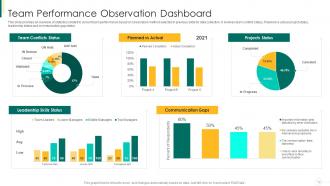
Slide 12: This slide shows overview of statistics related to current team performance based on observation method.
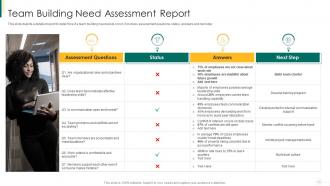
Slide 13: This slide presents detailed report to determine if a team building need exists or not.
Slide 14: This slide shows Table of Contents for Action Plan for Enhancing Team Capabilities.
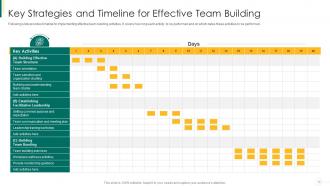
Slide 15: This slide displays Key Strategies and Timeline for Effective Team Building.
Slide 16: This slide represents Table of Contents for Action Plan for Enhancing Team Capabilities.
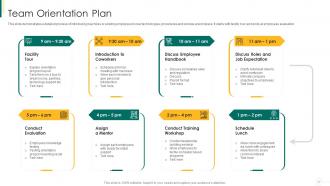
Slide 17: This slide shows introducing new hires or existing employees to new technologies, procedures and policies.
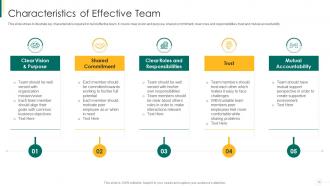
Slide 18: This slide presents key characteristics required to build effective team.
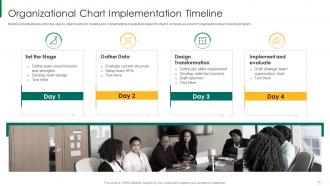
Slide 19: This slide shows four day step by step timeline for creating and implementing organization hierarchy chart.
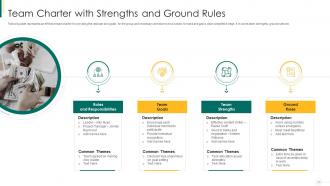
Slide 20: This slide displays effective team charter for providing the rationale and goals for the group.
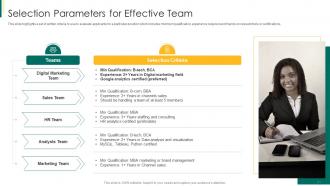
Slide 21: This slide represents set of written criteria to use to evaluate applicants for a particular position which includes minimum qualification, experience required, etc.
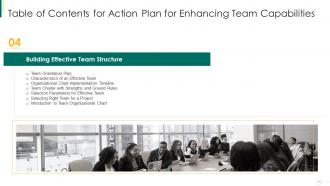
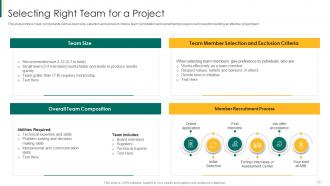
Slide 22: This slide shows major components such as team size, selection and exclusion criteria, team composition, etc.
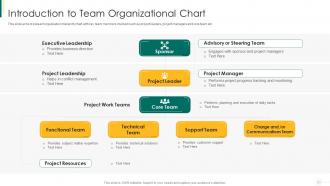
Slide 23: This slide presents present organization hierarchy chart with key team members involved.
Slide 24: This slide shows Table of Contents for Action Plan for Enhancing Team Capabilities.
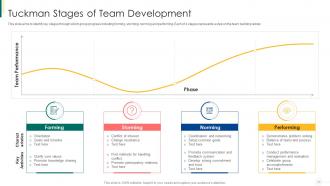
Slide 25: This slide displays key stages through which group progress including forming, storming, norming, etc.
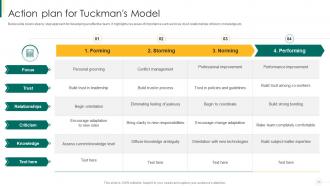
Slide 26: This slide represents step by step approach for developing an effective team.
Slide 27: This slide shows Table of Contents for Action Plan for Enhancing Team Capabilities.
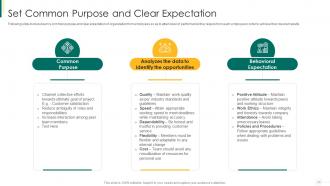
Slide 28: This slide presents team’s common purpose and clear expectation of organization from employees.
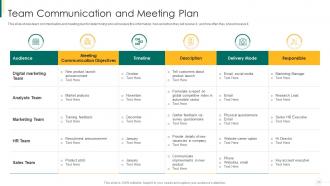
Slide 29: This slide shows team communication and meeting plan for determining who will receive this information.
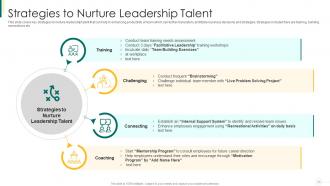
Slide 30: This slide displays key strategies to nurture leadership talent that can help in enhancing productivity.
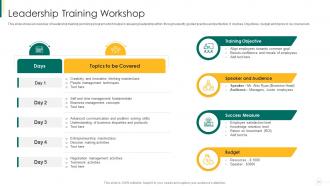
Slide 31: This slide represents an overview of leadership training workshop program which helps in releasing leadership.
Slide 32: This slide shows Table of Contents for Action Plan for Enhancing Team Capabilities.
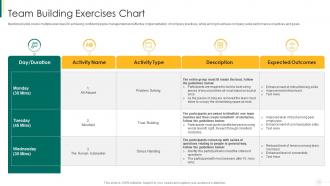
Slide 33: This slide presents multiple exercises for achieving confident people management and effective implementation.
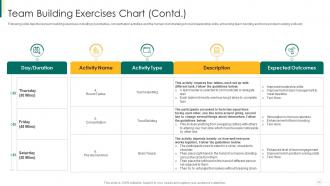
Slide 34: This slide shows key team building exercises including round tables, concentration activities and the human knot challenge.
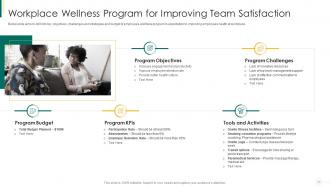
Slide 35: This slide displays Workplace Wellness Program for Improving Team Satisfaction.
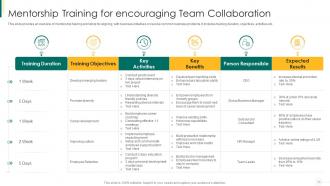
Slide 36: This slide represents Mentorship Training for encouraging Team Collaboration.
Slide 37: This slide shows Table of Contents for Action Plan for Enhancing Team Capabilities.
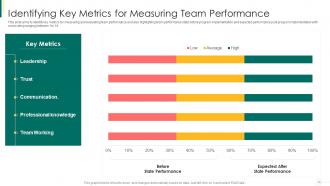
Slide 38: This slide presents Identifying Key Metrics for Measuring Team Performance.
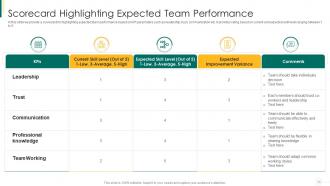
Slide 39: This slide shows Scorecard Highlighting Expected Team Performance.
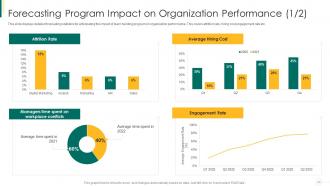
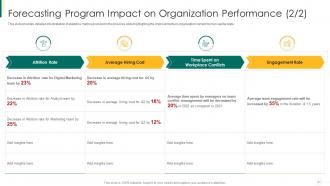
Slide 40: This slide displays Forecasting Program Impact on Organization Performance.
Slide 41: This slide represents interpretation of statistics metrics provided in the previous slide highlighting the improvements in organization.
Slide 42: This slide shows Table of Contents for Action Plan for Enhancing Team Capabilities.
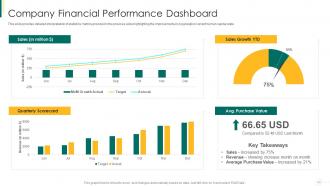
Slide 43: This slide presents interpretation of statistics metrics provided in the previous slide highlighting the improvements in organization.
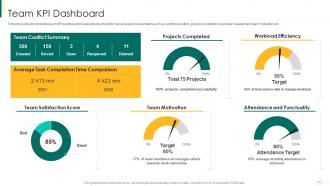
Slide 44: This slide shows KPI dashboard for evaluating team performance based on parameters such as conflict resolution, projects completion, workload management, etc.
Slide 45: This slide is titled as Additional Slides for moving forward.
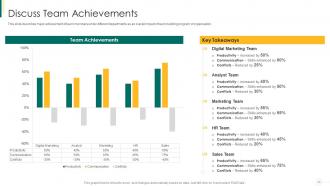
Slide 46: This slide represents major achievement of team members under different departments as an overall impact of team building program.
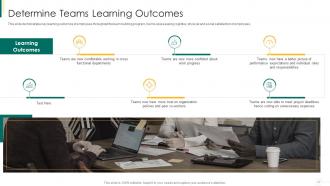
Slide 47: This slide shows key learning outcomes of employees throughout the team building program.
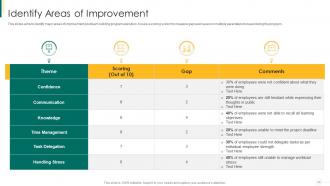
Slide 48: This slides aims to identify major areas of improvement post team building program execution.
Slide 49: This slide shows Icons for Action Plan for Enhancing Team Capabilities.
Slide 50: This is About Us slide to show company specifications etc.
Slide 51: This slide represents Venn diagram with text boxes.
Slide 52: This slide shows 30 60 90 Days Plan with text boxes.
Slide 53: This is Our Mission slide with related imagery and text.
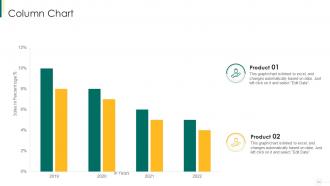
Slide 54: This slide displays Column chart with two products comparison.
Slide 55: This is Our Team slide with names and designation.
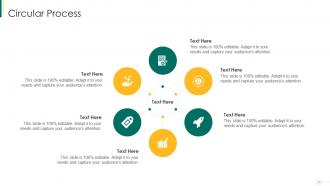
Slide 56: This slide represents Circular Process with related icons and text.
Slide 57: This is a Timeline slide. Show data related to time intervals here.
Slide 58: This slide presents Post It Notes. Post your important notes here.
Slide 59: This slide shows Puzzle with related icons and text.
Slide 60: This is a Thank You slide with address, contact numbers and email address.
Action plan for enhancing team capabilities powerpoint presentation slides with all 60 slides:
Use our Action Plan For Enhancing Team Capabilities Powerpoint Presentation Slides to effectively help you save your valuable time. They are readymade to fit into any presentation structure.

FAQs for Action plan for enhancing team capabilities
Oh yeah, the forming-storming-norming-performing thing! So when you're forming, just get everyone comfortable and set expectations upfront. Then storming hits and it gets weird - people clash, boundaries get tested. Don't freak out though, totally normal phase. You'll need to mediate and keep everyone talking. Norming is when you can finally step back a little. Let them figure out their own groove and working styles. Once they're performing, you're basically just clearing roadblocks and throwing high-fives. One thing though - teams bounce between these stages constantly, especially when someone new joins the mix.
Look, communication really makes or breaks everything with teams. Your people need to actually know what they're doing and why it matters. Trust builds when you're straight with them - and honestly, without trust you're pretty much screwed. Regular check-ins help catch problems before they explode. Also transparency about decisions goes a long way. When people feel safe to mess up or throw out ideas, that's where the magic happens. Knowledge gets shared instead of hoarded. I'd start with consistent touchpoints and just being real about what's going on.
Dude, diverse teams are seriously where it's at for creativity. You get people from different backgrounds throwing around ideas, and suddenly you're solving problems in ways nobody saw coming. Different perspectives call out your blind spots - which honestly can be uncomfortable at first. But that's when the magic happens. Short version: friction breeds innovation. Just make sure everyone actually gets to speak up and feels valued, you know? Oh, and try switching up who runs your brainstorming sessions. Different people bring totally different energy to the room.
Honestly, skip the cheesy trust falls - nobody wants that awkwardness. Problem-solving challenges work way better because people actually have to use each other's skills. I've seen storytelling sessions work really well too, where everyone shares a work win or epic fail. The trick is making sure it feels safe to be vulnerable without anyone dominating the conversation. Oh, and always debrief afterward! That's when people actually make connections. Start with easier stuff first - you can't jump straight into deep sharing with a group that barely knows each other.
Oh man, personality clashes are the WORST - I've seen teams implode over that stuff. Usually it's a combo of unclear roles, crappy communication, and people just not meshing well together. Trust issues pop up too, plus nobody wants to hear feedback. My advice? Get super clear on who does what from day one. Regular check-ins help catch problems early instead of letting them fester. And honestly, you need that safe space vibe where people can actually speak up without drama. The whole "let's talk about what's broken" conversation works way better when you start it before everything's on fire.
Honestly, your leadership style makes a huge difference in how your team clicks. Autocratic types create dependency - people just wait around for orders instead of jumping in. Democratic leaders get everyone involved, which builds way better problem-solving skills. With laissez-faire, experienced teams thrive but newbies get completely lost (trust me on this one). Transformational leaders? They're incredible at pushing teams past their comfort zones and building real confidence. The trick is reading where your team's at right now. Don't stick to one style - adjust as they grow.
Honestly, think of goals like a GPS for your team - everyone's headed to the same place instead of wandering around lost. Clear targets build trust because people can actually see what everyone's contributing. Hit a milestone together? That shared victory feeling is *chef's kiss* - way better than individual wins, IMO. Performance naturally jumps when you've got measurable stuff pushing people just past their comfort zone (but not into panic mode). I'd do both team goals and personal ones that connect to the bigger picture. Keeps everyone caring about their own growth plus the group success. Works every time.
Dude, break those huge projects down into smaller chunks you can actually celebrate. When people can't see progress, they just burn out. Set up check-ins where your team talks about real roadblocks, not just boring status stuff. Rotating responsibilities helps too - keeps things interesting and nobody feels trapped doing the same task forever. Make sure everyone gets how their work connects to the big picture. Honestly, meaningless work is probably the fastest motivation killer out there. Oh, and try doing quick team retrospectives every couple weeks to tweak things and keep everyone's energy up.
Honestly, skip the vague "good job" stuff - it's useless. You want to get specific about what you actually saw them do, and do it quickly while it's still relevant. Yeah, it feels weird at first but people actually appreciate real feedback way more than empty praise. I always ask for feedback on my own stuff too since it shows you're not just dishing it out. Build up that comfort level gradually with smaller things first. The whole point is making everyone feel safe enough to actually speak up when something needs saying.
Track the obvious stuff first - project completion rates, quality scores, how fast things get done. But honestly? The touchy-feely metrics matter way more than people think. Employee engagement, retention, who's getting promoted internally. Also look at 360 reviews and whether cross-functional projects are actually succeeding (that one's huge). Get your baseline numbers before changing anything, then check quarterly. I always tell people don't obsess over just one metric - you need like 4-5 different ones to really know if your team development efforts are working or if you're just fooling yourself.
Yeah, remote work totally kills those random moments when you'd just bump into people by the water cooler or whatever. Everything feels so... planned? Like you have to schedule a meeting just to say hi. What's worked for me though - set up those casual virtual coffee things and maybe throw in some online games or something. Oh, and definitely make a random chat channel for memes and dog pics. You'll need to be way more obvious about staying connected since it won't just happen naturally anymore. I'd start small - maybe one informal video call this week and see how your team vibes with it.
Honestly, emotional intelligence makes or breaks teams. You've gotta be able to read people's moods and catch conflicts early - before they turn into drama. When you understand your own triggers AND notice when someone's having an off day, decisions get way better. Trust builds faster too. I've seen teams fall apart because one person was totally oblivious to how they affected everyone else. It's painful to watch. Teams with good EQ just communicate better and recover from mistakes quicker. Start small though - just notice how your emotions change your behavior in meetings. You'll be surprised what you pick up on.
Look, conflict isn't people attacking each other - it's just different viewpoints bumping heads. When your team argues, dig into WHY everyone thinks what they thinks. That's the good stuff right there. Honestly, I've watched teams get way tighter after messy disagreements because they finally get how everyone's brain works. Make it safe for people to fight about ideas without getting personal. Ground rules help - like don't trash the person, trash their concept. Oh, and let everyone actually speak. Next time drama hits, ask what you can learn instead of just trying to make it stop. Trust me on this one.
Culture is everything when it comes to team development, honestly. When people feel safe to speak up and collaborate, they'll naturally share ideas and take risks. Toxic environments? Total opposite - everyone gets defensive and hoards info. Your team needs the right support and resources to actually grow their skills too. I've seen teams do endless trust falls and icebreakers, but if the culture underneath is broken, you're just wasting time. Start with what you can control in your own team bubble. Sometimes that's all you can do, but it makes a real difference.
Ok so I've found the sweet spot is usually just 3-4 tools that everyone actually uses. Slack's pretty solid for quick chats, and Asana keeps projects from turning into chaos. Google Docs is clutch for editing stuff together - way better than emailing Word files back and forth like it's 2010. But honestly? Jump on a video call when things get complicated. Text just doesn't cut it sometimes. Start with whatever your team already knows instead of forcing some shiny new platform on everyone. You can always add more tools later once they're comfortable.
-
Great product with effective design. Helped a lot in our corporate presentations. Easy to edit and stunning visuals.
-
Good research work and creative work done on every template.
-
Very well designed and informative templates.
-
Out of the box and creative design.
-
Designs have enough space to add content.