


Team skill capability assessment matrix action plan for enhancing team capabilities




Try Before you Buy Download Free Sample Product
 Impress Your
 Audience
 100%
100% Editable
 Save Hours
 of Time


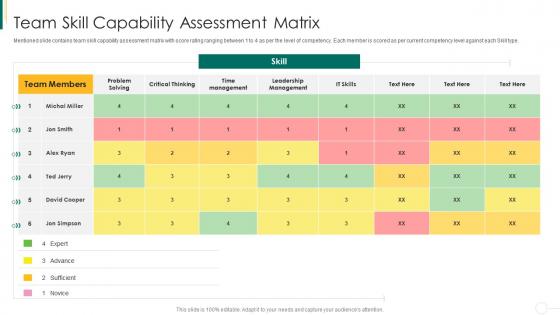
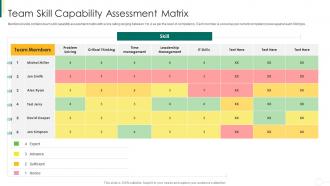
Mentioned slide contains team skill capability assessment matrix with score rating ranging between 1 to 4 as per the level of competency. Each member is scored as per current competency level against each Skill type.
People who downloaded this PowerPoint presentation also viewed the following :
Team skill capability assessment matrix action plan for enhancing team capabilities with all 9 slides:
Use our Team Skill Capability Assessment Matrix Action Plan For Enhancing Team Capabilities to effectively help you save your valuable time. They are readymade to fit into any presentation structure.








FAQs for Team skill capability assessment matrix action plan for
Honestly, I'd start with the technical stuff - what skills does everyone actually have and where are the gaps? Track delivery speed and quality too, that's pretty obvious. But the soft skills matter way more than people think. How well do they communicate with other teams? Can they adapt when things get crazy? I always look at whether someone can learn new things quickly - that's gold. Oh, and check if you've got backup people who could step up if someone leaves. Pick maybe 3-4 things that actually matter for your specific goals and don't overthink it.
Honestly, I'd start with having everyone rate their own skills first - like a basic self-assessment thing. Then get their managers to weigh in, maybe grab some peer feedback too. Past project reviews are super helpful for this stuff. But here's what really works - give people actual tasks to do, not just theoretical questions. You can't beat watching someone work through a real problem. Oh, and don't forget any certs they might have lying around. The whole point is getting info from different angles so you're not just going off one person's take. Check back every few months since people are always learning new stuff.
Your team knows way more about their actual skills and daily struggles than you do from the outside looking in. Get feedback both ways - formal surveys and casual check-ins work best. People will tell you where the real bottlenecks are if they trust you won't throw them under the bus for being honest about gaps. Honestly, this beats any assessment tool managers usually rely on. The tricky part is making sure everyone feels safe enough to actually speak up about what they're missing skillwise.
So you basically figure out what skills your team has now vs what they actually need. Honestly, most managers skip this step and wonder why training doesn't work. List out the capabilities you need first, then rate everyone's current levels - be brutally honest here. The gaps will jump out at you pretty fast. Technical stuff, soft skills, knowledge areas, whatever. It's like cleaning out your garage and finally seeing what tools you're missing. Short sentences work better for this kind of assessment, but you can also go deeper into specific competency areas if needed. The patterns that show up will definitely surprise you.
For skills assessment? Start with a basic skills inventory - seriously, it shows you way more than you'd expect about what's missing. Skills matrices work great, plus 360-degree feedback from the team. Culture Amp or 15Five are solid for surveys, but honestly a good spreadsheet does the trick for smaller groups. Map what skills you have now against what you'll actually need for your upcoming projects. DISC or StrengthsFinder are worth it if you've got budget left over, though I'd nail down the basics first. Oh, and structured team interviews help too - people often know exactly where the gaps are.
Honestly, every 6 months works for most teams. If you're growing fast or just formed though? Maybe quarterly. I've watched teams go literal years without checking in on their skills - then they're shocked when nothing improves. Don't be that team lol. Time it around big project milestones or when you get new people. Keep doing those informal check-ins during retros too. The consistency matters way more than how often you do it. Oh and block out your next two assessment dates right now before you inevitably forget!
Look at what your org actually needs to hit its goals first, then see where your team stacks up. I've watched so many teams get caught up assessing people's strengths without connecting it to real business needs - total waste of time honestly. Figure out the specific skills and performance levels you'll need for upcoming projects. Compare that against what you currently have. Be brutally honest here, no sugarcoating. The gaps you find? Those tell you exactly where to focus your development efforts. Makes hiring and training decisions way easier when you've got actual data backing you up instead of just going with gut feelings.
Honestly, the biggest mistake is checking off individual skills without seeing how your team actually works together. People suck at rating themselves (I definitely do), so don't just rely on self-assessments. Watch how they communicate and handle pressure as a group - that's where you'll spot the real gaps. Also, recent drama or wins can totally skew your judgment of someone's overall abilities. You gotta observe them during actual work, not hypothetical situations. Maybe shadow a few team meetings this week? Team dynamics tell you way more than any skills checklist ever will.
So basically these assessments show you who's actually ready to move up versus who still needs work. You'll spot your stars who can handle promotions right now. Then there's people with potential but they need specific training first. The awkward part? Sometimes you realize you've got gaps that mean hiring from outside - nobody loves admitting that but it happens. Map out what skills people have now against what future roles actually need. Way better than crossing your fingers and hoping someone's magically ready when your manager quits. Plus you can build real development plans instead of generic training nonsense.
Honestly, team dynamics will totally mess up your capability assessment if you're not careful. People won't be real with their feedback when there's bad communication or trust issues. You'll miss critical skills because they're stuck in knowledge silos. But here's the thing - when teams actually click, individual strengths get amplified and you discover collaborative abilities you'd never see otherwise. I learned this the hard way at my last job. Create that psychological safety vibe so people feel comfortable being authentic. Otherwise you're basically assessing a performance, not actual capabilities.
Start with your assessment data and pick 2-3 gaps that are actually hurting performance right now. Don't go crazy trying to fix everything - I've seen teams burn out that way. Get super specific about what you're targeting. Like instead of "better communication," say "finish conflict resolution training by Q2 and have Sarah practice running our monthly meetings." Each plan needs an owner and timeline, obviously. Training works for some stuff, but mentoring or stretch projects might be better depending on the gap. The main thing is checking in regularly to see if it's actually working or if you need to pivot.
Honestly, start with the obvious stuff - who's actually good at what they're supposed to do. But here's the thing: someone can be a coding genius and still make everyone miserable to work with. So dig into how they collaborate and communicate too. I'd look back at their previous cross-functional projects - did things actually get done? Who makes decisions and owns outcomes? Also check if people are already swamped with other stuff that'll pull them away. Maybe do a quick skills gap check and feel out the team vibe before jumping into anything big.
Honestly, tech makes team assessments way less painful. Digital surveys and 360-feedback tools grab input from everyone super fast - way better than chasing people down for responses. Analytics can spot patterns you'd totally miss doing it by hand. There's even AI stuff that predicts what skills your team might need later, which is kinda wild. Don't go overboard with the fancy tools though - your gut still matters more than algorithms. The best part? You're not stuck doing all the boring admin work anymore. Start with something simple like SurveyMonkey and see how it goes.
Start with the good stuff, then frame gaps as chances to grow - not failures. Be specific too. "Communication needs work" is useless feedback that helps nobody. I've watched managers just dump a weakness list and then act shocked when everyone's bummed out! Stick to 2-3 areas max so people don't get overwhelmed. Set up one-on-ones after you share results. That way team members can ask questions without everyone listening. Most important thing? Connect each finding to actual next steps and resources. People need to see how they'll get better, not just where they're struggling right now.
Honestly, just tack on a few questions to your regular reviews - way easier than creating something from scratch. Ask about collaboration and knowledge sharing alongside the usual stuff. Keep it simple though, like 3-4 questions max. Nobody has time for another massive form to wade through! Focus on finding skill gaps and figuring out who could mentor who. The trick is making it feel natural, not like more corporate BS to check off. I'd probably start super basic and tweak it as you go. Team dynamics stuff is actually pretty revealing once people get comfortable talking about it.
-
Awesome use of colors and designs in product templates.
-
Unique and attractive product design.
-
Great designs, Easily Editable.
-
Very unique and reliable designs.