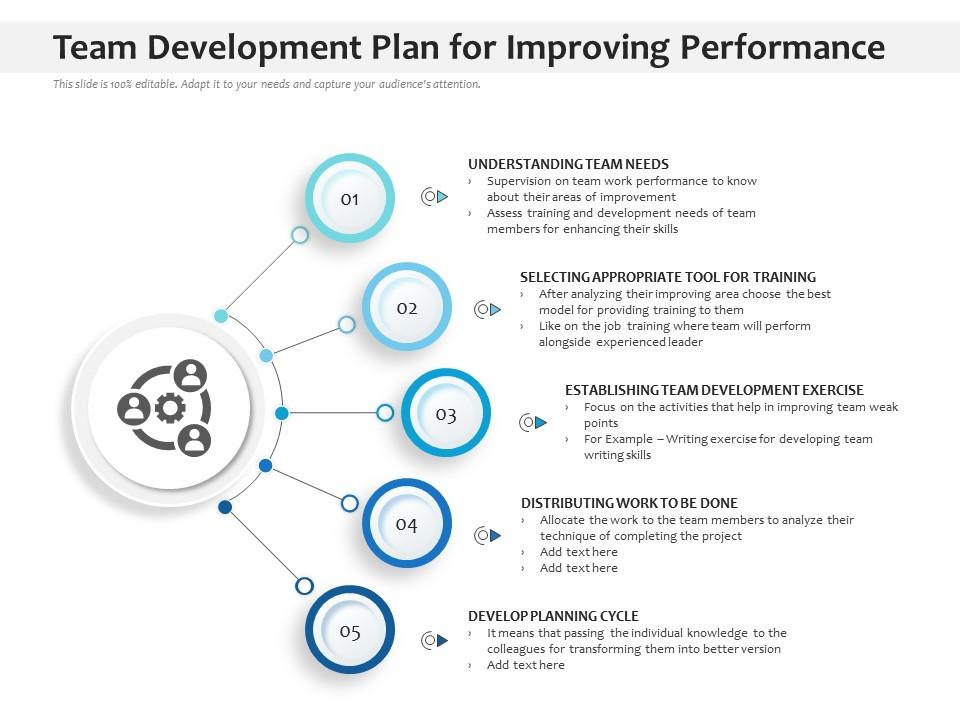
Team development plan for improving performance
Try Before you Buy Download Free Sample Product
Audience
Editable
of Time
Our Team Development Plan For Improving Performance are topically designed to provide an attractive backdrop to any subject. Use them to look like a presentation pro.
People who downloaded this PowerPoint presentation also viewed the following :
Team development plan for improving performance with all 2 slides:
Use our Team Development Plan For Improving Performance to effectively help you save your valuable time. They are readymade to fit into any presentation structure.
FAQs for Team development plan
Oh yeah, Tuckman's stages! So basically there's four phases every team hits. Forming is when everyone's still being super nice and figuring things out. Storming comes next - honestly the worst part because people start butting heads over everything. But then you get to Norming where everyone finally agrees on how to actually work together. Performing is the sweet spot when your team's crushing it. I went through this with my last project team and the storming phase was brutal, but once we pushed through it everything clicked. Don't stress when things get messy - it's totally normal.
Honestly, good communication is like creating a safe bubble where people actually want to share their weird ideas and call out problems. You know how some teams feel super tense? This fixes that. When everyone can speak up without getting shut down, you'll catch stuff early instead of having those "wait, what are we even doing?" moments three weeks later. I'm a huge fan of just doing quick daily check-ins - nothing fancy, just "hey what's going on" vibes. Regular team syncs help too. The key is really listening when people talk and being honest about when things aren't working.
Oh man, leadership changes SO much depending on where your team's at. When they're just forming, you're basically directing everything and setting expectations. Storming phase? That's when things get messy - you become more of a coach, helping sort out conflicts and who does what. Once they hit norming, you can step back and just facilitate stuff. Then performing stage - that's where you delegate and focus on clearing roadblocks for them. Honestly, the biggest mistake I see is trying to delegate when people are still figuring out basic team stuff. You've gotta read the room first, you know?
Honestly, personality tests are pretty clutch for figuring out your team dynamics. Like, you'll finally understand why Sarah needs forever to respond in meetings (she's processing internally) while Jake thinks out loud nonstop. They show you who wants the nitty-gritty details vs. people who just need the big picture stuff. Plus you can spot potential friction points before they blow up. I mean, it's not gonna solve everything obviously, but it's basically a roadmap for how everyone ticks. Makes it way easier to tweak how you run meetings and communicate with different people.
Don't let this stuff sit and get worse - call a meeting ASAP. Get everyone together and have each person explain their side without getting interrupted. I swear, every time I've seen teams skip this part, it blows up later. Focus on the actual problem you're trying to solve, not who screwed up or whose idea is better. Then set clear roles so people aren't stepping on each other's toes going forward. The whole thing works way better when people feel safe speaking up early instead of letting resentment build.
Honestly, most teams mess this up by just looking at job titles instead of figuring out what people are actually good at. Like, who's your strategic big-picture person? Who obsesses over details? Who's naturally great with clients? Map that stuff out first - it's kind of obvious but everyone skips it lol. Then when you're planning projects, don't just randomly hand out tasks. Actually think about who would absolutely nail each piece based on their strengths. Makes such a huge difference because people feel valued when they're doing what they're best at.
Honestly, clear goals are like having a roadmap - nobody's wandering around confused about where they're headed. When your team actually gets the bigger picture, collaboration just flows better because people see how their stuff connects. The best part? Way less workplace drama when expectations aren't some mystery. You get those celebration moments too when you hit milestones together. Oh, and here's something that works - start your next meeting by having everyone explain the main goal in their own words. I swear, half the time people are thinking completely different things.
Track your sprint velocity and quality metrics first - that's the easy data. But honestly? The team vibe stuff is harder to measure and way more important. Do quick pulse surveys or just ask people how they're feeling in retros. I'd watch how fast conflicts get resolved too, that tells you a lot. Oh, and time how long it takes new people to actually contribute meaningfully. Start simple though - pick one number thing and one feelings thing. You can always add more tracking later once you figure out what's actually broken.
You really gotta be way more deliberate about talking to people now. Like, those random bump-ins at the coffee machine? Gone. So schedule actual one-on-ones that aren't just work stuff - ask how they're doing, what's bugging them. Video calls over phone calls every time, trust me on this. Seeing someone's face makes such a difference. Oh and create little team traditions! Virtual coffee breaks, weekly check-ins where people can actually vent. But honestly? The biggest thing is just doing what you say you'll do. When you're not in the same room, following through is everything for building trust.
Dude, you absolutely need diversity for real innovation. Different backgrounds = different ways of attacking problems, which is huge. I've watched so many teams just echo each other's ideas when they're all similar - it's painful honestly. Mix it up though? People start challenging assumptions and catching things others miss. The puzzle piece thing is kinda cheesy but true - you get way more creative breakthroughs when everyone's bringing something different to the table. Just make sure people actually feel comfortable speaking up, otherwise what's the point of having diverse voices if they stay quiet?
You need regular check-ins where people actually feel comfortable speaking up. Weekly retros work great, or even anonymous suggestion boxes if your team's more introverted. Here's the thing though - if people think their honesty will come back to haunt them, they'll just tell you what you want to hear. Focus feedback on specific actions, not personalities. Nobody wants to hear "you're disorganized" but "the project timeline wasn't clear" is actionable. Oh, and actually DO something with the feedback you get. I've seen so many teams where people stop participating because nothing ever changes anyway.
Oh man, the usual suspects are always unclear roles and crappy communication. But here's what nobody talks about - teams skip the messy conflict phase because everyone wants to play nice. Wrong move! You actually need those early disagreements to sort things out. Start with making people feel safe to speak up, then nail down who decides what. Weekly check-ins for the first month are clutch - don't skip the uncomfortable conversations. Most teams take like 3-6 months to actually click, which feels forever but it's normal. Trust the process!
Figure out what's actually broken first - send out a quick survey or just pay attention to where things fall apart. Communication? Trust? People clashing over work styles? Once you know the real issues, pick activities that hit those exact problems. Trust stuff needs vulnerability exercises, not some random icebreaker. Communication breakdowns? Do structured challenges where they have to actually talk through problems together. Those generic rope courses are pretty much useless tbh. You want scenarios that feel like your actual workplace. Make sure there's a clear link between what you're doing and what skill you're fixing, then create real follow-up plans afterward.
Honestly, emotional intelligence is like a superpower for teamwork. You start picking up on when someone's stressed just from their voice, or noticing body language that screams "I'm drowning here." Then you can actually respond in a way that helps instead of making things worse. It also keeps you from totally losing it when deadlines get crazy (which, let's be real, happens way too often). The best part? Teams that get this stuff resolve arguments way faster. People actually hear each other out instead of just planning what to say next. Next time you're in a meeting, try tuning into the emotional vibe - you'll catch so much more than just the words.
Honestly, you can't just dump teams into sprints without proper training first. Get real Scrum Masters certified or hire actual agile coaches - not Bob from accounting who skimmed an article about standups lol. Teams need psychological safety to experiment and fail without getting roasted. Good project management tools help too, obviously. But here's the thing - leadership has to buy into agile themselves, not just preach it. I'd start with one pilot team, see what works (and what crashes and burns), then expand from there. Way less painful than going all-in immediately.
-
The content is very helpful from business point of view.
-
Really like the color and design of the presentation.
-
Good research work and creative work done on every template.
-
Attractive design and informative presentation.
-
Perfect template with attractive color combination.
-
Nice and innovative design.
-
Great quality product.
-
Awesomely designed templates, Easy to understand.