


Capability Building Powerpoint Presentation Slides




Try Before you Buy Download Free Sample Product
 Impress Your
 Audience
 100%
100% Editable
 Save Hours
 of Time


Get access to this professionally designed content-ready Capability Building PowerPoint Presentation Slides to grow your organization with the help of your employees. Support your teammates to develop skills they required in the workplace. Showcase technical, operational and soft skills through capability building PPT templates. This deck comprises of templates such as executive summary, key management, current organization structure, capability assessment, capability maturity model, current vacancies, job description, recruitment budget, etc. These templates are completely customizable. Change color, text, icon and font size as per your requirement. Enhance culture development, integrate feedback into learning, build capacity for change and more with the help of ready-to-use capability building PowerPoint presentation templates. Follow the process of building a capability strategy with the help of easy-to-understand capacity building PowerPoint slideshow. Support workforce change and innovation. Enhance performances using capability building PowerPoint templates. Grab this ready-made capability building complete PowerPoint presentation and create a supportive environment to encourage employees to learn and grow. Enter the clan with our Capability Building Powerpoint Presentation Slides. Gain entry into elite groups.
People who downloaded this PowerPoint presentation also viewed the following :
Content of this Powerpoint Presentation
Slide 1: This slide introduces Capability Building. State Your Company Name and begin.
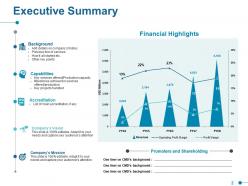
Slide 2: This slide shows Executive Summary describing- Background, Capabilities, Accreditation, Company’s Mission and Company’s Vision along with Financial Highlights.
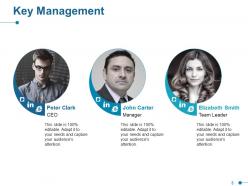
Slide 3: This is a Key Management slide with names and designation.
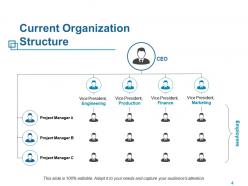
Slide 4: This slide describes Current Organization Structure from top to bottom.
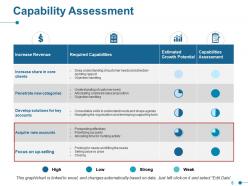
Slide 5: This slide presents Capability Assessment describing Increase revenue, Required capabilities, Estimated growth potential and its assessment.
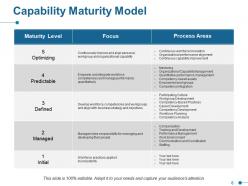
Slide 6: This slide showcases Capability Maturity Model describing- Maturity Level, Focus areas and Process Areas.
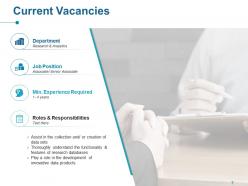
Slide 7: This slide displays Current Vacancies with- Job Position, Department, Min. Experience Required, Roles & Responsibilities.
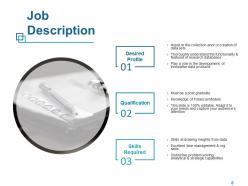
Slide 8: This slide represents Job Description with- Desired profile, Qualifications and Skills required.
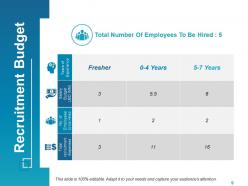
Slide 9: This slide shows Recruitment Budget with- Years of Experience, Salary Budget , Number of Employees to be Hired and Total recruitment Expenses.
Slide 10: This slide presents Training Plan with related table and text boxes. Put relevant data accordingly.
Slide 11: This slide shows Capability Building Icons.
Slide 12: This slide is titled Additional slides for moving forward. You may change the content as per need.
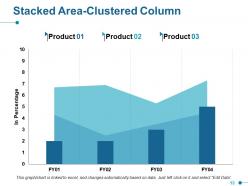
Slide 13: This slide displays Stacked Area-Clustered Column chart with three products comparison.
Slide 14: This slide represents Clustered Bar graph with three products comparison.
Slide 15: This is Our mission slide with imagery and text boxes to go with.
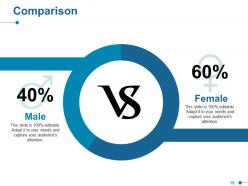
Slide 16: This is a Comparison slide. Show relevant comparing data here.
Slide 17: This is an About us slide to state company specifications etc.
Slide 18: This is a Puzzle slide with text boxes to show information.
Slide 19: This slide shows a Magnifying glass with text boxes.
Slide 20: This is a Bulb or Idea slide to state a new idea or highlight specifications/information etc.
Slide 21: This is a Thank You slide with Address# street number, city, state, Contact Number, Email Address.
Capability Building Powerpoint Presentation Slides with all 21 slides:
Initiate the debate for change with our Capability Building Powerpoint Presentation Slides. Give equal attention to advantages and disadvantages.




FAQs for Capability Building
Honestly, you need to nail down your biggest skill gaps first - maybe pick your top 3 instead of trying to fix everything at once. Get leadership actually invested, not just nodding along in meetings. People need real practice time, not just theory, plus feedback that actually helps them improve. Track progress with actual metrics instead of those useless "how did we do?" surveys. Peer learning works surprisingly well too since coworkers explain things differently than trainers do. Oh, and block out dedicated time for this stuff - otherwise it'll just sit there unused like that expensive software nobody touches.
Honestly, you'll want to measure this stuff from multiple angles. Skills assessments before and after are obvious, but also track how fast people actually use what they learned on real projects. Performance data matters too - project success rates, how long new hires take to get up to speed, retention numbers. The confidence surveys are surprisingly useful though, way more than I expected when I first started doing them. Peer feedback catches blind spots that numbers miss completely. Oh, and definitely do check-ins at 30, 60, and 90 days post-training. Catching problems early saves you so much hassle later.
Honestly, it all comes down to your leaders actually walking the walk. I've seen way too many places where managers talk about learning constantly but then never give anyone time for it - super frustrating. The good leaders I've worked with? They share what they're currently learning, ask people about their development, and don't freak out when someone admits they don't know something. Creating that psychological safety is huge. They also celebrate when learning experiments fail, which sounds weird but really works. Oh, and they actually remove the barriers instead of just complaining about them. Start by having your leadership team openly share what they're learning right now - it's weirdly effective.
Tech is basically a multiplier for building up your team's skills. Learning platforms let you customize training paths for different people. AI can spot where your teams are missing key skills - that part's honestly pretty impressive these days. Simulation tools give people a safe space to practice without real-world consequences. VR training works great for complicated scenarios too, though it can get pricey. Data analytics help track who's progressing and whether you're actually getting returns on training investments. Don't treat these as separate systems though. Audit what capabilities you need first, then pilot one solution before going bigger.
Honestly, the hardest part is always convincing leadership to actually spend money on this stuff. Budget battles are real. And don't get me started on how everyone thinks building capabilities happens overnight - we're talking months, sometimes years here. Teams get super defensive too when you suggest their current process might suck (which, let's be real, it probably does). Oh, and good luck measuring ROI right away because the results take forever to show up. My take? Run a small pilot first. Get some quick wins under your belt, then use those to push for bigger changes.
Check where your team's skills are now versus where your strategy's going. You'll spot the gaps fast. Don't get sucked into building whatever's trendy though - I've watched so many companies waste money on flashy training that goes nowhere. Pick capabilities that actually tie to revenue, cost savings, or beating competitors over the next 2-3 years. Your L&D budget isn't unlimited, right? Track results against real business outcomes, not just how many people finished the course.
Make it personal first - sit down with people and figure out their skill gaps together instead of just telling them what they need. Honestly, gamification actually works way better than you'd think (yeah, even grown adults like badges). Mix up the learning formats too - some people hate sitting through long training sessions but love quick bite-sized stuff or learning from coworkers. The key thing is connecting whatever new skills they're building to real promotions or better roles. And celebrate wins publicly when someone masters something new. People engage when they see it's actually going to help their career, not just make the company money.
Honestly, it's crazy how different industries handle this stuff. Tech companies are all about rapid experimentation and those cross-functional teams everyone talks about. Manufacturing? Total opposite - they're big on structured training and safety protocols (which, fair enough). Healthcare does a ton of simulation work plus peer mentoring, and when you think about it, that makes perfect sense since people's lives are literally on the line. What's cool is how industries are starting to steal ideas from each other now. You've got tech companies adopting healthcare's risk management approach, while traditional industries are trying out more agile methods. The magic happens when you blend structured skill-building with real-world practice. I'd honestly just look at what other industries do well and see what you can adapt.
Start with figuring out what gaps you actually have - no point training people on stuff they already know. Build learning paths that tie to real work, not random workshops. Mix formal training with actual projects where people can practice. Honestly, the best learning happens when you're doing something, not sitting in a conference room. Set up ways to track what's working so you can pivot when needed. Oh, and this only works if leadership is actually invested - make it part of regular check-ins, not some yearly HR thing that everyone forgets about.
Honestly, survey your team first to see how they actually like to learn. Some people are visual so they'll love infographics and videos. Others need to hear stuff - podcasts work great for them. Then you've got the hands-on folks who want workshops or simulations. Mix it up with self-paced modules, peer mentoring, and those quick microlearning bits. Don't be the company that does endless PowerPoint presentations and acts shocked when nobody remembers anything lol. Give people options but keep your main learning goals the same across everything.
Cross-functional teams totally blow up those silos that drive everyone crazy. Your marketing people start picking up engineering insights, product dev gets real sales feedback - it's like the whole company suddenly clicks. People develop this bigger-picture thinking instead of just tunnel vision on their own stuff. Honestly, companies that nail this become way more adaptable when things get weird (which they always do). The knowledge sharing happens naturally once teams work together on actual projects. Start with one small collaboration between departments and you'll see capabilities spread faster than you'd expect. It's organizational cross-training basically.
Don't just throw a survey at people when it's all over – that's basically useless. I'd set up quick check-ins throughout the whole thing, maybe after each module or whatever. Anonymous stuff works really well since people actually tell you what they think instead of just being polite. Also get participants giving feedback to each other, not just to you. The facilitators need to be able to pivot based on what they're hearing too. Honestly, start small with like 2-3 feedback points and build from there once you get the hang of it.
Partnerships are seriously a lifesaver when you're trying to build new capabilities fast. Why hire and train from scratch when you can work with vendors, consultants, or even universities who already know their stuff? I've watched companies nail tech transformations this way - brought in specialists who could hit the ground running. The trick is figuring out what you actually want to own versus what you're cool outsourcing forever. Map out where you're weak first, then find partners who can fill those gaps. Bonus if they'll teach your people along the way, though that doesn't always happen.
Honestly, investing in training sends a pretty clear message - "we actually care about your growth." That alone keeps people from jumping ship. Nobody wants to feel trapped doing the exact same stuff forever, you know? Learning new skills makes work way more interesting and gives people something to look forward to. Career advancement becomes real instead of just empty promises in job interviews. The trick is actually asking what they want to learn instead of assuming you know best. I've seen too many companies waste money on random workshops nobody asked for.
So the big trends I'm seeing are AI that creates personalized learning paths and VR/AR for hands-on practice. Microlearning through apps is huge too. Companies are doing more peer-to-peer networks and gamification - though half the gamification stuff feels pretty cheesy if I'm honest. What's actually working? Real-time feedback systems and just-in-time learning that gives you content right when you need it for whatever project you're working on. Everything's getting way more adaptive to your specific role instead of those boring one-size-fits-all modules we all hate. I'd definitely pilot just one approach first rather than going crazy trying everything.
No Reviews