

Team Capabilities Powerpoint Presentation Slides




Try Before you Buy Download Free Sample Product
 Impress Your
 Audience
 100%
100% Editable
 Save Hours
 of Time


Our Team Capabilities Powerpoint Presentation Slides enhance amity. They create a feeling of comradeship.
People who downloaded this PowerPoint presentation also viewed the following :
Content of this Powerpoint Presentation
Slide 1: This slide introduces Team Capabilities with relevant imagery.
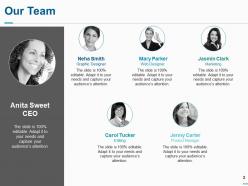
Slide 2: This slide showcases Our Team with Name and Designation to fill.
Slide 3: This slide shows the Organizational Structure with designations and names to fill.
Slide 4: This is also an Organizational Structure slide showing names and designations like- John Smith: CEO Elisabeth Parker: Product Manager Jenny Clark: Product Manager etc. as examples. Add the names and designations of your own team members and use it.
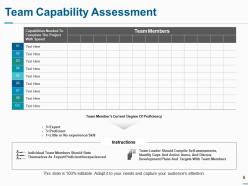
Slide 5: This slide shows Team Capability Assessment with Team Member’s Current Degree Of Proficiency.
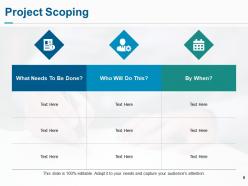
Slide 6: This is a Project Scoping slide showing What Needs To Be Done? Who Will Do This? By When? with icon imagery and text boxes.
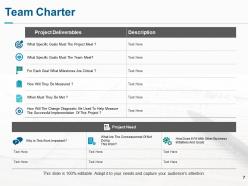
Slide 7: This slide shows Team Charter in a tabular form.
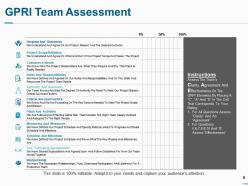
Slide 8: This slide shows GPRI Team Assessment table with instructions.
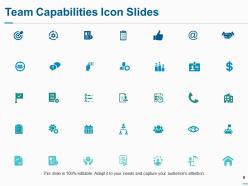
Slide 9: This slide shows Team Capabilities Icons which you can alter as per your requirement.
Slide 10: This slide is titled Additional Slides to move forward. You can alter the slide content as per need.
Slide 11: This is Our mission slide with imagery and text boxes to go with.
Slide 12: This is an About us slide to state company specifications etc.
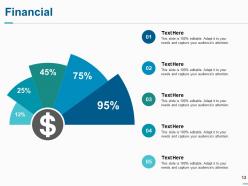
Slide 13: This slide presents Financial scores to display.
Slide 14: This is a Lego image slide to show information, specifications etc.
Slide 15: This is a Puzzle image slide to show information, specifications etc.
Slide 16: This is a Venn diagram image slide to show information, specifications etc.
Slide 17: This is a Mind Map image slide to show behavioural segmentation, information or anything relative.
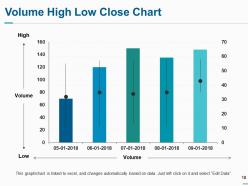
Slide 18: This is a Volume High Low Close Chart slide to show product/ entity comparison, specifications etc.
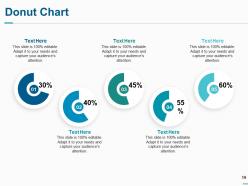
Slide 19: This slide displays a Donut Chart to show percentages of entities.
Slide 20: This is a Thank You slide with Address# street number, city, state, Contact Numbers, Email Address.
Team Capabilities Powerpoint Presentation Slides with all 20 slides:
Footfalls grow with our Team Capabilities Powerpoint Presentation Slides. They attract bigger crowds.




FAQs for Team Capabilities
Honestly, fast-paced teams need to nail three things: being adaptable when everything changes, communicating like crazy so nobody's lost, and solving problems without overthinking it to death. People also gotta feel safe calling out issues - that psychological safety thing is real. You can't just cross your fingers and hope this stuff happens naturally though. Daily check-ins work pretty well for keeping communication tight. When priorities flip (and they will), your team needs to pivot fast. I'd start there and build up those problem-solving muscles through practice.
Honestly, start with a skills audit - just map what your team can actually do vs what you need. People have random talents they never mention! Get some 360 feedback going so you're not just guessing at strengths and gaps. Past project data tells you a lot too - where do you always crush it, where do things go sideways? I'm big on regular one-on-ones because people usually know their weak spots better than anyone else. Oh, and make a visual skills matrix once you have all this info. Makes it super easy to see who needs training or if you should shuffle responsibilities around.
Honestly, diverse teams just crush problems better than homogeneous ones - the research backs this up big time. Different backgrounds mean people see blind spots you'd totally miss otherwise. You're not getting trapped in that groupthink bubble where everyone nods along. More creativity happens because someone's always approaching stuff from a weird angle you never considered. The tricky part though? Making sure people actually feel comfortable speaking up with their different takes. Otherwise you've got diversity that looks good on LinkedIn but doesn't do much for solving actual problems.
Honestly, you need crystal clear ownership within your team goals. Everyone should know exactly what they're responsible for AND how it connects to the big picture. I've watched so many teams get stuck in that "we'll all just collaborate" trap - spoiler alert, nothing actually gets finished that way! Regular check-ins are huge, but make people report on their actual deliverables instead of vague updates. Project boards work great since tasks have clear owners but still roll up to shared milestones. Oh, and definitely map out who's doing what before your next project starts. Trust me on this one.
Honestly, start with whatever's driving you crazy right now and work backwards. Slack or Teams will save your sanity by cutting down on email hell. Project management stuff helps you catch problems early - I'm partial to seeing everything laid out visually. Automation handles the boring repetitive work so your team can actually think. Oh, and get some kind of knowledge base going because when people quit, their brain knowledge shouldn't walk out the door with them. Don't try to fix everything at once though. Pick one tool, see how it goes.
Honestly, just weave it into stuff you're already doing. Maybe grab 15 minutes in your weekly meetings for someone to share what they picked up recently. Lunch and learns work too - way more casual than formal training. Book clubs are hit or miss though, half the time people stop showing up after like three weeks. The real trick? Don't punish people when they mess up trying something new. Give them actual time and budget for this stuff, not just empty promises. I'd start with one small thing and see how it goes. Oh, and celebrate the failures - sounds weird but it makes people way more willing to experiment.
Honestly, team dynamics can totally make or break everything. I've seen super talented people produce garbage because they can't communicate or trust each other. It creates these weird bottlenecks and just makes work suck. Good teams though? They naturally cover each other's blind spots and make everyone look better. The biggest thing is psychological safety - people need to feel okay speaking up or disagreeing without getting their heads bitten off. Oh, and watch how your team acts in meetings. That's usually where the dysfunction shows up first, like when someone dominates or people just check out completely.
Honestly, you need way more check-ins than feels normal - remote work totally kills those random conversations that actually matter. I'd start with weekly skill-sharing sessions where people teach each other stuff. One-on-ones are obvious but don't skip the social time either. Virtual coffee chats sound cheesy but they actually work for getting people to collaborate better later. Oh, and pair up teammates for mentoring - that's been huge for skill building in my experience. The communication thing is tricky but regular team meetings help fill those gaps.
Honestly, just start with regular one-on-ones - they're seriously underrated for catching problems before they blow up. Add team retrospectives after projects wrap so everyone can hash out what worked and what didn't. Peer feedback is clutch too since your teammates often spot stuff you're totally blind to as a manager. The whole thing only works if people feel safe being real with you though. Oh, and don't try to do everything at once - pick one approach first. I'd probably go with the one-on-ones since they're easiest to get rolling.
Dude, soft skills are what actually make or break teams. I've watched brilliant engineers completely crash because they couldn't communicate without starting wars. The best teams? They give feedback without people getting defensive, actually listen instead of just waiting to jump in, and handle disagreements like adults. It sounds cheesy but it's true - you can teach someone coding, but teaching someone not to be a nightmare to work with is way harder. When people can read the room and build on ideas together, everything just flows better. Definitely hire for personality alongside the technical stuff.
Honestly, just start by figuring out what skills your team has now vs. what you'll actually need down the road. Talk to leadership about where things are headed - though let's be real, priorities shift constantly anyway. Map out the gaps, then focus on stuff that transfers across different situations. Cross-training is huge so you're not screwed if one person leaves. Sometimes it's easier to bring in outside help for short-term projects rather than training someone from scratch. The main thing? Don't wait until it becomes a crisis to start planning.
Oh right, the four stages thing - forming, storming, norming, performing. Most teams try to skip straight to performing which is... not how it works lol. You've got to nail those awkward early convos about roles and expectations during forming. Then storming hits - that's when people actually disagree about stuff, so don't avoid it. Norming is where you figure out how you'll actually work together. Performing comes last when everyone's clicking. Honestly? The teams that take time upfront to hash out working styles and communication stuff are the ones that crush it later. Those early conversations feel weird but they're worth it.
Honestly, good conflict resolution is a game changer for teams. When people know how to handle disagreements properly, you skip all the petty drama and actually get work done. Active listening helps a ton - so does finding common ground early before things blow up. Your team will feel more respected and won't do that thing where they just go silent in meetings (you know what I mean). Ground rules are clutch too. Set them up before conflicts happen, not after. People collaborate way better when there's trust and they're not holding grudges over stupid stuff.
Track your delivery speed and quality stuff first - like how often you're shipping and your bug rates. Team happiness metrics are huge too though. Are people actually enjoying work? Do they feel safe speaking up? I'd also watch retention rates because losing people sucks and is expensive. Knowledge sharing is tricky to measure but super important. Honestly, pick maybe 3 metrics max that actually matter to your situation. I made the mistake of tracking everything once and it was overwhelming. Start with what feels most broken right now and build from there.
Honestly, goal-setting makes such a huge difference for teams. Without it, people just work on random stuff that doesn't connect. I've seen this mess up so many projects. When you actually sit down and figure out 2-3 clear objectives for the quarter, suddenly everyone knows what they're working toward. Your best people stop wasting time on conflicting priorities. It's like finally having directions instead of driving around lost. The motivation boost is real too - people want to understand how their work matters. Get everyone in a room and hash out those key goals together.
No Reviews