Capability Management Powerpoint Presentation Slides
Try Before you Buy Download Free Sample Product
Audience
Editable
of Time
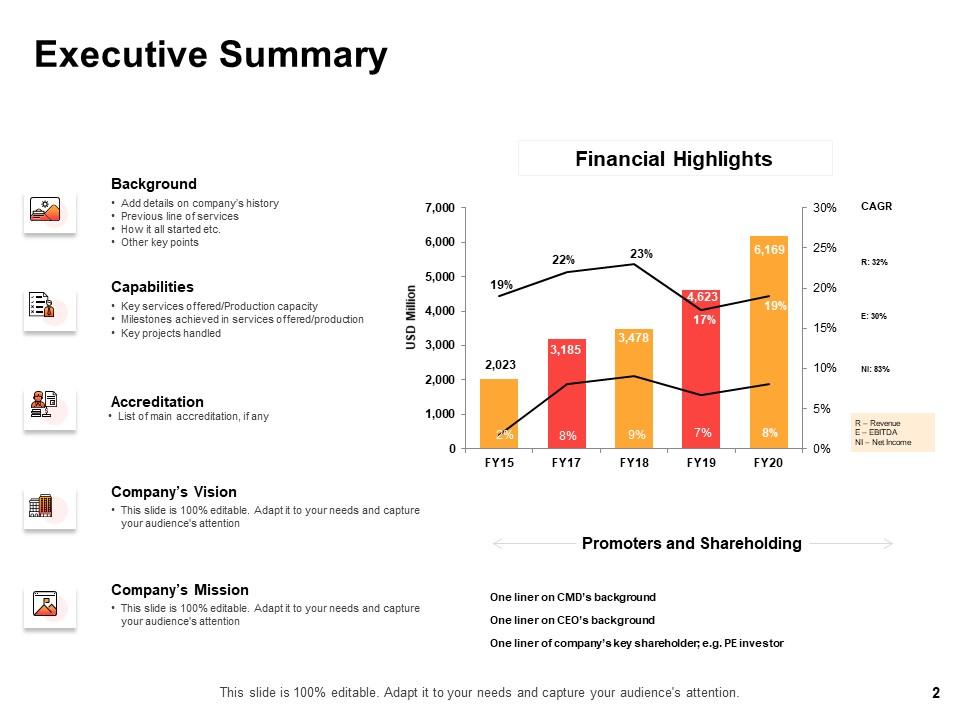
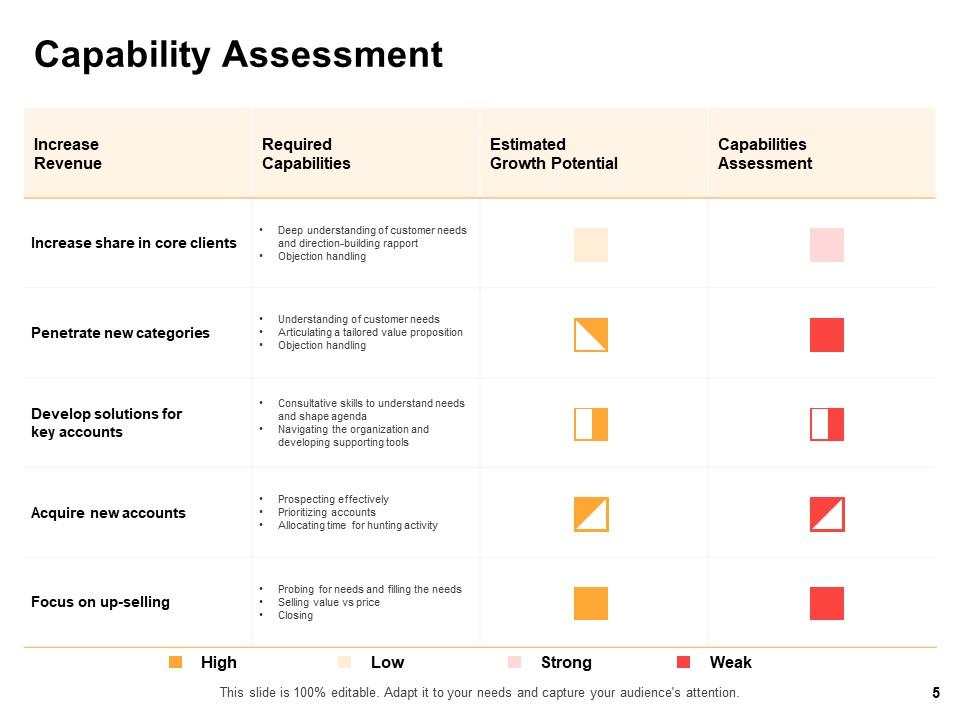
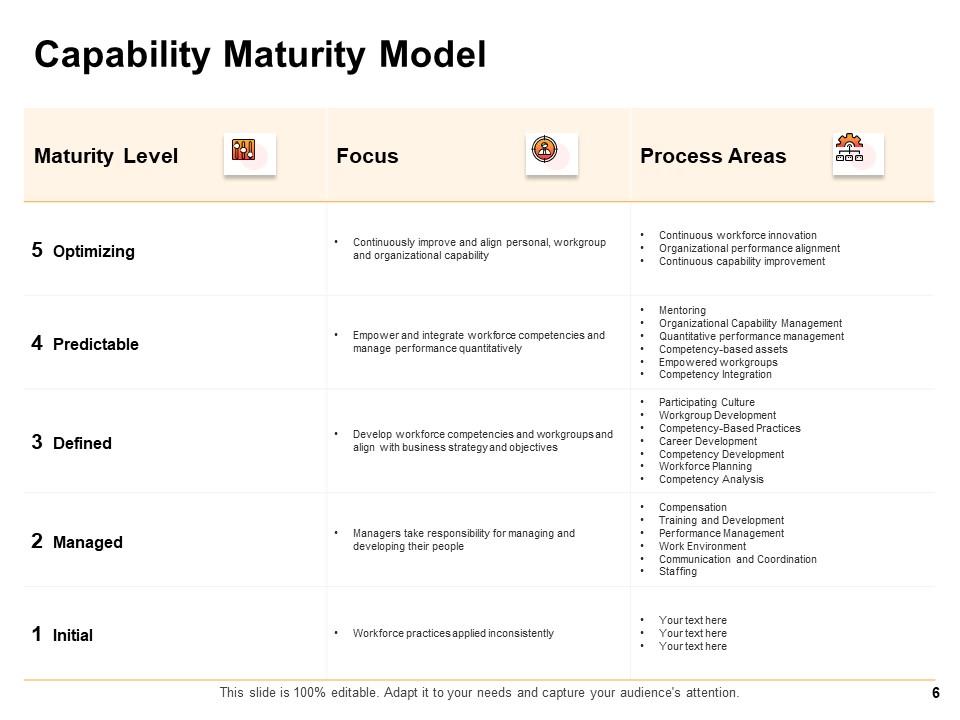
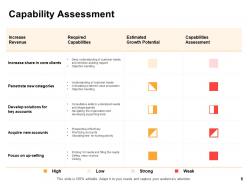
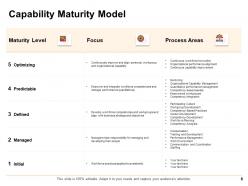
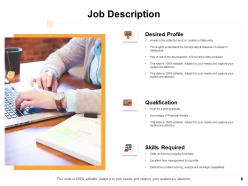
Identify the key strategic capabilities that are critical for business success by using our content ready Capability Management Powerpoint Presentation Slides. Take the assistance of this capacity management PowerPoint slideshow to illustrate the five maturity levels namely initial, managed, defined, predictable, and optimizing. Employ professionally designed resource planning presentation deck to portray the behaviors, knowledge & skills your company people need to succeed. Showcase the capabilities necessary to execute a business strategy with the help of this professionally designed capability management framework. Depict the strategic objectives of the business by utilizing the organizational capability PPT templates. Focus on your business ability to meet customer demands with the aid of capability assessment model PPT slides. Build competency of your organization with the help of this topic-specific capability maturity model PPT graphics. Therefore, map the capability of your business by downloading the business capacity assessment PowerPoint Presentation.
People who downloaded this PowerPoint presentation also viewed the following :
Capability Management Powerpoint Presentation Slides with all 19 slides:
Use our Capability Management Powerpoint Presentation Slides to effectively help you save your valuable time. They are readymade to fit into any presentation structure.
FAQs for Capability Management
Honestly, most companies totally bomb this because they skip the boring baseline stuff. Start by mapping what you've got now against what your strategy actually needs. Find the gaps, then rank them by business impact - that's your priority list. Build development roadmaps with clear owners for each piece. Oh, and you absolutely need governance structures for regular check-ins, otherwise everything just drifts apart over time. I'd test this whole approach on one capability area first before you go crazy rolling it out everywhere. Way less risky that way.
Start with a capability audit - basically map what you're actually good at versus what your strategy needs. Interview people across different departments to get the real story, not just what's written down somewhere (that stuff's usually old anyway). Compare your processes, skills, tech, and resources against competitors or industry standards. Honestly, the gaps become pretty obvious once you look at it systematically. Make a simple matrix - current state versus where you want to be for each capability. Then figure out which gaps are actually killing your business goals right now versus the stuff that'd just be nice to fix later.
Tech is basically what makes capability management actually doable these days. It handles all the data collection automatically and shows you real-time analytics so you can spot gaps you'd totally miss otherwise. Platforms let you map what you have now against what you'll need later, plus track how your development stuff is going. Some even predict where to invest next - which honestly blows my mind sometimes. Doing this manually is like... why would you torture yourself? Just make sure whatever tools you pick actually work with your current systems instead of creating another headache. Start with your biggest blind spots first.
Honestly, capability management is like doing a reality check before making big moves. You map out what your company can actually handle versus what you're trying to achieve. No more jumping into projects only to realize halfway through that you don't have the right people or systems. I've seen too many strategies crash because leadership got excited about an opportunity without checking if they could execute it. The whole point is spotting those gaps early so you can either build what's missing or pick different battles. It saves you from those painful (and expensive) pivots later.
Track the hard stuff first - capability scores, faster time-to-market, cost cuts in your key areas. Employee assessments and training rates help too, but honestly people just click through half that stuff anyway. What really matters? Revenue tied to specific capabilities, customer satisfaction, and whether you're actually closing gaps on schedule. Don't go crazy with metrics though - pick 3-4 and stick with them until you've got solid baseline data. Then you can add more. I learned this the hard way after drowning in dashboards that told me nothing useful.
So capability management is basically making sure you can actually DO the stuff in your business plan. Like, don't plan to expand into five new cities if your team can barely handle the current workload - I've seen companies crash hard doing exactly that. Map out what skills and resources you have now vs what you need for your goals. Then figure out the gaps. Should you hire? Train people? Partner with someone? Start simple: pick your top 3 priorities and honestly ask if you're equipped to pull them off.
Honestly, data quality is gonna be your biggest headache. Different departments guard their info like it's state secrets, and half of it's outdated anyway. Leadership won't get excited about it either since results take forever to show up. Plus nobody ever wants to own the thing once you build it - classic corporate hot potato situation. My take? Pick one small business unit first. Show them it actually works, then use that win to convince everyone else. Way less painful than trying to boil the ocean from day one.
Honestly, mapping out what skills you actually have versus what you need is a game-changer for spotting innovation opportunities. Think of it like finding the gaps on your roadmap - that's where the creative stuff happens. I've seen companies get so caught up in day-to-day operations that they miss these white spaces completely. Track your capabilities systematically and you'll know exactly where to put resources for experimental projects or cross-team collaboration. Start by comparing your current skills against your strategic goals. You'll probably discover innovation opportunities you didn't even know existed.
Okay so first thing - you've gotta do regular capability assessments and figure out where your gaps are. Start with baseline measurements, then track how you're doing against your goals. Honestly, without solid data collection you're basically flying blind. I'd do quarterly reviews to see what's actually working (spoiler: probably not everything). Get your teams involved in spotting improvement opportunities - they know the pain points better than anyone. Create action plans with clear owners and deadlines. Oh and celebrate the wins! People need that momentum. My advice? Pick just one capability area first and nail down your process there before you try to boil the ocean.
Honestly, the key is making it feel personal, not like some HR checkbox. Let people pick what they actually want to learn - forcing skills on someone is such a waste. Peer teaching works way better than formal training half the time. Set up lunch sessions where people share what they know. Actually give them time and money to develop skills too, because "do it on your own time" is basically saying you don't care. Oh, and celebrate when they use new skills at work, not just course completions. People need to see how learning connects to better projects and promotions.
Start with a good capability map that shows what each thing does and why it matters. Document where you're at now - maturity levels, processes, tech, people. Honestly, most of these end up being useless PowerPoints that sit in someone's folder forever. Put everything somewhere people can actually find it, like a wiki. Keep it simple at first. The real trick is getting the people doing the actual work to help you write it - they know what's really happening vs what leadership thinks is happening. Update it regularly or it'll just become another dead document.
So capability management is basically like taking inventory of what you can actually do vs what you need to do. Makes it super obvious where your weak spots are. You'll spot gaps fast - missing skills, crappy old systems, being way too reliant on one vendor (learned that one the hard way). Then you can focus your risk planning on those actual problem areas instead of just throwing stuff at the wall. I'd say start with your 3-5 most critical business functions first. That's usually where the scary stuff lives anyway.
Honestly, you need people from different teams involved because they all see totally different things. Marketing spots gaps IT completely misses. Operations finds redundancies that finance never caught. When you're planning investments, having everyone there from the start means way better buy-in - nobody wants resource requests randomly dumped on them later. The trick is setting up regular check-ins where teams can actually talk about what they need (not just what they think they need, which is usually different). I'd start small though - just map out one capability with reps from each area involved.
For capability management, you've got a few good options. MEGA, LeanIX, and BiZZdesign are the big enterprise platforms - they'll map everything to your processes and systems. Way more comprehensive but pricey. Lucidchart or draw.io work great for simpler capability mapping. Honestly though? I've seen teams crush it with just Excel or Google Sheets before dropping serious cash on enterprise stuff. My old manager swore by spreadsheets for like two years. Start with clear definitions of what your capabilities actually are first. Then pick your tool based on how complex things get and what you can actually afford.
Look, capability management basically means you can actually do what you tell customers you'll do. Having the right skills and processes lined up means way fewer screwups on delivery. Quality stays consistent. Delays drop off. Honestly, most companies are terrible at this - they promise stuff they can't handle well. The smart move? Map out what you're actually good at versus what customers want from you. Then tackle the biggest gaps first. It's like... you wouldn't promise to cook a fancy dinner if your kitchen's a mess, right?
-
Great product with highly impressive and engaging designs.
-
Design layout is very impressive.
-
Great quality slides in rapid time.