


Agriculture Consultancy Firm Brochure Trifold
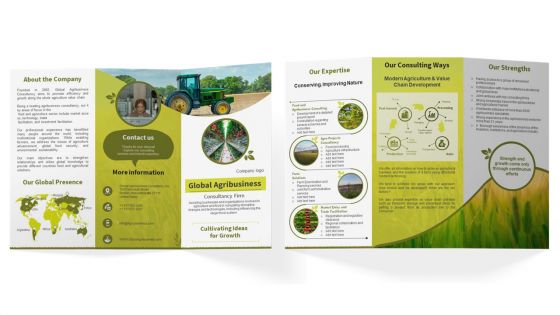




Try Before you Buy Download Free Sample Product
 Impress Your
 Audience
 100%
100% Editable
 Save Hours
 of Time


Use our incredibly captivating Agriculture Consultancy Firm Trifold Brochure Template to promote your Consultant Business. With the assistance of Our Agriculture brochure presentation template, you can provide a quick introduction of company and its contact details. You can talk about the company expertise and consulting approach using the consultant business brochure PowerPoint theme. Employ this expertly created PPT brochure to highlight companys strengths. Leverage this brochure to emphasize on modern techniques employed by the company to attract potential clients.
People who downloaded this PowerPoint presentation also viewed the following :
Agriculture Consultancy Firm Brochure Trifold with all 1 slides:
Use our Agriculture Consultancy Firm Brochure Trifold to effectively help you save your valuable time. They are readymade to fit into any presentation structure.

FAQs for Agriculture Consultancy
Dude, totally worth it if you can swing the cost. Agriculture consultants know all the latest tech and farming methods for your specific crops. They'll help cut down your input costs and boost yields without you having to become an expert overnight. The regulatory stuff alone is such a pain - honestly saved me hours of paperwork headaches. Most have solid connections with suppliers and buyers too, which is huge. Just make sure whoever you pick has experience with farms your size and actually knows your crop type. Ask around locally first though, sometimes word-of-mouth beats fancy credentials.
Dude, ag consultants can seriously bump up your yields - we're talking 15-30% which is nuts. They hook you up with GPS tractors, soil sensors, drone monitoring, all that fancy stuff. Makes everything data-driven instead of just winging it. The predictive analytics part is pretty sweet too, basically tells you what weather and pests are coming. Your consultant picks tech that actually fits your crops and budget, then shows your crew how to use it without breaking anything. Honestly? Start with soil testing first - biggest bang for your buck right there.
Dude, sustainability is everywhere in ag consulting now. Farmers are getting hit from all sides - regulations, picky consumers, supply chains demanding proof they're being responsible. Plus it actually saves them money over time, which is huge. We're doing precision ag, helping cut waste, soil health stuff that keeps yields up. The whole "just spray everything" mentality is dead. Carbon credits are becoming a real thing too - like, actual revenue streams. If you're getting into this space, learn about carbon sequestration and those certification programs. That's where all the money and opportunities are heading right now.
So basically, these consultants do regular field checks and catch pest problems way before they blow up into expensive nightmares. They'll create custom treatment plans mixing biological controls with targeted spraying - timing is everything with this stuff. What's cool is they know your specific crops and area, so no generic cookie-cutter approach. Plus they factor in resistance management so you're not creating superbugs down the road. Honestly, it's like having someone who can read the warning signs while you're focused on everything else. Way better than scrambling to fix disasters after they happen.
Biggest myth is they're just overpriced middlemen who've never touched dirt. Not true - tons of them actually farmed before consulting. You're probably too close to your operation to catch certain inefficiencies anyway. People think you only call them when everything's falling apart, but honestly that's backwards thinking. Small farms actually see better returns than big ones sometimes because the advice hits harder. Oh, and everyone assumes they'll push some crazy expensive tech on you. Good ones start with what you've already got. Just make sure they ask about YOUR goals first, not launch into their pitch immediately.
So basically they're like your personal translator for all the crazy regulations out there. Federal, state, local - whatever applies to your farm, they know it inside and out. They'll walk you through compliance, handle pesticide licenses, organic cert stuff, food safety rules. The regulatory world moves so damn fast these days. Plus they can be there during inspections (honestly a lifesaver) and help with permits. Documentation is huge too - they make sure you're covering your butt properly. Just find someone who actually gets your type of operation. Worth every penny to avoid those compliance nightmares later.
Bring all your data - yields, soil tests, pest issues, the whole mess. Your consultant needs to see everything upfront. Don't forget equipment limits and labor stuff either, because honestly what's the point of some perfect plan you can't actually pull off? I've watched so many gorgeous rotation charts completely crash when reality hits. Map out 3-4 years together, mixing nitrogen-fixers with heavy feeders like corn. The trick is being brutally honest about what you can handle day-to-day, then let them work their magic around that.
Honestly, getting your soil tested properly is one of the smartest moves you can make. These assessments tell you exactly what nutrients you're missing, pH levels, compaction - all the stuff you can't just eyeball. My neighbor saw his yields jump like 25% in just two seasons following the recommendations. Way better than randomly dumping fertilizer everywhere and hoping for the best. The real benefit? You're actually building soil health instead of just masking problems. I'd get a baseline test done this year so you can track what's working. Makes decisions way easier when you've got actual data to work with.
So right now the big things are AI crop monitoring and variable rate application getting way cheaper. Drone mapping too - like, seriously affordable now compared to even 2022. Most farmers I know are finally jumping on soil sensors and satellite data for real-time stuff. Don't overwhelm them with everything though. Pick one or two techs max to start. ROI calcs are huge since they need to see the numbers work. Hands-on training is key - farmers learn by doing, not PowerPoints. Oh and definitely buddy up with local equipment dealers. They'll handle the ongoing headaches after you're gone, which honestly saves everyone time.
So they'll basically crunch all your numbers first - what you're spending on seeds, equipment, labor versus what you expect to make from your crops. Cash flow, break-even points, all that fun stuff. The financial modeling gets crazy detailed honestly, way more variables than you'd think! Weather risks, market swings, pest problems - they factor in everything that could mess with your profits. Oh and don't go in with pie-in-the-sky projections. I've seen farmers get burned by being too optimistic upfront. You want realistic numbers or you'll regret it later.
Get someone who's actually worked with your type of crops/livestock - classroom knowledge doesn't mean much when the weather goes sideways. Their track record matters more than fancy degrees, honestly. Find someone who keeps up with new tech and sustainable stuff, not some guy still doing everything like it's 1995. Oh and make sure you actually get along with them since you'll probably be talking constantly. References from other farmers are huge. Also they need proper certifications obviously. I'd definitely start small - maybe one project to see how it goes before diving into anything big.
Ag consultants are honestly pretty clutch for connecting farms with actual buyers. They'll help you understand what the market wants and link you up with distributors. Pricing strategies become way less of a guessing game too. The supply chain stuff is where they really shine - better logistics, fewer losses after harvest, contract negotiations. Their networks are probably the biggest advantage though. You'd never get access to those connections on your own. I mean, my cousin's farm doubled their profit margins after hiring one. If you're getting screwed on prices or can't find reliable buyers, it's worth the investment.
Honestly, the biggest pain points are gonna be infrastructure stuff - crappy internet, transportation headaches, clients spread all over creation. Language barriers hit hard too. Most farmers aren't exactly jumping to ditch methods their grandparents used, which honestly makes sense sometimes. Mobile hotspots are your friend here. Partner up with local co-ops instead of going solo - they already have trust built up. Don't lead with fancy tech talk. Show them actual money saved or earned first, even if it's small wins. Consistency beats flashy presentations every time. Build locally, prove it works, then you can think bigger.
So first thing - figure out what climate stuff actually threatens their specific farm. Drought, weird weather patterns, whatever. Then you can push them toward things that make sense, like hardier crops or better soil practices. Water management's obviously huge too. But honestly, don't dump everything on them at once or they'll just shut down. Pick maybe two strategies that won't break their budget. I'd build some basic risk tools they can actually understand and use, then work backwards from their worst vulnerabilities. Makes the whole thing way less overwhelming for everyone.
Honestly, ag consultants are a game-changer for going organic. They'll walk you through the certification mess (and wow, is it messy), plus help with soil health and pest control that actually works instead of just theory. The regulatory stuff alone is worth paying someone who knows what they're doing. They're also great for connecting you with buyers and figuring out fair pricing. Oh, and crop rotation planning - super important but easy to screw up on your own. Find someone who specializes in whatever you're growing and knows your local market. It's worth the investment upfront.
-
Best Representation of topics, really appreciable.
-
I am a big fan of their newsletters because that is how I found my perfect requirement at the time of urgency. Thank God, I kept opening those.