Annual Coffee Shop Balance Sheet Projections Business Plan For Opening A Cafe Ppt Layouts

Rating:
96%
Annual Coffee Shop Balance Sheet Projections Business Plan For Opening A Cafe Ppt Layouts
Slide 1 of 2
Favourites Favourites

Try Before you Buy Download Free Sample Product

Audience Impress Your
Audience
Editable 100%
Editable
Time Save Hours
of Time
The Biggest Sale is ending soon in
0
0
:
0
0
:
0
0
Rating:
96%
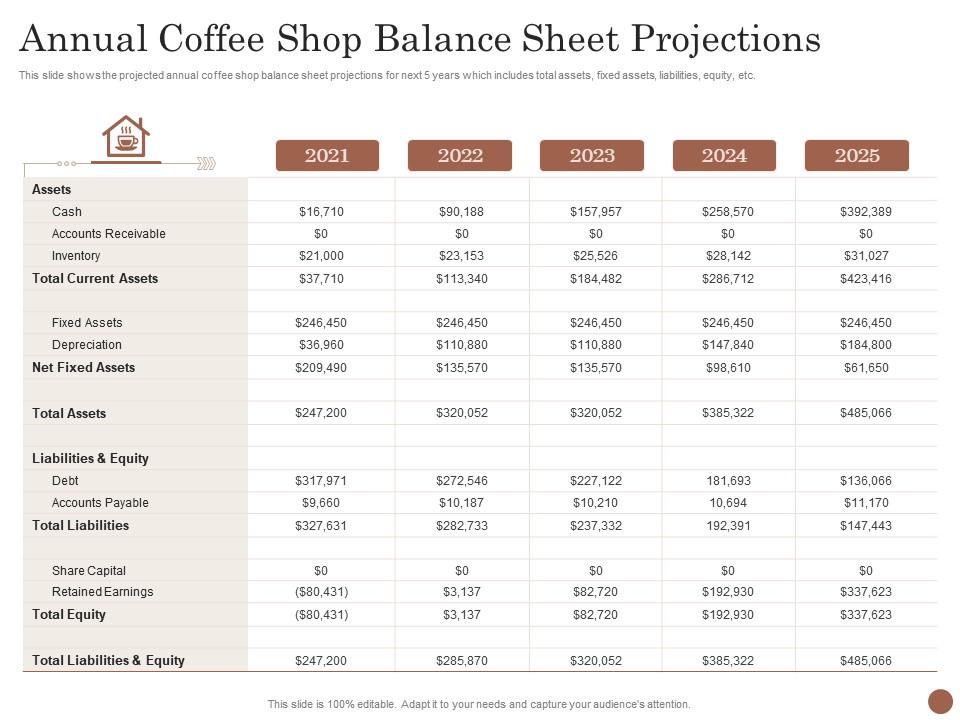
This slide shows the projected annual coffee shop balance sheet projections for next 5 years which includes total assets, fixed assets, liabilities, equity, etc. Deliver an outstanding presentation on the topic using this Annual Coffee Shop Balance Sheet Projections Business Plan For Opening A Cafe Ppt Layouts. Dispense information and present a thorough explanation of Assets, Liabilities And Equity, Inventory, Accounts Payable, Depreciation using the slides given. This template can be altered and personalized to fit your needs. It is also available for immediate download. So grab it now.

FAQs for Annual Coffee Shop Balance Sheet Projections Business Plan For Opening A

So you'll need solid market research first - who's your customer and what's the competition like? Financial stuff is obviously crucial: startup costs, revenue projections, all that fun math. Location analysis matters way more than people think. Your menu concept and pricing need to make sense together. Operations gets messy fast - staffing, suppliers, equipment, how everything actually runs day-to-day. Marketing strategy too, but honestly? Check out what successful cafes near you are doing first. Don't reinvent the wheel. Just be super realistic with your timeline and numbers or you'll hate yourself later.

Dude, you gotta know who's actually gonna buy your coffee before you open. Do some surveys around the neighborhood - are people rushing to work needing quick breakfast? Students wanting to camp out? Families looking for weekend hangouts? Check out similar cafes nearby and see who hangs there. Peak hours, what people spend, food combos that work - the data tells you everything instead of just guessing. I learned this the hard way with my cousin's failed smoothie place. Start simple though, don't overthink it.

So you'll want daily sales projections and average ticket prices first. Operating costs are huge - rent, staff, ingredients, all that stuff. Don't forget your initial equipment and buildout expenses either. Cash flow statements matter because cafes get hit hard seasonally (winter's rough when nobody wants iced coffee). Break-even analysis shows when you'll actually make money, plus you need P&L projections for three years minimum. Oh, and factor in loan payments if you're financing anything. Honestly? Lowball your revenue estimates and add 10-15% to expenses because everything costs more than you think it will.

Start with who you're trying to reach - that's what matters most. Coffee-to-go people? Hit the office districts. Laptop campers who nurse one drink for hours? Residential spots work better (and honestly those folks become your regulars). Check if you can even afford rent where your customers hang out though. Walk around different times of day, see how busy it gets. Parking matters too - nobody wants to circle blocks for caffeine. Don't put yourself right next to three other coffee shops unless you've got something really different. Best spot is where your people naturally go and you won't go broke paying for it.

Your menu basically controls everything else about your cafe. Seriously, it affects your target customers, profit margins, equipment needs, suppliers, staffing - even where you can set up shop. Can't make fancy brunch plates without decent kitchen space, you know? Plus it sets the whole vibe for customers. Are you the grab-coffee-and-go place or somewhere people hang out for hours over eggs benedict? I'd figure out your concept first, then design a menu around that. Way easier than trying to force a random menu into whatever space you end up with.

Honestly, you gotta figure out what actually sets you apart - and "good coffee" doesn't count since everyone claims that. Are you the only place doing specialty teas? Got some amazing breakfast sandwich that nobody else has? Maybe you're going all-in on the remote worker crowd with crazy good wifi and quiet spots. Whatever it is, be super specific in your business plan about who you're targeting. Like, why would someone pick you over the Starbucks right down the road? Write down your real advantages - could be local partnerships, unique menu stuff, or just the vibe you're creating. Then you better be able to actually pull it off.

Equipment's gonna be your biggest hit - espresso machines, grinders, all that good stuff. Then there's lease deposits and renovations which honestly get expensive way faster than you'd think. Don't sleep on permits and insurance either, that stuff adds up. You'll need working capital for like 3-6 months since it takes forever to build regular customers. Labor during those slow first months kills budgets too. I'm thinking $80-200k depending on where you are and how big. Get equipment quotes first - that's where most of your money's going anyway.

Figure out what your cafe actually *is* first - cozy hangout spot or sleek work hub? Don't try being both because honestly, that just confuses people. Once you've got that nailed down, everything else should match. Your Instagram, events, loyalty stuff - it all needs to feel consistent. I swear, half the cafes I see are having identity crises and wonder why their marketing feels scattered. The good ones? They know exactly who they are. Write down your vibe on one page and check it whenever you're planning something new. Sounds simple but it works.

Get your staffing nailed down first - clear schedules and who does what. Inventory's huge too, especially coffee beans (trust me, people drink way more than you'd think). Set up systems to track everything so you don't run out of stuff. Document your daily routines step by step, then train everyone the same way. Your POS should connect to inventory tracking. Equipment breaks and people call out sick, so have backup plans ready. Honestly, the drink prep standardization will save you so much headache later. Start with workflows, then build from there.

Honestly, start with a solid POS system - that's your backbone for payments, inventory, and sales data. Mobile ordering is basically mandatory now because nobody wants to wait in line anymore (I literally won't go places without it). Kitchen displays are way better than those messy paper tickets flying everywhere. You'll definitely need good WiFi since everything runs digital these days. Staff scheduling software saves you so many headaches. Oh, and loyalty apps keep people coming back - those reward points are addictive. Build everything around your POS first, then add the other stuff gradually.

So for your business plan, you'll want to figure out when you're hiring and what each role actually costs. Baristas are obvious, but think shift leads and kitchen people too if you're doing food. Training takes forever - seriously, budget like 2-3 weeks before they're actually useful. Map out your busy vs dead times for scheduling, and have a backup plan when people call out sick (because they will). Don't forget the boring stuff like payroll taxes and benefits. Oh, and write actual job descriptions now so you're not scrambling later trying to remember what you need.

Start with local suppliers - coffee, food, whatever you can find nearby. Cuts down on shipping and your customers actually dig knowing where their stuff comes from. Get some composting going and maybe offer like 10% off for people bringing reusable cups (works better than you'd think). LED bulbs are a no-brainer for your electric bill. Oh, and ditch plastic packaging for the biodegradable stuff when you can. Don't try to do everything at once though - pick two things, see how they work, then add more. Energy Star equipment costs more upfront but you'll thank yourself later.

Track your revenue per square foot and daily sales first - that's your baseline. Customer stuff matters too though: how often people come back, what they're spending per visit, table turnover rates. Cost of goods and labor percentages will literally make or break you, trust me on that one. Don't just do monthly reports either, that's too slow. Set up something weekly so you can actually catch problems before they get ugly. Oh and profit margins obviously, but you probably already knew that.

So you gotta build in flexibility from the start, honestly. Mix up what you offer - seasonal stuff, catering, maybe even sell retail products when things get slow. My friend's cafe got absolutely demolished that first winter because he didn't see it coming! Staff smart so you can scale up and down easily. Cash reserves are huge - save like crazy during busy months to survive the dead periods. Oh, and definitely partner with other local spots for cross-promotion during peak times. Track everything so you'll know what's coming each year and can actually prep for it.

Look for partnerships that either bring customers or save you money. Bookstores are perfect for reading events, gyms for post-workout deals. Food suppliers usually give better rates on longer contracts - wish I'd known that earlier! Local roasters and bakeries are great for cross-promotion too. Co-working spaces might want coffee delivery, which is honestly easier money than you'd think. Even food trucks can work for joint events. Just map out businesses within a few blocks and start reaching out. The relationships you build now will save you tons of stress down the road.

Ratings and Reviews

96% of 100
Review Form
Write a review
Most Relevant Reviews
  1. 100%

    by Donovan Cunningham

    Colors used are bright and distinctive.
  2. 100%

    by Dong Santos

    Top Quality presentations that are easily editable.
  3. 100%

    by Collin Gonzales

    Best way of representation of the topic.
  4. 100%

    by Li Stewart

    Great product with highly impressive and engaging designs.
  5. 80%

    by Coleman Henderson

    Presentation Design is very nice, good work with the content as well.

5 Item(s)

per page: