


Projected profit and loss statement business plan for opening a cafe ppt powerpoint example file




Try Before you Buy Download Free Sample Product
 Impress Your
 Audience
 100%
100% Editable
 Save Hours
 of Time


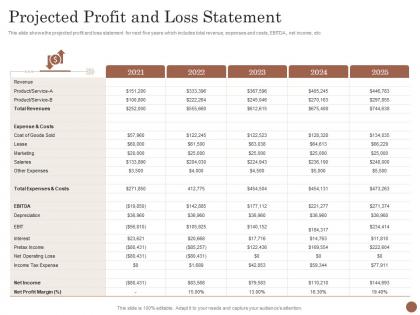
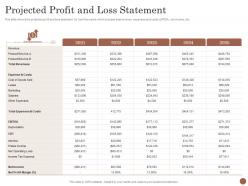
This slide shows the projected profit and loss statement for next five years which includes total revenue, expenses and costs, EBITDA, net income, etc.
People who downloaded this PowerPoint presentation also viewed the following :
Projected profit and loss statement business plan for opening a cafe ppt powerpoint example file with all 2 slides:
Use our Projected Profit And Loss Statement Business Plan For Opening A Cafe Ppt Powerpoint Example File to effectively help you save your valuable time. They are readymade to fit into any presentation structure.
FAQs for Projected profit and loss statement business plan for opening a cafe ppt
So for your café P&L, start with revenue - coffee sales, food, maybe some retail items. Then hit your cost of goods: beans, milk, pastries (this stuff seriously adds up). Operating expenses are rent, utilities, payroll, equipment fixes. Oh and don't forget the boring stuff like permits and insurance. I'd honestly go conservative on revenue projections since building a customer base takes forever. Break it into fixed costs versus variable ones that change with sales. Monthly projections work best for the first year - cafés get weird seasonal swings that'll mess with your numbers.
Dude, seasonality will absolutely mess with your café numbers - we're talking 20-40% swings depending where you are. Summer's brutal because everyone's either traveling or hanging out at parks instead of buying your lattes. If you're near a college, exam season kills foot traffic too. January is the worst though. People are totally broke from the holidays and doing that whole "new year, new me" health kick thing. Winter holidays can be decent for sales at least. Don't just assume steady income when you're doing your projections - that's rookie mistake territory. Check out what other local spots are doing or find some industry data to figure out those monthly patterns. Way better than freaking out when things naturally slow down.
Honestly, I'd start by calculating your actual recipe costs ingredient by ingredient - that's way more accurate than guessing. Add like 10-15% on top for waste and portion stuff that always happens. Coffee and tea are pretty straightforward to figure out cost-wise. Industry standards say cafés usually hit 28-35% of revenue on food costs, which is helpful for a reality check but feels kinda broad to me. If you can get your hands on data from similar places or supplier quotes, even better. Do the math on your main menu items first, then see if it lines up with those industry percentages. At least then you'll know if you're totally off base or not.
After rent, labor's gonna be your biggest hit - probably 25-35% of revenue. Don't forget about payroll taxes, benefits, workers comp on top of wages when you're doing projections. Good baristas are honestly worth every penny though, they keep customers coming back and move lines fast. Start with minimal staff and add seasonal tweaks since summer can get weird depending where you are. Oh, and once you're running - check that labor percentage every week. If it starts creeping up, cut hours quick or you'll regret it.
Your pricing is what makes or breaks your P&L projections - mess this up and you're screwed. Calculate your cost per item first (ingredients, labor, rent, the whole deal). Then see what competitors are charging. Too low and you won't cover costs even if you're slammed. Go too high? Customers vanish - my buddy's smoothie place learned that lesson fast. Honestly, pricing feels like guesswork sometimes but you gotta find that balance where you're profitable without scaring people off. Test a few different price points in your projections and see what actually works.
Count foot traffic at different times - usually only 1-3% will actually come inside. Check out your competition too, see when they're busy and what people spend. Don't fall into that "if you build it they'll come" trap, btw. Figure out your seating capacity and how many times tables turn over (cafés usually get 3-4 per day). Seasonal stuff matters too. Honestly, I'd start super conservative - like 50-60% of what you think you can do in year one. Do a soft opening first to test your numbers before you commit to anything major on paper.
Get everything down on paper - revenue projections, daily customer counts, what people spend on average, ingredient costs, rent, labor. Growth rates too. Oh, and don't forget the random stuff like equipment breaking down (learned that one the hard way). Market research sources and industry benchmarks are crucial for backing up your numbers. Your assumptions are literally what everything else builds on, so if they're garbage, your whole plan falls apart. Stay conservative with your estimates - way better to beat your projections than scramble when reality hits and you're way off.
Honestly, I'd check those P&L projections monthly your first year - maybe even more if things are moving fast. Caught me off guard at my last place when I got lazy about it and suddenly we were way off track. Short, brutal lesson learned there! Once you hit year two, quarterly reviews are probably fine unless revenue's all over the place. The real trick is actually comparing what happened vs. what you thought would happen, then fixing your assumptions. Oh, and put it on your calendar or you'll just keep pushing it off. Trust me on that one.
Dude, biggest thing is don't get crazy optimistic with sales projections. Summer's brutal for cafes - everyone's on vacation or whatever. Labor costs will eat you alive if you're not careful. Oh, and equipment breaks constantly (learned that one the hard way). Your espresso machine will definitely die on the busiest day possible, I swear it's like they plan it. Factor in all the boring stuff - rent, insurance, utilities. Then add like 20% on top for random disasters because trust me, something will go sideways. Variable costs are tricky too since they change with how busy you are.
Look, investors basically want to see you've actually thought this through - not just "I love coffee so let's open a café!" Your P&L shows you get the real costs. Labor alone will probably eat like 30% of your revenue, then there's rent, beans, equipment repairs. Most food places crash and burn because people don't crunch these numbers properly. Be realistic about your timeline too. Don't claim you'll be packed from week one - that's BS and everyone knows it. Show seasonal dips, conservative capacity estimates, when you'll actually break even. It's your proof you understand this isn't just a hobby.
Honestly, budget around 60-75% of your sales for operating expenses. Food costs will probably hit you for about 28-35% - and trust me, premium coffee beans aren't cheap these days. Labor's another big chunk at 25-30%. Then there's rent, utilities, marketing, all that jazz. Really depends on your setup though. Full kitchen? Just coffee and pastries? Your neighborhood matters too. I'd peek at what similar spots near you are doing and work backwards from there. Those percentages are a decent starting point but every café's different.
Yeah so you definitely want to track each revenue stream separately since the margins are totally different. Dine-in is your goldmine - people order more stuff, get drinks, and you're not paying those brutal third-party fees. Takeout's somewhere in the middle, decent margins but smaller orders usually. Delivery though... ugh, those platforms are ruthless with their 15-30% cuts. Sure, you might get more volume but it barely feels worth it sometimes. I'd build separate models for each one so you can actually see which streams are making you money vs just keeping you busy.
Check out your local competition first - are you gonna be the fifth Starbucks on the block? Winter's brutal for patio sales, and honestly, coffee's usually the first thing people ditch when they're broke. Your neighborhood matters big time. Office workers want their 7am fix, but residential areas are more chill afternoon crowds. Coffee bean prices are wild right now - like, I've seen them jump 30% in a few months. Supply chain stuff is still messy too. I'd pad your budget with at least 10-15% extra for when things inevitably go sideways.
So first thing - set up marketing expenses as their own line item. Then just compare that directly to whatever revenue bump you're seeing in the same timeframe. Customer acquisition cost is huge here - divide your total marketing spend by how many new customers you actually got. Honestly, I get way too in the weeds with this stuff but it's worth it. Look at customer lifetime value too because sometimes the math is brutal and you need to know. Track specific campaigns against what they brought in revenue-wise. Give it like 3-6 months minimum to see real patterns though.
Check your daily sales and food costs first - keep food around 28-35% if you can. Customer count and average ticket size will tell you everything honestly, way before your monthly reports catch up. Labor costs are huge too. I'd set up some kind of weekly dashboard because waiting for month-end numbers is brutal. Waste tracking is annoying but food spoilage will destroy your margins without you realizing. Compare weekly performance to what you projected - gross margin trends don't lie. Short sentences mixed with longer ones keep it readable.
-
I discovered this website through a google search, the services matched my needs perfectly and the pricing was very reasonable. I was thrilled with the product and the customer service. I will definitely use their slides again for my presentations and recommend them to other colleagues.
-
Design layout is very impressive.
-
Presentation Design is very nice, good work with the content as well.
-
Commendable slides with attractive designs. Extremely pleased with the fact that they are easy to modify. Great work!
-
Unique design & color.