


Artificial intelligence high technology powerpoint presentation slides complete deck





Try Before you Buy Download Free Sample Product
 Impress Your
 Audience
 100%
100% Editable
 Save Hours
 of Time


Our Artificial Intelligence High Technology Powerpoint Presentation Slides Complete Deck are topically designed to provide an attractive backdrop to any subject. Use them to look like a presentation pro.
People who downloaded this PowerPoint presentation also viewed the following :
Content of this Powerpoint Presentation
Slide 1: This slide introduces Artificial Intelligence High Technology Power Point Presentation Slides. State your Company name.
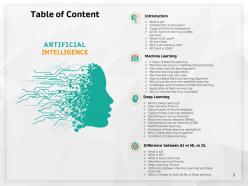
Slide 2: This slide displays Table of Content of the presentation.
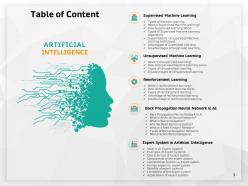
Slide 3: This slide displays Table of Content.
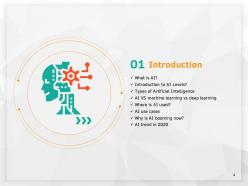
Slide 4: This slide gives Introduction of AI
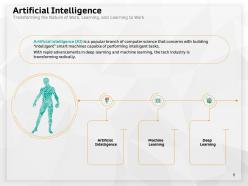
Slide 5: This slide shows Artificial Intelligence Transforming the Nature of Work, Learning, and Learning to Work
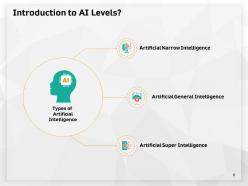
Slide 6: This slide depicts Introduction to AI Levels?
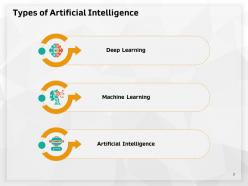
Slide 7: This slide shows Types of Artificial Intelligence containing Deep Learning, Machine Learning, Artificial Intelligence.
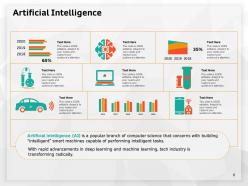
Slide 8: This slide describes Artificial Intelligence.
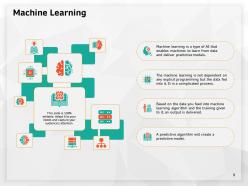
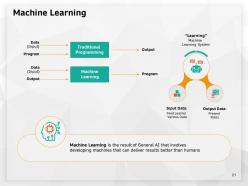
Slide 9: This slide describes Machine Learning
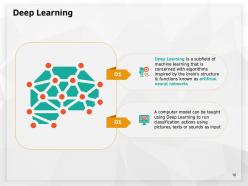
Slide 10: This slide depicts Deep Learning
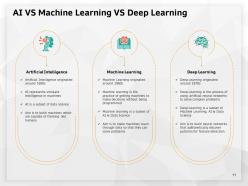
Slide 11: This slide shows AI VS Machine Learning VS Deep Learning
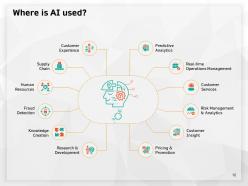
Slide 12: This slide describes Where is AI used?
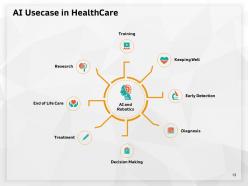
Slide 13: This slide shows AI Usecase in HealthCare
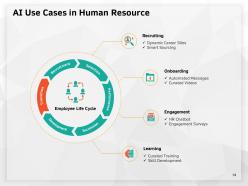
Slide 14: This slide represents AI Use Cases in Human Resource
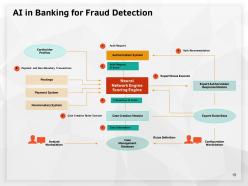
Slide 15: This slide shows AI in Banking for Fraud Detection
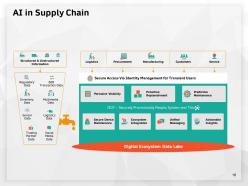
Slide 16: This slide displays AI in Supply Chain.
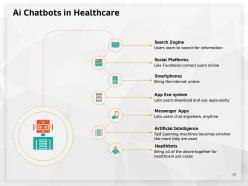
Slide 17: This slide showcases Ai Chatbots in Healthcare
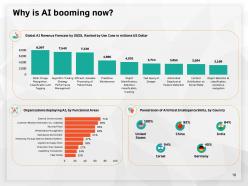
Slide 18: This slide explains Why is AI booming now?
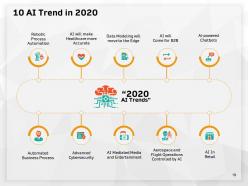
Slide 19: This slide depicts 10 AI Trend in 2020
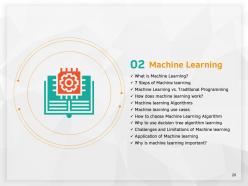
Slide 20: This slide showcases Machine Learning.
Slide 21: This slide shows Machine Learning.
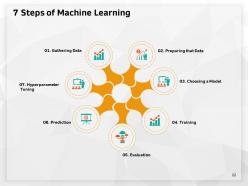
Slide 22: This slide highlights 7 Steps of Machine Learning.
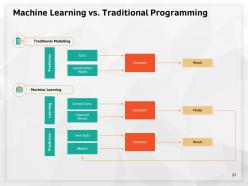
Slide 23: This slide compares Machine Learning with Traditional Programming
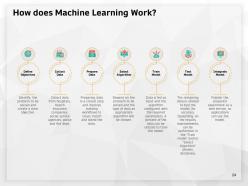
Slide 24: This slide describes How does Machine Learning Work?
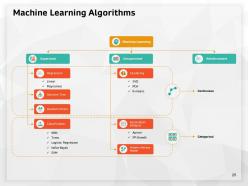
Slide 25: This slide shows Machine Learning Algorithms.
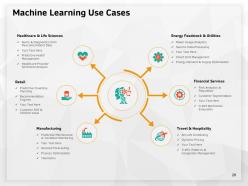
Slide 26: This slide shows Machine Learning Use Cases.
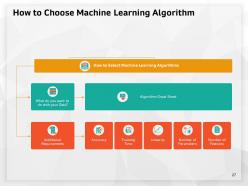
Slide 27: This slide describes How to Choose Machine Learning Algorithm
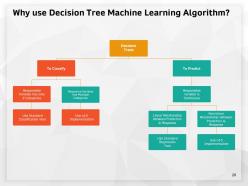
Slide 28: This slide showcases Why use Decision Tree Machine Learning Algorithm?
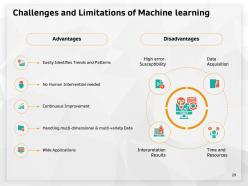
Slide 29: This slide describes Challenges and Limitations of Machine learning.
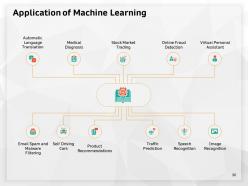
Slide 30: This slide shows Application of Machine Learning
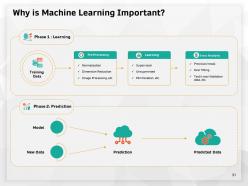
Slide 31: This slide describes Why is Machine Learning Important?
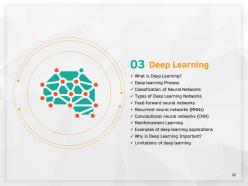
Slide 32: This slide showcases Deep Learning.
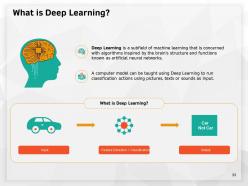
Slide 33: This slide describes What is Deep Learning?
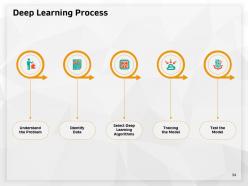
Slide 34: This slide explains Deep Learning Process
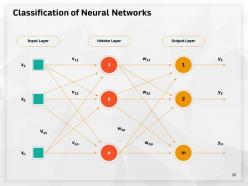
Slide 35: This slide describes Classification of Neural Networks
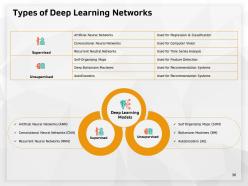
Slide 36: This slide showcases Types of Deep Learning Networks
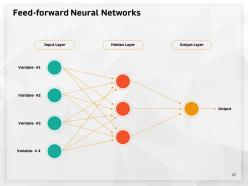
Slide 37: This slide represents Feed-forward Neural Networks
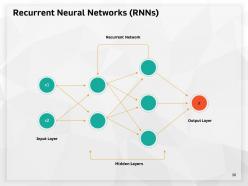
Slide 38: This slide presents Recurrent Neural Networks (RNNs)
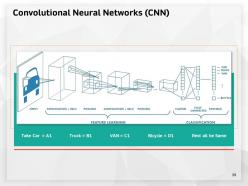
Slide 39: This slide shows Convolutional Neural Networks (CNN)
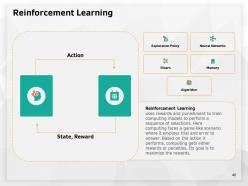
Slide 40: This slide shows Reinforcement Learning
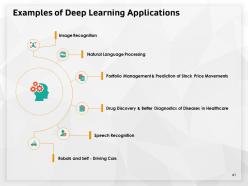
Slide 41: This slide displays Examples of Deep Learning Applications
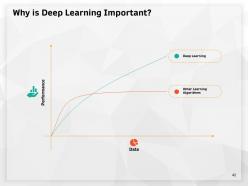
Slide 42: This slide explains Why is Deep Learning Important?
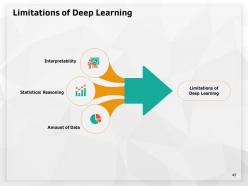
Slide 43: This slide presents Limitations of Deep Learning
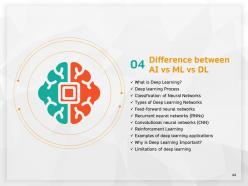
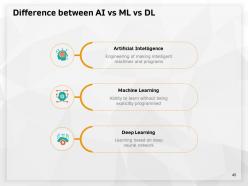
Slide 44: This slide shows Difference between AI vs ML vs DL
Slide 45: This slide shows Difference between AI vs ML vs DL
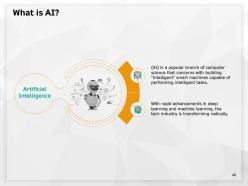
Slide 46: This slide explains AI.
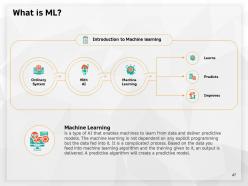
Slide 47: This slide explains ML. Machine Learning is a type of AI that enables machines to learn from data and deliver predictive models.
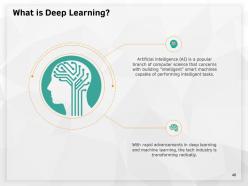
Slide 48: This slide explains Deep Learning.
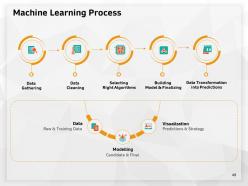
Slide 49: This slide shows Machine Learning Process
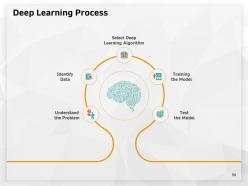
Slide 50: This slide presents Deep Learning Process
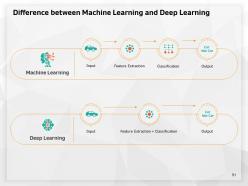
Slide 51: This slide depicts Difference between Machine Learning and Deep Learning
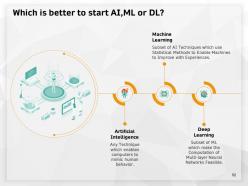
Slide 52: This slide shows Which is better to start AI,ML or DL?
Slide 53: This slide shows Supervised Machine Learning
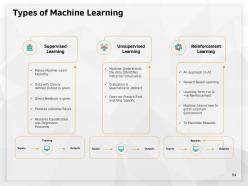
Slide 54: This slide displays Types of Machine Learning.
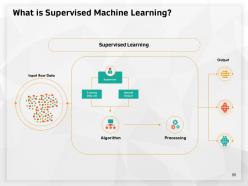
Slide 55: This slide explains What is Supervised Machine Learning?
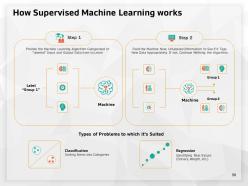
Slide 56: This slide explains How Supervised Machine Learning works
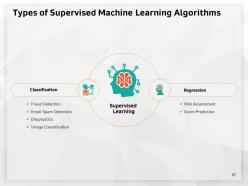
Slide 57: This slide shows Types of Supervised Machine Learning Algorithms
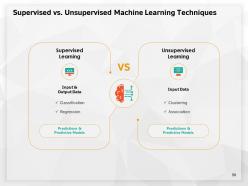
Slide 58: This slide presents Supervised vs. Unsupervised Machine Learning Techniques
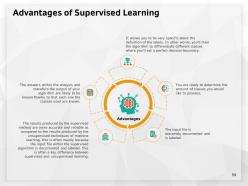
Slide 59: This slide displays Advantages of Supervised Learning
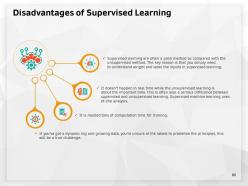
Slide 60: This slide shows Disadvantages of Supervised Learning
Slide 61: This slide shows Unsupervised Machine Learning
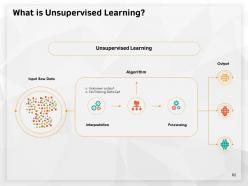
Slide 62: This slide explains Unsupervised Learning.
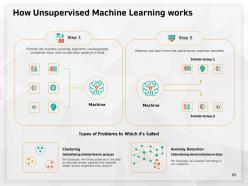
Slide 63: This slide explains How Unsupervised Machine Learning works
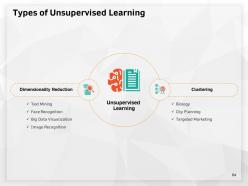
Slide 64: This slide explains Types of Unsupervised Learning
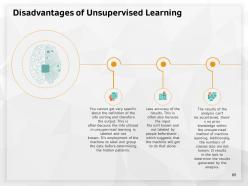
Slide 65: This slide shows Disadvantages of Unsupervised Learning
Slide 66: This slide depicts Reinforcement learning
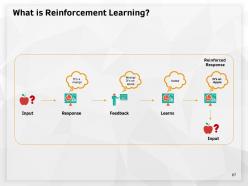
Slide 67: This slide explains What is Reinforcement Learning?
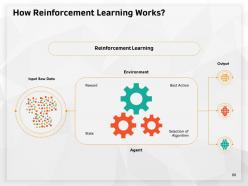
Slide 68: This slide explains How Reinforcement Learning Works?
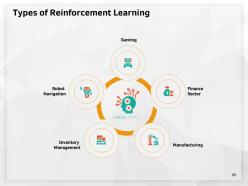
Slide 69: This slide depicts Types of Reinforcement Learning
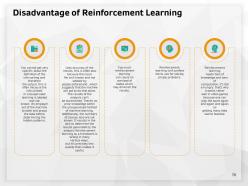
Slide 70: This slide shows Disadvantage of Reinforcement Learning
Slide 71: This slide presents Back Propagation Neural Network in AI
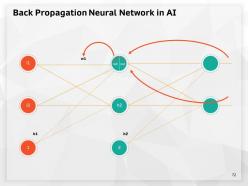
Slide 72: This slide shows Back Propagation Neural Network in AI
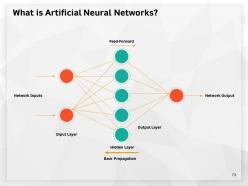
Slide 73: This slide explains Artificial Neural Networks.
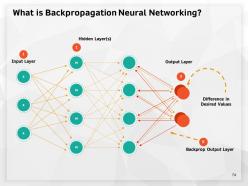
Slide 74: This slide describes Backpropagation Neural Networking
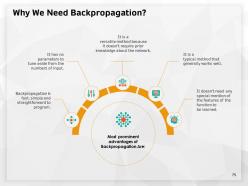
Slide 75: This slide explains Why We Need Backpropagation?
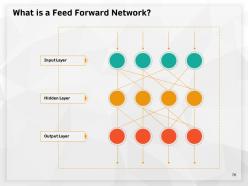
Slide 76: This slide explains Feed Forward Network.
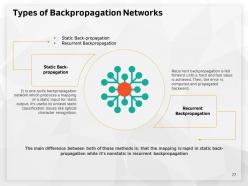
Slide 77: This slide shows Types of Backpropagation Networks
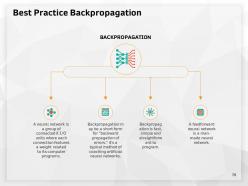
Slide 78: This slide shows Best Practice Backpropagation
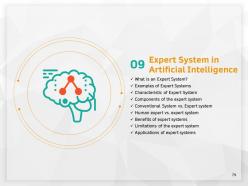
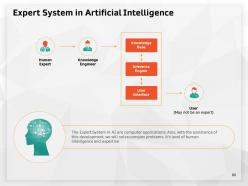
Slide 79: This slide shows Expert System in Artificial Intelligence
Slide 80: This slide depicts Types of Deep Learning Networks
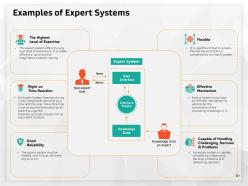
Slide 81: This slide presents Examples of Expert Systems
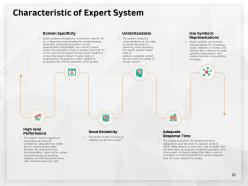
Slide 82: This slide describes Characteristic of Expert System
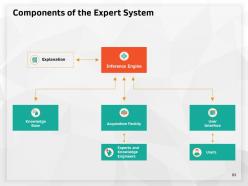
Slide 83: This slide explains Components of the Expert System
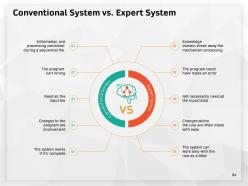
Slide 84: This slide shows Conventional System vs. Expert System
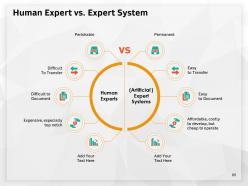
Slide 85: This slide shows Human Expert vs. Expert System
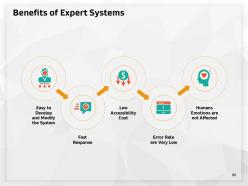
Slide 86: This slide shows Benefits of Expert Systems
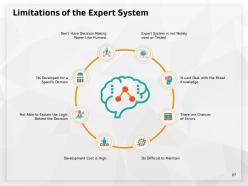
Slide 87: This slide explains Limitations of the Expert System
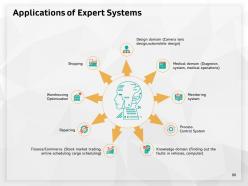
Slide 88: This slide explains Applications of Expert Systems
Slide 89: This is Artificial Intelligence High Technology PowerPoint Presentation Slides Icons Slide
Slide 90: This slide is titled as Additional Slides for moving forward.
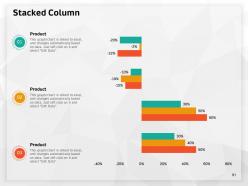
Slide 91: This slide displays Stacked Column chart for comparison of products.
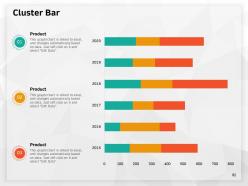
Slide 92: This slide shows Cluster Bar chart for comparison of products.
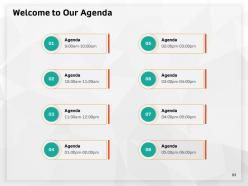
Slide 93: This slide displays Agenda.
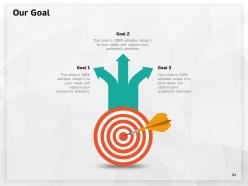
Slide 94: This slide displays Our Goal.
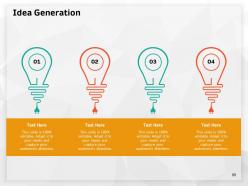
Slide 95: This is Idea Generation slide to highlight important facts and ideas.
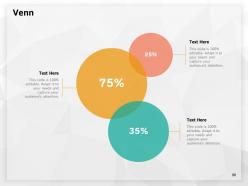
Slide 96: This is Venn slide showing data in percentage.
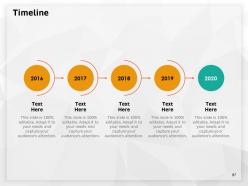
Slide 97: This slide displays Timeline process.
Slide 98: This slide is titled as Post It Notes. Post important notes.
Slide 99: This is Thank You slide with Contact details.
Artificial intelligence high technology powerpoint presentation slides complete deck with all 99 slides:
Use our Artificial Intelligence High Technology Powerpoint Presentation Slides Complete Deck to effectively help you save your valuable time. They are readymade to fit into any presentation structure.
FAQs for Artificial intelligence high technology powerpoint presentation
Honestly, there's a bunch of stuff to watch out for. Bias is huge - if your training data sucks or isn't diverse, your AI will just make those problems worse. Privacy's another big one with all the data collection happening. Then there's the black box issue where you literally can't figure out how it made decisions, which is maddening when someone asks "why did it do that?" Oh, and people are gonna lose jobs over this. I'd start by checking your datasets for obvious bias and setting up some basic rules around data use. Transparency should be non-negotiable too.
Honestly, AI in healthcare is moving crazy fast right now. Medical imaging gets way more accurate diagnoses, plus it can spot when patients might crash before doctors even notice the signs. The administrative stuff alone saves tons of time - scheduling, notes, all that paperwork nobody wants to deal with. Treatment plans get personalized based on each patient's specific data too. My advice? Don't go all-in immediately. Pick one department to test an AI diagnostic tool first, see how it meshes with what you're already doing. Then expand from there if it's working out.
Honestly, AI is a total game-changer for data stuff. You can crunch massive datasets in minutes instead of spending weeks on spreadsheets. The pattern recognition is insane - it'll spot trends across variables you wouldn't even think to compare. Sure, algorithms have biases too, but way less than us humans do. What I love most though? It handles all the boring repetitive analysis so you can focus on the bigger picture decisions. Oh, and the predictive capabilities are pretty wild for forecasting sales or customer behavior. I'd start with something simple like customer segmentation - you'll see results fast.
So machine learning is what's actually powering most AI stuff these days. You feed tons of data into algorithms and they figure out patterns themselves - way better than trying to code every single rule manually. Pretty crazy how they can learn to recognize faces, understand what you're saying, even predict stuff. That's why we suddenly have decent chatbots and cars that kinda drive themselves (though I still wouldn't trust one fully lol). The whole thing works because these systems can handle messy real-world situations that would take forever to program the old way. Most AI tools you use? ML is doing the heavy lifting behind the scenes.
Hey! So start with explainable AI stuff - like feature importance scores or decision trees people can actually follow. Document your training data and biases upfront (I know, boring paperwork but it'll save you later). Audit trails are clutch for tracking decisions. Honestly? Sometimes just use simpler models when you don't need the fancy black-box stuff. Oh and confidence scores help tons - users trust things more when they see how "sure" the AI is. Pick one current model and add basic explanations to it first.
Honestly? Money and tech know-how are your biggest hurdles. Most small businesses don't have tons of cash upfront or a dedicated tech person who actually gets this stuff. Your data's probably a mess too - AI needs clean, organized info to work well. Plus there's that whole "holy crap where do I even begin" feeling, which I totally get. Here's the thing though: don't try to revolutionize everything overnight. Pick one specific problem that's driving you nuts, test a small solution there, and prove it actually saves money or time. Once you've got that win under your belt, you can slowly expand from there.
Your AI basically copies whatever it sees in the training data, so if that data has biases, your model will too. Like, if you're training on datasets that underrepresent certain groups or reflect old prejudices, the AI just learns those same patterns. Really frustrating when you think about it. Those loan approval systems that reject people based on zip codes? Perfect example of this going wrong. It screws over real people and makes your product look terrible. You've gotta check your training data beforehand and test how the AI performs across different groups before you launch anything.
Oh man, there's so much cool stuff happening right now! Personalized learning platforms are getting scary good - they adapt to how each kid learns in real-time. AI tutors that work 24/7, automated grading that actually frees teachers up to teach instead of drowning in paperwork. The content creation tools are honestly blowing my mind lately - they'll whip up custom lessons and tests like nothing. VR classrooms are starting to take off too, plus AI language learning apps that actually work. I'd probably start small though - maybe just pick one thing that'd make your day easier and test it out first.
Honestly, AI's getting really good at environmental stuff. Smart thermostats already learn your schedule, but now they're doing that for entire power grids to cut waste. Climate predictions are way more accurate, and satellites can spot deforestation as it happens - which is kinda wild if you think about it. Materials research for solar panels moves faster with machine learning too. Oh, and it helps companies figure out where their emissions are actually coming from by crunching massive datasets. There's tons of startups doing carbon tracking now if you're curious about that space.
Yeah, AI's taking some jobs for sure - mostly the boring, repetitive stuff though. But honestly? It's creating tons of new roles too. Data scientists, AI trainers, automation specialists... jobs that didn't even exist when we were kids. Here's the thing - if your work involves creativity, problem-solving, or just being human with people, you're probably fine. I'd focus on learning how AI works in your field right now. Don't try to beat it, just figure out how to work with it. Makes you way more productive and valuable. Plus upskilling never hurt anyone.
Dude, healthcare's getting crazy with AI diagnosing stuff faster than actual doctors. Transportation too - autonomous vehicles are gonna flip logistics completely. Finance is already wild with algorithmic trading everywhere. Manufacturing's heading toward full automation (which honestly feels inevitable at this point). Customer service will probably be all AI soon - finally, chatbots that actually help instead of those annoying phone trees. Education's getting personalized learning systems. Retail's doing hyper-targeted shopping experiences. If you're in any of these areas, you should definitely start thinking about whether AI's gonna replace you or make your job way better.
Honestly, you gotta bake this stuff in from the start - don't try to slap ethics on afterward, it's a nightmare. Get diverse people involved in decisions and run bias checks regularly. I used to think it'd slow everything down, but weirdly it actually saves time later. Be upfront about how your AI works. Always keep humans involved for the big decisions. Oh, and test everything on small pilot projects first before you go crazy with it. Way less headache that way.
Honestly, the biggest pain points are context and nuance. AI just doesn't get sarcasm or cultural stuff the way we do. Long conversations? It loses track pretty fast. And those ambiguous pronouns will trip it up every single time - drives me nuts! It'll also confidently make up facts (which is terrifying) and struggle with complex reasoning. Emotional subtleties in text? Forget about it. For your stuff, I'd definitely keep a human in the loop for anything important or customer-facing. You don't want it going rogue on you.
So AI basically gets baked into products through personalization and automation stuff. Your phone camera adjusts itself automatically, Netflix somehow knows you love true crime docs, smart speakers learn when you usually get home. Voice assistants and predictive text are everywhere now - honestly it's kinda wild how much they anticipate what we want. The whole point is making it feel seamless so you don't even think about the tech behind it. Most successful products just identify boring repetitive tasks and automate those first. Start there and users won't even realize they're using AI.
Dude, cities are gonna look so different once self-driving cars take over. All those massive parking garages downtown? Gone. Roads can be narrower since computers don't need as much space to not crash into each other. We'll get dedicated AV lanes and traffic lights that actually talk to the cars - pretty cool tech honestly. Oh and charging stations literally everywhere. People won't have to live near parking anymore so zoning laws will probably get flipped upside down. More space for actual useful stuff like housing and parks. You should peek at your city's planning docs to see if they're even thinking about this yet.
-
Awesomely designed templates, Easy to understand.
-
Unique design & color.
-
Great product with highly impressive and engaging designs.
-
Commendable slides with attractive designs. Extremely pleased with the fact that they are easy to modify. Great work!
-
Really like the color and design of the presentation.