

Visão geral de inteligência artificial em slides de apresentação em PowerPoint




Try Before you Buy Download Free Sample Product
 Impress Your
Audience
 100%
Editable
 Save Hours
of Time


Automatize suas operações de negócios incorporando estes slides de apresentação em PowerPoint de visão geral de inteligência artificial. O escopo do aprendizado de máquina está aumentando dia a dia, pois é muito mais conveniente e eficiente. Facilite a transformação dos negócios usando esta apresentação do PowerPoint de aprendizado de máquina. Com o advento de tecnologias novas e aprimoradas, é importante substituir a inteligência humana pela automação de processos robóticos. Mostre o estímulo da inteligência humana e como a aplicação da inteligência artificial pode ajudar a organização a crescer usando esta apresentação de slides do PowerPoint sobre ciência da computação. Você também pode apresentar uma análise detalhada da IA junto com seus componentes, objetivos, estatísticas-chave, razões e muitos outros pontos com a ajuda deste visual PowerPoint de inteligência de máquina. Alguns dos problemas estão além do controle de um ser humano. Eles exigem inteligência cognitiva. Utilize este gráfico do PowerPoint para solução de problemas nessa situação para encontrar soluções adequadas para seus problemas organizacionais. Portanto, baixe este deck completo de algoritmo de aprendizagem agora para substituir sua tecnologia antiga com consciência de máquina, senciência e mente.
People who downloaded this PowerPoint presentation also viewed the following :
Video for Artificial intelligence overview powerpoint presentation slides
Conteúdo desta apresentação em PowerPoint
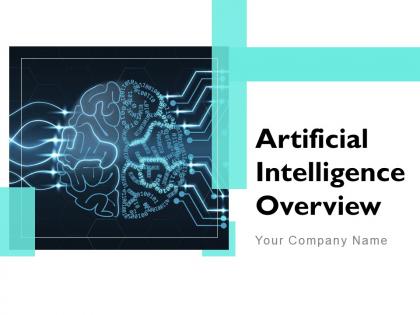
Slide 1 : Este slide apresenta a Visão Geral da Inteligência Artificial. Indique o nome da sua empresa e comece.
Slide 2 : Este é o slide da nossa agenda. Declare sua agenda aqui.
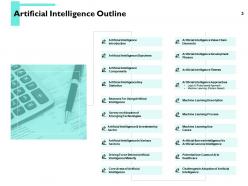
Slide 3 : Este slide mostra o Esboço de Inteligência Artificial.
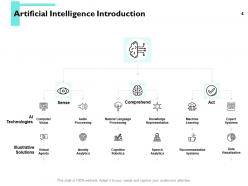
Slide 4 : Este slide apresenta a Introdução à Inteligência Artificial com as principais categorias - Sentir, compreender e agir.
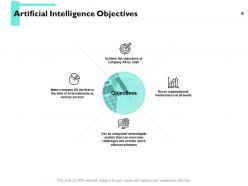
Slide 5 : Este slide exibe os Objetivos de Inteligência Artificial com ícones relacionados.
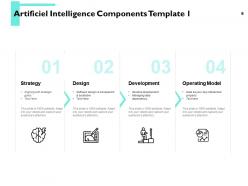
Slide 6 : Este slide representa o Modelo 1 de Componentes da Artificiel Intelligence que descreve - Estratégia, Design, Desenvolvimento, Modelo Operacional.
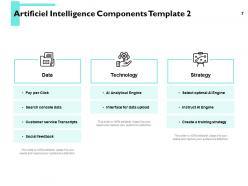
Slide 7 : Este slide mostra o modelo 2 de componentes do Artificiel Intelligence que descreve - Dados, Tecnologia, Estratégia.
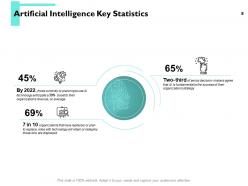
Slide 8 : Este slide mostra as estatísticas principais de inteligência artificial.
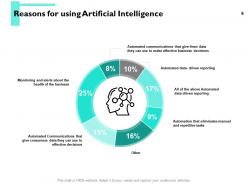
Slide 9 : Este slide apresenta Razões para usar Inteligência Artificial.
Slide 10 : Este slide mostra a Pesquisa sobre Adoção de Tecnologias Emergentes.
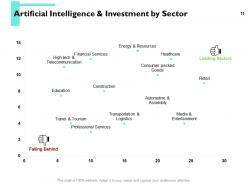
Slide 11 : Este slide representa Inteligência Artificial e Investimento por Setor.
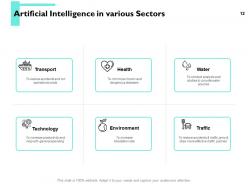
Slide 12 : Este slide mostra a Inteligência Artificial em vários setores, incluindo - Água, Tráfego, Saúde, Meio Ambiente, Transporte, Tecnologia.
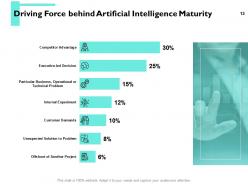
Slide 13 : Este slide mostra a força motriz por trás da maturidade da inteligência artificial.
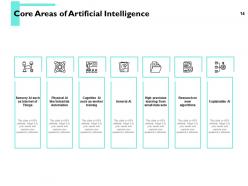
Slide 14 : Este slide apresenta as Áreas Centrais da Inteligência Artificial.
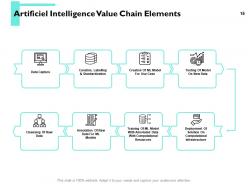
Slide 15 : Este slide mostra os Elementos da Cadeia de Valor de Inteligência Artificial.
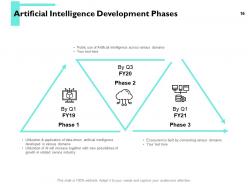
Slide 16 : Este slide representa as fases de desenvolvimento de inteligência artificial.
Slide 17 : Este slide apresenta Temas de Inteligência Artificial com diagramas relacionados.
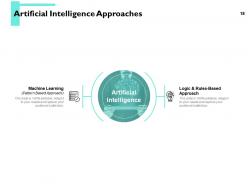
Slide 18 : Este slide mostra Abordagens de Inteligência Artificial, incluindo Aprendizado de Máquina (Abordagem Baseada em Padrões) e Abordagem Baseada em Lógica e Regras.
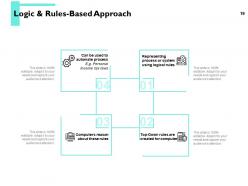
Slide 19 : Este slide apresenta a Abordagem Lógica e Baseada em Regras como- Pode ser usada para automatizar o processo, Representando o processo ou sistema usando regras lógicas, Computadores raciocinam sobre essas regras, Regras de cima para baixo são criadas para o computador.
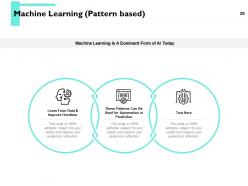
Slide 20 : Este slide mostra o aprendizado de máquina (baseado em padrões), como - Aprenda com os dados e melhore com o tempo, esses padrões podem ser usados para automação ou previsão, etc.
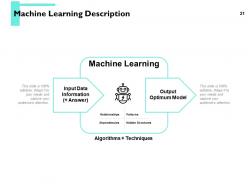
Slide 21 : Este slide representa a Descrição do Machine Learning com o diagrama relacionado.
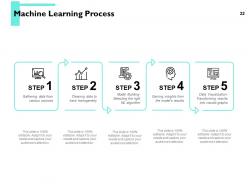
Slide 22 : Este slide mostra o Processo de Aprendizado de Máquina com estas 5 etapas - Limpeza de dados para ter homogeneidade, Coleta de dados de várias fontes, Criação de Modelo - Seleção do algoritmo de ML correto, Obtenção de insights dos resultados do modelo, Visualização de Dados - Transformação de resultados em gráficos visuais .
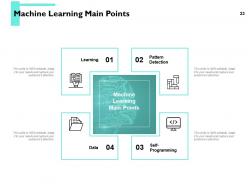
Slide 23 : Este slide mostra os pontos principais do aprendizado de máquina como - aprendizado, detecção de padrões, dados, autoprogramação.
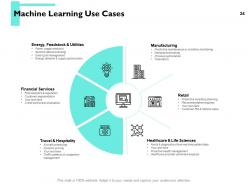
Slide 24 : Este slide apresenta casos de uso de aprendizado de máquina que descrevem - manufatura, varejo, saúde e ciências biológicas, viagens e hospitalidade, serviços financeiros, energia, matéria-prima e serviços públicos.
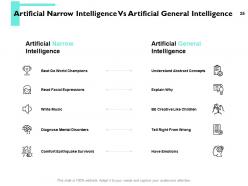
Slide 25 : Este slide mostra Inteligência Artificial Estreita Vs Inteligência Geral Artificial.
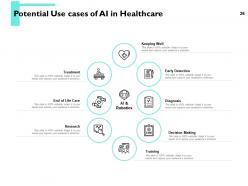
Slide 26 : Este slide representa os casos de uso potencial de IA na saúde, descrevendo: Manter-se bem, detectar precocemente, diagnóstico, tomada de decisão, treinamento, pesquisa, cuidados para o fim da vida, tratamento.
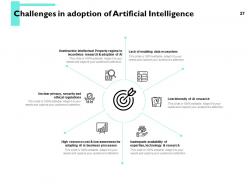
Slide 27 : Este slide mostra os desafios na adoção da Inteligência Artificial.
Slide 28 : Este slide lembra sobre uma pausa para o café de 15 minutos.
Slide 29 : Este slide mostra os Ícones de Visão Geral da Inteligência Artificial.
Slide 30 : Este slide é intitulado como Slides adicionais para avançar.
Slide 31 : Este é o slide da nossa meta. Mostre os objetivos da sua empresa aqui.
Slide 32 : Este é um slide de Localização com mapa para mostrar dados relacionados a diferentes localizações.
Slide 33 : Este é um slide financeiro. Mostre seu material relacionado a finanças aqui.
Slide 34 : Este é um slide de Venn com caixas de texto.
Slide 35 : Este é o slide Nossa missão com imagens e textos relacionados.
Slide 36 : Este é um slide da linha do tempo para mostrar informações relacionadas ao período de tempo.
Slide 37 : Este é um slide de agradecimento com endereço, números de contato e endereço de e-mail.
Visão geral da inteligência artificial Slides de apresentação em PowerPoint com todos os 37 slides:
Descubra o curso apropriado com nossos slides de apresentação em Powerpoint de visão geral de inteligência artificial. Eles ajudam a considerar ideias conflitantes.






FAQs for Artificial intelligence overview
So basically, narrow AI is super focused on one thing - like how Netflix knows exactly what shows you'll binge next, or chess programs that crush grandmasters. General AI would be more like... well, us. Able to learn anything and everything. Right now we've got narrow AI everywhere (Siri, Tesla's autopilot, photo tagging) but general AI? That's still sci-fi territory, honestly. The media makes it sound way closer than it actually is. Whatever you're building, you're definitely working with narrow AI, so just pick one specific problem you want it to tackle. Don't expect magic.
Honestly, just pick one thing that's driving you crazy right now - don't go overboard trying to automate everything. Maybe it's data entry or those same customer questions over and over. Find something repetitive where AI won't mess up your team's groove. I've watched so many companies crash and burn because they went too big too fast. Train everyone on whatever you choose, be upfront about what it actually does (and doesn't), then build from there. Oh, and definitely nail that first process before moving on. You'll thank yourself later.
So the main stuff you gotta watch for: bias is huge - if your training data sucks, your AI will be discriminatory as hell. Privacy's another mess since these systems hoover up personal info like crazy. Job displacement is the obvious one everyone talks about. But honestly, the accountability thing might be the trickiest - like when an AI screws up, who actually takes the blame? If you're building anything, just audit your data sources constantly and bake fairness testing into your process from day one. Don't wait until later to fix it.
Honestly, ML is a game-changer for predictions - it spots patterns in huge datasets that we'd totally miss. Healthcare uses it to predict patient risks, finance catches fraud, retail figures out what customers want. The crazy part? These algorithms actually get better over time as they see more data. Manufacturing companies can even predict when machines will break down (which saves them tons of money, obviously). Your predictions just keep getting more accurate. I'd say pick one area in your business and test it out first. Don't try to do everything at once - that usually backfires.
Look, data entry and basic manufacturing jobs are probably toast. New roles will pop up though - they always do when tech shifts happen. Honestly, nobody really knows which specific jobs since AI changes so damn fast. Creative work, complex problem-solving, anything needing human connection? Those should stick around. My advice? Don't try to beat AI at its own game. Focus on skills that work WITH it instead - critical thinking, reading people, adapting quickly. Oh, and start learning new stuff now. Waiting around isn't gonna help anyone.
Dude, AI chatbots are a game changer for customer service - no more 20-minute hold music torture. Your customers get instant answers 24/7. The cool part? It learns what people need before they even ask by analyzing all that customer data you're sitting on. I'd start with something simple, like handling your basic FAQ stuff. Then you can let your actual humans deal with the messy complicated problems while the bot handles "what are your hours" for the millionth time. Oh, and it gets smarter with every conversation, which is honestly pretty wild when you think about it.
So NLP is basically how computers figure out what we're actually saying and respond back in a way that makes sense. Think Siri, Google Translate, those chatbots that pop up on websites. It's everywhere now - probably the AI stuff you use most without even thinking about it. The tech handles both understanding your question and spitting out decent answers. Oh, and spam filters too, which is honestly pretty clutch. If you're looking at AI for work stuff, just find where people are typing or talking to systems. That's your sweet spot for NLP.
So AI is getting crazy good at reading X-rays and MRIs - like, sometimes better than actual doctors, which is wild. It can also predict who's gonna get sepsis or heart failure before they even show symptoms. On the treatment side, it helps figure out the right drug doses for each person and plans out surgeries. Oh, and drug discovery too - that's probably the most exciting part honestly. IBM Watson and Google's DeepMind are doing some really cool stuff if you want to check it out. The whole field is moving so fast it's hard to keep up.
Honestly, AI has some major issues you should watch out for. It makes mistakes but sounds super confident about them - which is kinda scary if you think about it. The whole "common sense" thing? Yeah, it doesn't really get that. Most systems are weirdly specialized too, like they'll crush one task but completely fail at something similar. Oh, and there's definitely bias problems since they learn from messy human data. They also need tons of training examples to function. My advice? Always fact-check what AI tells you, especially for anything important.
Honestly, AI is pretty amazing for sustainability stuff. Smart thermostats are just the beginning - it can track deforestation through satellite data, predict weather patterns, and optimize supply chains to cut waste. The cool thing is it spots patterns we'd totally miss in environmental data. Renewable energy systems get way more efficient with AI too. It processes huge datasets faster than any human could, which means better decisions happen quicker. My advice? Look at where your company's bleeding resources first - that's usually the sweet spot for AI solutions. The energy optimization alone can be game-changing.
Honestly, AI is weird with privacy - it cuts both ways. Companies can hoover up your data and build crazy detailed profiles without you even knowing. That's the nightmare scenario. But then AI also catches hackers and builds better encryption, so there's that. I guess what bugs me is how it just amplifies whatever the company wants to do with your info. Good companies will protect you better. Sketchy ones? Yeah, they'll get sketchier. You've gotta check who you're trusting with your data because AI makes everything more intense.
So AI basically speeds up decision-making by crunching tons of data super fast. Companies use it everywhere now - hiring algorithms scan resumes, predictive stuff helps with inventory, you name it. The cool part? It catches patterns your team might miss or take forever to find manually. My old company started using it for supply chain stuff and honestly saved them so much time. But here's the thing - the AI gives you the insights, but someone still needs to actually interpret what it means and make the real decisions. It's not magic, just really good at processing information.
Dude, AI in creative stuff is getting crazy good. Tools like DALL-E and Midjourney are making artwork from just typing what you want - some pieces are literally selling for thousands at auctions. Then you've got AIVA and Amper cranking out original music. Musicians use them to brainstorm melodies, artists for quick concept work. Honestly, the quality blows my mind sometimes. My advice? Start playing around with these tools sooner rather than later. They're not gonna replace artists, but they're becoming like really smart creative assistants. Worth getting familiar with them now.
Track the obvious stuff first - cost savings, revenue bumps, time saved, fewer errors. That's your solid ROI data. But don't ignore the fuzzy benefits like happier customers or employees getting more done (honestly, those can be huge). Get your baseline numbers before you start anything. Then check progress every few months - AI takes forever to show real results, like 6-18 months usually. Keep notes on everything so when your boss asks for more AI budget next year, you've got actual proof it works.
Dude, AI is everywhere now and actually working. Healthcare's gotten crazy good - IBM Watson helps doctors catch cancer better, and Google cut data center energy costs by 40%. JPMorgan uses it for catching fraud and trading stuff. Netflix's recommendations? They nail it 80% of the time (kinda scary how well they know me tbh). Amazon's whole supply chain runs on it, plus Tesla's autopilot is pretty solid. If you're thinking about using AI at work, look for boring repetitive tasks first - that's where you'll see results fast. Pattern recognition stuff too.
-
Excellent template with unique design.
-
Informative presentations that are easily editable.
-
Unique and attractive product design.
-
Qualitative and comprehensive slides.
-
Excellent design and quick turnaround.