


As is to be ppt sample




Try Before you Buy Download Free Sample Product
 Impress Your
 Audience
 100%
100% Editable
 Save Hours
 of Time


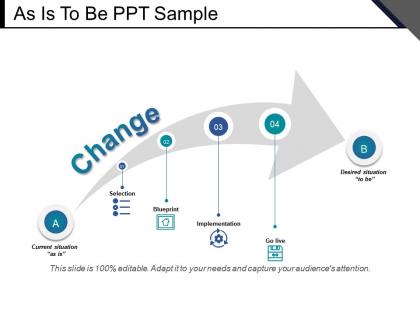
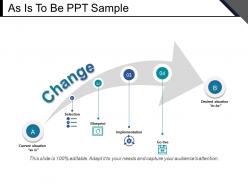
Deal with specific features or factors through ours, as is to be PPT sample template. Compete in different areas like the management, product quality, and features through the following change management layout. You can use this design to show go through the transformation to change your means of working and to boost productivity in the work environment. Four steps are shown here to reach from beginning which is shown through the point 'A' defined as, "current situation, as is" to point B which is destination shown as, "the desired situation, to be". Four steps are shown here as, selection, blueprint, implementation, and go-live. We have shown engaging color patterns and icons here to make this PPT design more interactive. Derive better plans, conduct competitive analysis reports to monitor the working of your leading competitors. Compare various features and mention your direct and indirect competitors for competitive analysis. Include your key points and get your ideas across through the help of a PowerPoint template by editing the text boxes shown here. Download our, as is to be PPT sample template to make your competitive analysis approach more engaging to leave a prolonging impact. When your presentations have to be perfect they need to look great. Thousands of As Is To Be Ppt Sample are waiting to get your work looking its best.
People who downloaded this PowerPoint presentation also viewed the following :
As is to be ppt sample with all 5 slides:
Factor in compulsions with our As Is To Be Ppt Sample. They eliminate any handicaps.

FAQs for As is to
Honestly, start with the big stuff - market share changes and what you're spending to get new customers. Customer churn rates will tell you if you're actually growing or just spinning your wheels. Revenue per customer is huge too. Watch how fast your competitors are picking up AI and automation because that digital transformation piece is make-or-break right now. Oh, and talent retention - companies are bleeding good people left and right these days, so that's becoming a real advantage if you can nail it. Just benchmark yourself quarterly against these metrics and you'll have something solid to work from.
Honestly, just write down what you can actually do right now - your skills, resources, whatever applies to your goal. Then figure out what you need to get where you're going. Compare the two lists and boom, there's your gaps. I'm a huge fan of making some kind of simple chart or document because it makes the missing pieces painfully obvious. Like, you'll literally see exactly what you're lacking. Once that's done, pick which gaps matter most and work backwards from there. Sounds basic but it actually works pretty well for planning stuff out.
Honestly, AI automation is the big one - it'll transform how you handle operations and customer stuff. Cloud tech and data analytics help you scale quick and actually understand what's happening in real time. Blockchain's solid for supply chain transparency too, depending on your space. Mobile-first design and IoT are changing the whole customer experience game. But here's the thing - don't try to do everything at once. Pick maybe 2-3 that actually solve problems you have right now. I'd start by figuring out where you're bleeding time or money first, then see which tech fits.
So first thing - map what your team can do now against where your industry's going. I'd honestly dig way deeper into this than most people bother to. Look at tech trends, what customers want, new regulations, whatever. Find your biggest skill gaps and figure out which ones'll bite you first. Mix formal training with actual hands-on projects where they practice on real work. Oh, and definitely get your team involved in planning this stuff - they usually have the best sense of what's actually coming down the line. You'll miss blind spots otherwise.
Look, customer feedback is your sanity check when you're changing things up. Without it, you're basically guessing what people want - and trust me, we're terrible at guessing. People will use your product in completely weird ways you never thought of. They'll also complain about stuff that seemed obvious to fix but somehow you missed it. The trick is getting their input constantly during the transition, not waiting until everything's "done." I learned this the hard way once. Set up regular check-ins so you can pivot before you've wasted months going the wrong direction.
Honestly, you're gonna hit three main issues. First, people hate change - even when it's good for them. Expect serious pushback from teams who think their current way works fine. Budget and timeline are next - I swear, every transformation I've seen runs 30% over schedule, minimum. Plus you'll get hit with random technical bottlenecks you never saw coming. Oh, and don't be surprised if some key people bail during the chaos. Here's what actually works: pad your timeline like crazy and celebrate small wins loudly. Seriously, overcommunicate every tiny victory to keep people bought in.
First thing - figure out where you are now vs where you want to be. What are the biggest holes? Then rank your projects by three things: how much they'll actually move you forward, what they'll cost you (time/money), and which ones depend on each other. Honestly, everyone tries to do everything at once and it's a disaster every time. Pick some quick wins to get momentum going, but also start on the big foundational stuff that takes forever. Map it out so things happen in the right order - you don't want to build the roof before the foundation, you know? And build in checkpoints to course-correct when things inevitably go sideways.
You need both leading and lagging indicators to track this stuff. Leading ones show if you're actually doing the work - training completion rates, how many people adopted new processes, stakeholder engagement scores. Lagging metrics prove it worked - better customer satisfaction, faster cycle times, cost savings. Most teams obsess over the lagging numbers and totally miss the early warning signs, which is backwards if you ask me. Don't go crazy with data - pick 3-5 metrics max. Figure out what success looks like first, then work backwards to find the signals that'll tell you you're heading in the right direction.
Honestly, trends are like your reality check when planning where you want your business to go. Can't just ignore what's happening around you - customer shifts, new tech, regulations, whatever your competitors are doing. AI totally flipped everyone's plans this year, right? But here's the thing - use trends as guardrails, not the boss of your whole strategy. They should help you spot opportunities early and inform your vision, just don't let them completely override what you're actually trying to achieve. I'd say pick the 3-4 trends that really matter to your business and work them into your regular planning.
Cross-functional workshops are honestly your best bet - get everyone mapping out the transition together. Set up working groups with people from each area that's getting hit by changes. Way better when people help create the new setup instead of just having it dumped on them. Oh, and pair up teams who'll need to collaborate differently so they can hash out new processes together (saves so much headache later). Regular check-ins are a must because your original plan will definitely need adjustments once things get messy. Start with a big kickoff where people can actually speak up about concerns.
Honestly, start with whatever data you're already collecting - customer stuff, operational metrics, financials, whatever applies to your situation. Most people have way more useful data than they realize, they just aren't doing anything with it. Set up some basic dashboards that show trends instead of just dumping raw numbers everywhere. Look for gaps between what you thought would happen and what's actually going down. That's where you'll find your problems. Once you've got that baseline mapped out, you'll know exactly what's broken before you start planning where to go next.
Honestly, just talk to people early and often - that's like 90% of it. Map out what's actually changing and why each person should care. I've watched so many changes crash because bosses thought everyone would magically get it. Quick feedback loops are your friend here. When something's not working, you'll know fast and can pivot. Oh, and don't forget to celebrate the small stuff! Transitions suck for everyone involved. Your first move should be sitting down with the key players and letting them voice their concerns. Trust me, they have them whether they admit it or not.
Don't just present your vision - get them to help build it with you. People feel way more invested when they've actually contributed ideas. I'd run some workshops where they can talk through their biggest frustrations and brainstorm solutions together. Focus on their specific problems, not just broad "this will be great" stuff. Document what they say and show how it influenced your final vision - honestly, this step gets overlooked but it matters. Oh, and give them actual roles in making it happen, not just "we'll keep you updated" nonsense. Makes a huge difference.
Honestly, sustainability is kind of like having a really smart older sibling looking over your shoulder when you're setting goals. You literally can't ignore environmental and social stuff anymore - regulations won't let you, and your customers will call you out. But here's the thing: those constraints actually push you toward better solutions. Instead of slapping sustainability metrics on at the end (which never works well), build them right into how you measure success. Before committing to any major goal, just ask yourself: "Is this something we can actually sustain long-term?" It'll save you headaches later.
Think of scenario planning like having a few backup plans, but way more organized. You pick 2-3 big uncertainties hitting your business - maybe economic shifts, new tech, whatever your competitors might pull. Then build out 3-4 different stories of how things could unfold. Honestly, none of them will happen exactly as you map out, but that's not really the point. What you're after is spotting the moves and skills you'll need no matter what happens. It beats putting all your eggs in one "this is definitely how it'll go" basket. Way less stressful when curveballs come your way.
-
Great quality product.
-
Use of icon with content is very relateable, informative and appealing.