


Asset lifecycle management powerpoint presentation slides




Try Before you Buy Download Free Sample Product
 Impress Your
 Audience
 100%
100% Editable
 Save Hours
 of Time


Use Asset Lifecycle Management PowerPoint Presentation Slides to represent, assess, and cut down asset management costs. Open doors for profit optimization by compiling objectives with our visually-affluent asset management process PPT theme. Showcase assets that require optimization and the costs involved using the informative design of this ALM PowerPoint slideshow. Demonstrate your company’s asset lifecycle management process using an easy-to-follow ALM PowerPoint template deck. Our asset administration PPT slide assists you outline the procurement and acquisition plan in a concise manner. This enterprise asset organization PowerPoint presentation also covers the new equipment maintenance plan. Utilize performance metrics like procurement cost, lead time, etc. as mentioned in our asset management PPT template. Illustrate the asset maintenance and deployment process in a neat tabular format as represented in this assets optimization PowerPoint theme. Hit the download button and impress your audience with an asset lifecycle management PPT presentation unlike any.
People who downloaded this PowerPoint presentation also viewed the following :
Content of this Powerpoint Presentation
Slide 1: This slide introduces Asset Lifecycle Management. State your Company name and begin.
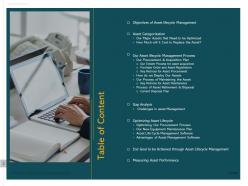
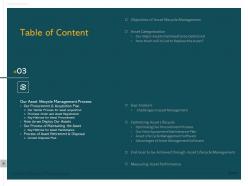
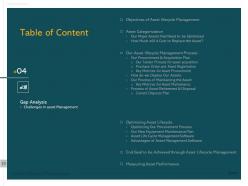
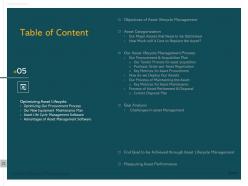
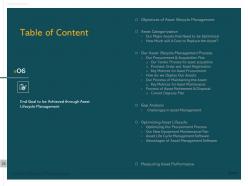
Slide 2: This slide displays Table of Content of the presentation.
Slide 3: This slide displays Table of Content of the presentation.
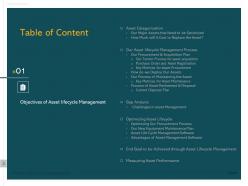
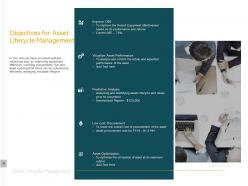
Slide 4: This slide showcases Objectives for Asset Lifecycle Management.
Slide 5: This slide displays Table of Content.
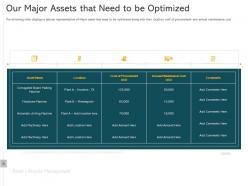
Slide 6: This slide depicts Our Major Assets that Need to be Optimized.
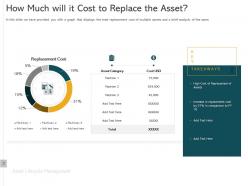
Slide 7: This slide showcases How Much will it Cost to Replace the Asset?
Slide 8: This slide depicts Table of Content.
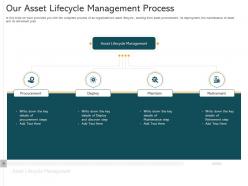
Slide 9: This slide showcases Our Asset Lifecycle Management Process.
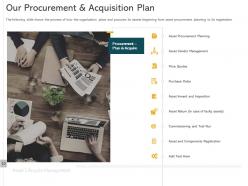
Slide 10: This slide describes Our Procurement & Acquisition Plan.
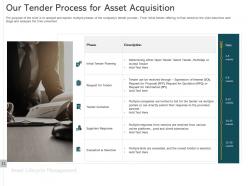
Slide 11: This slide showcases Our Tender Process for Asset Acquisition.
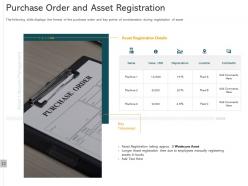
Slide 12: This slide depicts Asset Registration Details.
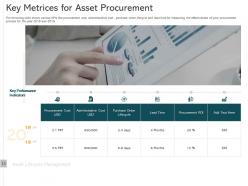
Slide 13: This slide showcases Key Metrices for Asset Procurement.
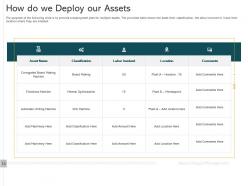
Slide 14: This slide showcases How do we Deploy our Assets.
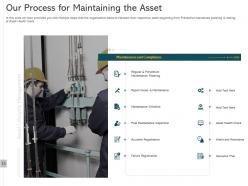
Slide 15: Thi slide depicts Our Process for Maintaining the Asset. In this slide we have provided you with Multiple steps that the organization takes to Maintain their respective asset beginning from Preventive maintained planning & ending at Asset Health check
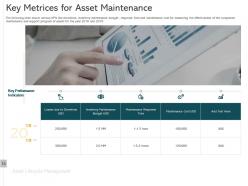
Slide 16: This slide shows Key Metrices for Asset Maintenance.
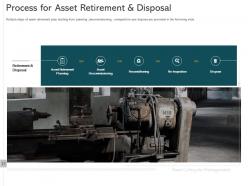
Slide 17: This slide represents Process for Asset Retirement & Disposal.
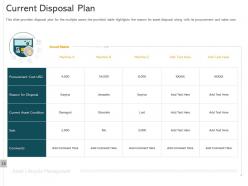
Slide 18: This slide depicts Current Disposal Plan.
Slide 19: This slide displays Table of Content.
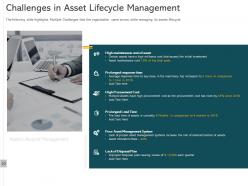
Slide 20: This slide showcases Challenges in Asset Lifecycle Management. The following slide highlights Multiple Challenges that the organization came across while managing its assets lifecycle
Slide 21: This slide displays Table of Content.
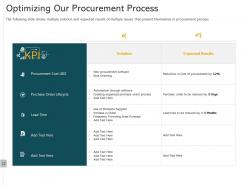
Slide 22: This slide describes Optimizing Our Procurement Process. The following slide shows multiple solution and expected results of multiple issues that present themselves in procurement process
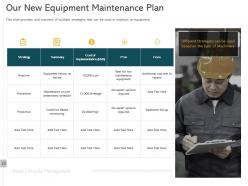
Slide 23: This slide represents Our New Equipment Maintenance Plan.
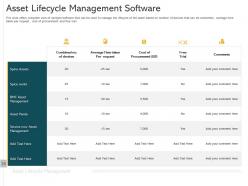
Slide 24: This slide depicts Asset Lifecycle Management Software.
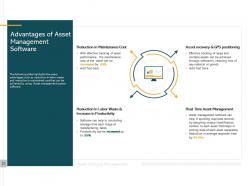
Slide 25: This slide showcases Advantages of Asset Management Software.
Slide 26: This slide displays Table of Content.
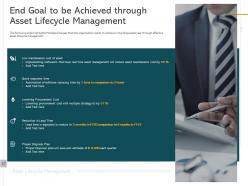
Slide 27: This slide shows Low maintenance cost of asset.
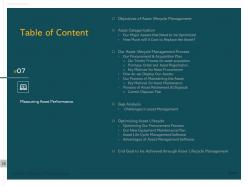
Slide 28: This slide shows Table of Content.
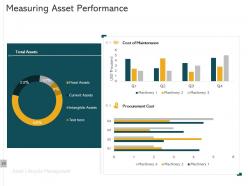
Slide 29: This slide depicts Measuring Asset Performance contaning- Asset Lifecycle Management, Total Assets, Cost of Maintenance, Procurement Cost.
Slide 30: This is Asset Lifecycle Management Icons Slide
Slide 31: This slide is titled as Additional Slides for moving forward.
Slide 32: This slide describes Managing Change in Asset Lifecycle Management.
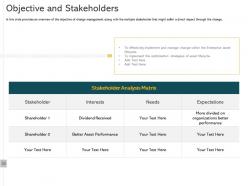
Slide 33: This slide showcases Objective and Stakeholders.
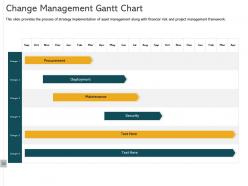
Slide 34: This slide displays Change Management Gantt Chart. This slide provides the process of strategy implementation of asset management along with financial risk and project management framework.
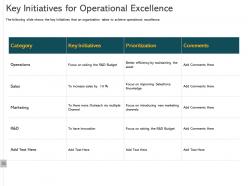
Slide 35: This slide showcases Key Initiatives for Operational Excellence. The following slide shows the key initiatives that an organization takes to achieve operational excellence.
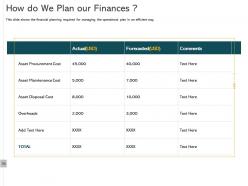
Slide 36: This slide describes How do We Plan our Finances ?
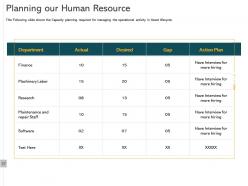
Slide 37: This slide describes about Planning our Human Resource.
Slide 38: This slide shows Asset Lifecycle Management.
Slide 39: This slide is titled as Post It Notes. Post your important notes here.
Slide 40: This is Idea Generation slide to highlight ideas, information etc.
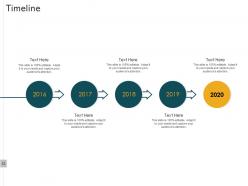
Slide 41: This slide displays Timeline process.
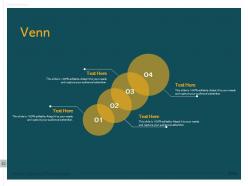
Slide 42: This is Venn slide showcasing- Asset Lifecycle Management
Slide 43: This is Thank You slide with Address, Email address and Contact number.
Asset lifecycle management powerpoint presentation slides with all 43 slides:
Explain the geometry with our Asset Lifecycle Management Powerpoint Presentation Slides. They accurately display the layout.



FAQs for Asset lifecycle management
So there's four main stages - planning, buying stuff, running/maintaining it, then getting rid of it. But here's the thing that drives me crazy: most companies treat each stage like it's totally separate when they're actually super connected. What you decide early on completely changes how much you'll spend later. Like, if you plan poorly you end up buying the wrong equipment. Skip maintenance and boom - expensive repairs. Don't think about disposal and you're just throwing money away at the end. You've gotta track everything and make sure teams actually talk to each other between stages.
Start by tagging everything when you buy it, then track maintenance and how stuff's performing over time. CMMS software works great, but honestly? A good spreadsheet beats messy paperwork any day. The trick is getting everyone to actually use whatever system you pick. Don't just look at sticker price either - that "cheap" printer becomes expensive real quick when you're calling for repairs every month. Set up alerts for maintenance schedules so things don't slip through the cracks. Track the full lifetime costs, not just what you paid upfront. Consistency is everything here.
Honestly, tech is a game-changer for asset management. IoT sensors give you real-time data on everything - performance, maintenance needs, costs. Predictive analytics catch problems early (trust me, this alone is worth it). RFID scanning cuts out all those manual tracking mistakes that drive everyone crazy. Your team can update stuff through mobile apps wherever they are, which is super convenient. The trick is making sure everything talks to each other instead of having random disconnected systems. I'd start small though - just digitize your most important assets first and build from there.
Honestly, compliance runs your entire asset lifecycle - from when you buy something to when you finally get rid of it. Documentation is huge here. Auditors will dig through everything, so you've got to track it all properly. Sometimes you'll be stuck maintaining equipment way past when you'd normally replace it just because the regs say so. Specific inspection schedules, approved disposal methods - it's all spelled out for you. Here's the thing though: build those compliance checks right into your workflows from day one. Way easier than trying to backtrack later. I'd start by just comparing what you're doing now against whatever regulations apply to your stuff.
Focus on four main things: how much you're actually using your equipment (utilization rates), total ownership costs, how often stuff breaks down, and ROI. Honestly, utilization is where most companies get shocked - like finding out you're only using 60% of what you own. Track maintenance costs as a percentage of asset value too, plus how accurate you are at timing replacements. Don't try to monitor everything at once though. Pick two metrics that match your biggest headaches right now, then add more later.
So predictive analytics is like having a crystal ball for your equipment - you can spot problems before they hit. It looks at all your asset data and figures out when stuff needs fixing, how much life your equipment has left, that sort of thing. Way better than scrambling when everything breaks at once, trust me. You get to plan maintenance around your schedule instead of random 3am emergencies. Plus you'll know whether it's worth repairing something or just replacing it entirely. Just make sure you're tracking the right data consistently - garbage in, garbage out, you know?
Look, the biggest thing is switching from fixing stuff when it breaks to catching problems early. Preventive maintenance and condition monitoring will save you a fortune - I've watched companies cut their repair costs in half just doing this. Train your operators properly so they're not accidentally damaging equipment. Control your environment too - temperature and humidity matter more than people think. Oh, and don't cheap out on replacement parts, that always backfires. Start by figuring out which assets are most critical, then focus your efforts there first. Way more manageable that way.
Dude, lifecycle cost analysis is a game changer - it shows you what something *actually* costs over its whole lifespan, not just upfront. So you'll see maintenance, energy bills, downtime, all that stuff. That "bargain" equipment? Might end up costing you way more because it breaks constantly. I learned this the hard way with a cheap printer once, haha. Anyway, it lets you compare different options fairly. Usually the pricier option upfront saves you tons later. Ask vendors for these projections next time - totally changes how you think about what's worth buying.
Dude, training is honestly make-or-break for ALM. I've watched companies dump money into fancy systems then completely bomb because nobody actually knew how to use them properly. Your team needs to get the "why" behind asset care, not just basic procedures. They should spot warning signs early and handle equipment right - otherwise you're just burning cash on expensive paperweights. Oh, and don't forget regular refreshers after the initial training. People get sloppy over time. Start with solid onboarding though, that's your foundation.
Data silos are gonna be your worst nightmare - asset management never talks to ERP or procurement systems. You're stuck doing everything twice and nobody trusts the numbers anyway. Approvals get completely stuck because workflows weren't built to connect departments. Legacy systems? Forget about it, they're basically islands. Honestly, procurement people are the worst about this stuff. Start by figuring out where your data actually flows and breaks down. That'll show you what needs fixing first instead of trying to solve everything at once.
So basically you set up IoT sensors on your equipment to track stuff like temperature, vibration, how much it's being used - whatever matters for that asset. The AI crunches all that data and gets scary good at predicting failures before they happen. Way better than just guessing when to do maintenance. You'll spot problems early instead of dealing with random breakdowns, plus you won't waste time servicing things that don't need it yet. Honestly, I'd start with just your most expensive equipment first and see how it goes.
Okay so first thing - set up solid validation rules at every data entry point. That's gonna catch most problems before they spiral. Role-based access is crucial too, you don't want random people messing with your asset data. Automated backups are obvious but people still forget somehow. Regular audits will save your butt, trust me on this one. Oh and definitely run reconciliation between systems - inconsistencies always hide there. You'll also need clear governance policies with actual owners for each data type. Honestly though? Start with those validation rules first, they're your best friend here.
Honestly, sustainability's changed everything about how we handle assets now. Companies are picking suppliers based on their environmental game, not just price. During operations, energy efficiency matters way more than it used to. And when stuff breaks? Instead of just dumping it, everyone's thinking recycling or refurbishment first. The circular economy thing has companies designing for longevity from day one - which makes sense if you think about it. Track your carbon footprint alongside total ownership costs. You'll be surprised how often the green choice saves money long-term too.
Honestly, having everything in one spot instead of hunting through random spreadsheets is a game changer. You can actually see what's breaking down, when warranties expire, all that stuff that usually slips through the cracks. The cost tracking becomes way more accurate too - no more guessing when to replace equipment. Your whole team stays on the same page, which is huge. I'd say start by figuring out where all your asset info is hiding right now (probably everywhere, let's be real). That'll show you exactly what headaches you're trying to fix.
Basically you've gotta translate all that technical stuff into what each group actually gives a damn about. Show executives ROI numbers and how you're cutting risk. Operations? They want to know you're preventing downtime and keeping maintenance smooth. Finance just wants clean budget breakdowns - honestly, they're probably the easiest to please if you've got your numbers straight. Ditch those heavy reports nobody opens anyway. Use dashboards and quick updates instead. The whole trick is talking their language, not making them learn yours. When they see how asset decisions hit their specific problems, you'll actually get somewhere.
No Reviews