

Australia country powerpoint flags





Try Before you Buy Download Free Sample Product
 Impress Your
Audience
 100%
Editable
 Save Hours
of Time


Take the dais by storm. Let your thoughts rain with our Australia Country Powerpoint Flags.
People who downloaded this PowerPoint presentation also viewed the following :
Australia country powerpoint flags with all 11 slides:
Heighten the experience for you listeners. Charm them with the colourful effect of our Australia Country Powerpoint Flags.


FAQs for Australia
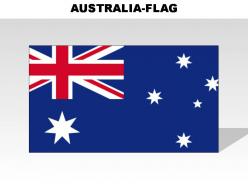
The Australian flag reflects British colonial heritage through the Union Jack, maritime tradition via the Blue Ensign design, and national identity through the Southern Cross constellation visible from Australia. While maintaining Commonwealth connections, the flag represents Australia's unique geographical position and cultural evolution, with the Federation Star symbolizing the union of six states and territories into one nation in 1901.
The Australian flag symbolizes national identity through its Union Jack representing historical British ties, the Southern Cross constellation reflecting Australia's geographic position, and the Commonwealth Star embodying federation unity. These elements collectively foster national pride by connecting Australians to their heritage, unique location, and democratic values, while serving as a unifying symbol across diverse communities, states, and territories in an increasingly multicultural society.
The Union Jack represents Australia's historical ties to Britain as a former colony, symbolizing the constitutional monarchy and Westminster parliamentary system that shaped Australian governance. While maintaining this connection honors Australia's legal and political heritage, it increasingly sparks debate about national identity, with many Australians advocating for a distinctly Australian symbol that better reflects the nation's multicultural evolution and independent sovereignty.
The Australian flag's colors reflect both landscape and heritage, with blue symbolizing the surrounding Pacific and Indian Oceans, red representing the continent's distinctive red earth and outback terrain, and white signifying unity and peace. These colors connect Australia's geographic identity with its British colonial history, while the Southern Cross constellation uniquely positions the nation within its Southern Hemisphere context, ultimately delivering both historical recognition and regional distinction.
The Southern Cross constellation serves as the dominant visual element on the Australian flag's blue field, representing Australia's geographical location in the Southern Hemisphere through five white stars that mirror the actual constellation. This celestial feature distinguishes Australia from other Commonwealth nations, providing national identity and astronomical significance, while symbolizing navigation, exploration, and the country's unique position, ultimately delivering cultural meaning that resonates with Australian heritage and geographic distinctiveness.
Several proposed changes to the Australian flag focus on removing the Union Jack to reflect Australia's independence, with alternatives featuring the Southern Cross, Aboriginal symbols, or new color schemes. While supporters argue these changes would better represent Australia's multicultural identity and sovereignty, opponents emphasize preserving historical heritage and national unity, with many Australians finding that current flag recognition delivers international brand value and cultural continuity.
Australian states and territories express their unique identities through distinctive flag designs incorporating local symbols, colors, and historical elements like state badges, flora, fauna, and cultural heritage. These regional flags showcase each jurisdiction's natural landmarks, indigenous connections, and founding stories, with states like Queensland featuring the Maltese Cross, Victoria displaying the Southern Cross constellation, and territories emphasizing their distinctive geographical and cultural characteristics.
The Australian Flags Act 1953 provides key legal protections, establishing official designs, prohibiting unauthorized commercial use, and requiring government approval for modifications. These protections ensure respectful usage across government institutions, educational facilities, and public ceremonies, with many organizations finding that compliance enhances national representation while avoiding potential legal complications in official communications.
The Australian flag shares the Union Jack canton with many Commonwealth nations like Canada, New Zealand, and Fiji, while incorporating distinctive elements including the Southern Cross constellation and larger Commonwealth Star. This design approach balances historical British connections with unique national identity, with Australia's flag particularly emphasizing astronomical features that reflect its geographic position, ultimately creating visual distinction while maintaining Commonwealth heritage recognition.
Flag etiquette ensures the Australian flag receives appropriate respect and recognition as a national symbol, involving proper positioning, timing, and ceremonial protocols. These guidelines enhance civic pride, demonstrate national unity, and maintain diplomatic standards across government institutions, schools, and public events, with many organizations finding that proper flag display strengthens community engagement and institutional credibility.
Aboriginal and Torres Strait Islander flags represent distinct Indigenous sovereignty and cultural identity, contrasting with the Australian flag's colonial British heritage through different symbolism and meanings. While the Australian flag emphasizes historical Commonwealth ties, Indigenous flags celebrate connection to country, spiritual beliefs, and tens of thousands of years of continuous culture, with many organizations increasingly displaying all three flags together to acknowledge Australia's complete cultural landscape.
The Australian flag prominently represents the nation at Olympic Games, Commonwealth Games, FIFA World Cup matches, and diplomatic summits worldwide. Through ceremonial displays, athlete uniforms, and official protocols, it enhances national identity and unity while strengthening Australia's international presence, with sporting events particularly delivering global visibility and cultural recognition across diverse audiences.
Common misconceptions about the Australian flag include that the Union Jack represents ongoing British rule, that the Southern Cross belongs exclusively to Australia, and that the design lacks indigenous representation. While these concerns reflect valid historical complexities, the flag's symbolism has evolved to represent Australian identity and heritage, with many Australians finding that it embodies both historical connections and contemporary national pride.
Australian educational institutions incorporate the flag through history lessons exploring colonial heritage and federation, civics education teaching national symbols and democratic values, cultural studies examining Indigenous perspectives alongside European settlement, and ceremonial practices during assemblies and national events. Through these approaches, schools deliver comprehensive understanding of national identity, constitutional development, and multicultural citizenship, with many institutions finding that balanced flag education enhances students' civic engagement and critical thinking skills.
The Australian flag serves as a powerful unifying symbol during cultural events and national celebrations, fostering patriotism, community connection, and shared identity across diverse populations. Through prominent display at Australia Day festivities, sporting events, and multicultural celebrations, organizations and communities enhance civic engagement, strengthen cultural cohesion, and ultimately deliver meaningful experiences that celebrate national heritage while embracing modern diversity.
-
Informative presentations that are easily editable.
-
Very well designed and informative templates.