


India country powerpoint flags




Try Before you Buy Download Free Sample Product
 Impress Your
 Audience
 100%
100% Editable
 Save Hours
 of Time


Our India Country Powerpoint Flags are explicit and effective. They combine clarity and concise expression.
People who downloaded this PowerPoint presentation also viewed the following :
India country powerpoint flags with all 11 slides:
Give your audience a fulfilling experience. They will find our India Country Powerpoint Flags elevating.
FAQs for India
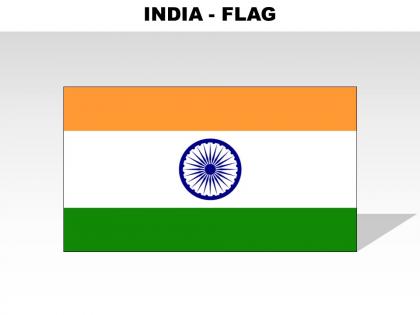
So the Indian flag actually comes from the 1920s Congress party flag that Gandhi helped design. Three stripes - saffron means courage, white is truth/peace, green represents prosperity. That spinning wheel in the middle? It's called a chakra and shows progress plus life's cycles. Here's something cool though - they originally wanted Gandhi's actual spinning wheel but ended up using the ancient Ashoka Chakra instead when they finalized it in 1947. Each part was super deliberately chosen to reflect India's values and independence fight. Makes it feel way more significant than just random colors, you know?
So the Indian flag colors all mean something specific - saffron is for courage and sacrifice, white's about peace and truth, green represents faith and chivalry. That blue wheel in the middle? It's the Ashoka Chakra, symbolizing eternal law and dharma. Pretty cool how much thought went into it honestly. When you're doing your presentation, mentioning these meanings shows you actually get what the flag represents to Indian people. It's one of those flags where they really packed a lot of meaning into the design instead of just picking random colors.
So the Ashoka Chakra is basically India's moral compass on the flag. It's got 24 spokes representing the hours in a day - pretty cool symbolism for continuous progress, right? Named after Emperor Ashoka, who went from warrior to peace advocate after some major life changes. The navy blue stands for truth and justice, which fits India's whole vibe internationally. Oh, and here's something interesting - it actually replaced Gandhi's spinning wheel when they designed the flag. Makes sense since they were transitioning from independence movement to actual sovereign nation. The dharma aspect is huge too - it's all about righteous duty and eternal law.
So the Indian flag went through four versions before they got it right. Started in 1906 with yellow, red, and green stripes plus "Vande Mataram" written on it. Then 1917 happened and they added the Union Jack in the corner - kinda defeats the whole independence thing, right? By 1921 they'd figured out the white stripe and spinning wheel situation. Finally in 1947 they landed on today's version: saffron, white, green with that navy blue Ashoka Chakra. Each change basically showed how serious they were getting about kicking out the British. Pretty cool evolution if you ask me!
So basically the Indian flag changed a bunch of times before 1947. Early versions had totally different colors - some with red and yellow stripes, others with random symbols including the Union Jack (pretty cringe looking back). The spinning wheel showed up in 1920s versions as a self-reliance thing. But they swapped it for the blue Ashoka Chakra wheel we know today. When independence hit, they went with the current saffron-white-green design with that 24-spoked wheel. Honestly, if you're doing a presentation on this, find some side-by-side images online - the visual progression is way more interesting than just describing it.
So basically the flag started as this rebel symbol back in 1906 - different versions kept popping up, but they all meant "screw the British." Gandhi and other leaders would wave them at protests (talk about ballsy, considering the consequences). The tricolor we know today? Congress Party made it official in 1931. What's cool is how it went from being this underground resistance thing to literally becoming who we are as a country. That transformation from protest symbol to national identity - that's your money shot for the presentation. People always remember that journey.
Yeah, tons of flags actually look similar to India's! Germany, France, Ireland - they all do the three-stripe thing, just vertical instead of horizontal. The colors are weirdly universal too - blues mean stability, greens are for nature (or Islam), reds show courage or revolution. Pretty much every flag uses stars, stripes, or symbols that represent their values like peace or prosperity. India's spinning wheel is definitely unique though, which is cool. Oh and crosses, crescents, natural stuff - super common. If you're doing that presentation, I'd focus on the symbolic themes rather than just how they look different. Way more interesting that way.
Hey! So saffron always goes on top - that's non-negotiable. Don't let it touch the ground or use it as clothing/car decoration, that's a big no. Hoist it quickly but take your time lowering it at sunset (unless you've got proper lighting for nighttime). Keep it in good condition too - torn or faded flags look terrible and it's disrespectful. Try to get khadi cloth if you can find it. Indoors, position it higher than other flags with decent lighting. Honestly, people don't realize how many rules there actually are!
The spinning wheel in the center is what makes India's flag really stand out - most other flags just stick with stars or crosses. Those three stripes have actual meaning too: saffron for courage, white for peace, green for faith. What's wild is the blue wheel has exactly 24 spokes representing each hour of the day. Pretty specific, right? Lots of countries use three horizontal stripes, but that dharma chakra makes it totally recognizable. When you're presenting, definitely focus on the wheel's symbolism since that's honestly what people find most interesting about it.
Hey! Yeah so there's this law called the Prevention of Insults to National Honour Act from 1971 that basically makes it illegal to mess with the flag - burning it, tearing it up, whatever. You're looking at up to 3 years in jail or fines if you get caught. There's also the Flag Code of India with all these specific rules about displaying it properly. Can't let it touch the ground, only put it up during daylight hours, has to be the right size and materials. Honestly the rules are pretty detailed - I'd definitely look them up before doing anything official with it.
India doesn't really have a "Flag Day" - you're probably thinking of Republic Day (Jan 26) or Independence Day (Aug 15). Those are the big ones with all the flag ceremonies. Republic Day's got that huge parade in Delhi - military stuff, cultural shows, the works. Independence Day has similar vibes at Red Fort and everywhere else. Both are pretty incredible to witness live, honestly. My cousin went to the Republic Day parade once and couldn't stop talking about it for weeks lol. If you're doing something flag-related, I'd copy the Republic Day format since it's more formal.
Yeah, the Indian flag gets really good reception internationally. Most countries see it as representing the world's largest democracy and a major economy that's still growing. At diplomatic events and global summits, it's treated with genuine respect. The symbolism actually works in India's favor too - saffron for courage, white for peace, green for prosperity, plus that wheel representing progress. Honestly, most nations view India as pretty stabilizing globally and want them as partners. Your flag presentation should go over well. Just don't mess up the flag etiquette because Indians are serious about that stuff.
Honestly, the key is making those colors really pop on screen. Get high-quality flag images from meaningful moments - Independence Day celebrations work great, or those iconic 1947 photos (they add serious authenticity). Each stripe tells a story: saffron means courage, white is peace, green represents prosperity. The Ashoka Chakra symbolizes progress and justice too. Keep backgrounds super simple so the tricolor stands out. If you're feeling fancy, try animating each stripe as you explain what it means. Historical context hits different when people can actually see it, you know? Clean layouts are your friend here.
Honestly, hands-on stuff works best with kids. Have them make mini flags with craft supplies while you explain what each color means. Acting out the flag's history is fun too - kids eat that up. Games are clutch - trivia, matching activities, whatever gets them moving. A flag parade where they share facts they learned is always a hit. Don't just lecture them, that's brutal for everyone involved. Mix like 2-3 of these ideas in one lesson. Keeps things moving and they'll actually remember it later instead of zoning out completely.
Look, social media has made the Indian flag basically unavoidable - it's plastered everywhere during Independence Day, in people's profile pics, you name it. Anyone can share flag content now, which is cool but also messy. Some of the memes are actually hilarious (even if they're not always appropriate). Kids today definitely see the flag way more than we used to. But here's the thing - people argue constantly about what's okay to post online versus not. My advice? Just treat digital flag stuff with the same respect you'd show the actual flag. Makes sense, right?
No Reviews