

B2b sales process consulting powerpoint presentation slides





Try Before you Buy Download Free Sample Product
 Impress Your
Audience
 100%
Editable
 Save Hours
of Time


Our B2B Sales Process Consulting Powerpoint Presentation Slides are topically designed to provide an attractive backdrop to any subject. Use them to look like a presentation pro.
People who downloaded this PowerPoint presentation also viewed the following :
Content of this Powerpoint Presentation
Slide 1: This is the title slide illustrating the B2B Sales Process Consulting.
Slide 2: This is the Agenda Slide for the B2B Sales Process Consulting.
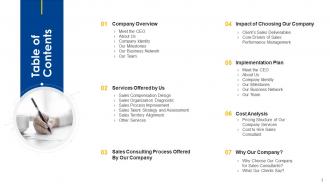
Slide 3: This is a Table of Contents slide including Company Overview, Services Offered by Us, Sales Consulting Process Offered By Our Company, etc.
Slide 4: This is a table of contents slide showing the Company Overview.
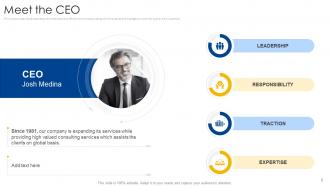
Slide 5: This slide provides a glimpse of the chief executive officer of the company along with his qualities and the message he would like to give to the customers.
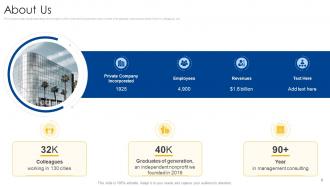
Slide 6: This slide provides a glimpse of the company, which covers the incorporation year, number of employees, revenues earned by the firm, colleagues, etc.
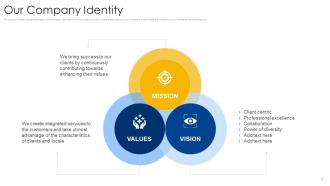
Slide 7: This slide provides a glimpse of the company identity, which focuses on the vision, mission, and values of the company which helps the customers to understand the business well.
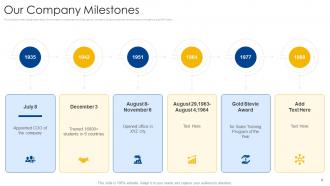
Slide 8: This slide provides a glimpse of the company milestones, which focuses on the company’s history and its achievements throughout the past 50+ years.
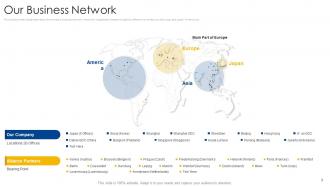
Slide 9: This slide provides a glimpse of the company's business network, which is globally located throughout different countries such as Europe, Asia, Japan, America, etc.
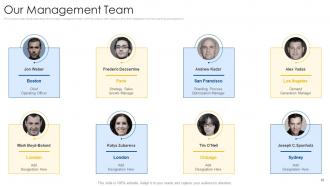
Slide 10: This slide provides a glimpse of the company’s management team.
Slide 11: This is a table of contents slide showing the Services Offered by Us.
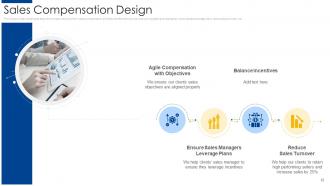
Slide 12: This slide provides a glimpse of the company service, which is sales compensation and features offered by the services such as aligning compensation, ensuring sales leverage plans, reducing sales turnover, etc.
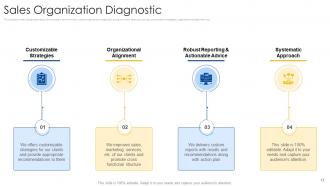
Slide 13: This slide provides a glimpse of the company service, which is sales organization diagnostic along with its features such as customizable strategies, organizational alignment, etc.
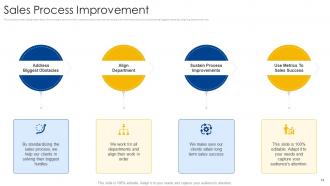
Slide 14: This slide provides a glimpse of the company service, which is sales process improvement along with its features such as addressing the biggest obstacles, aligning departments, etc.
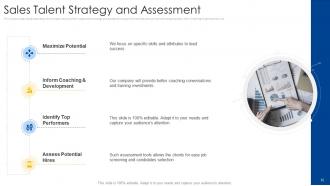
Slide 15: This slide provides a glimpse of the company service which is sales talent strategy and assessment along with its features such as maximizing potential, informed coaching and development, etc.
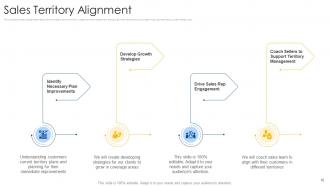
Slide 16: This slide provides a glimpse about the company service, which is sales territory alignment, along with its features such as planning improvements, coach sellers, etc.
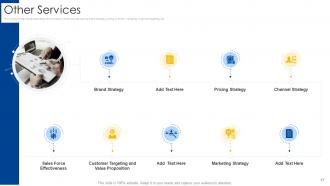
Slide 17: This slide provides a glimpse of the company’s other services such as brand strategy, pricing, channel, marketing, customer targeting, etc.
Slide 18: This is a table of contents slide showing the Sales Consulting Process Offered By Our Company.
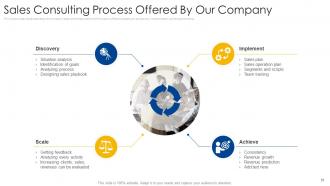
Slide 19: This slide provides a glimpse of the company’s sales consulting process, which focuses on different phases such as discovery, implementation, achieving, and scaling.
Slide 20: This is a table of contents slide showing the Impact of Choosing Our Company.
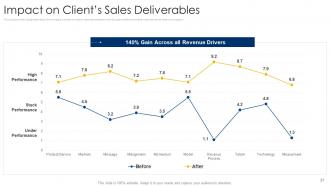
Slide 21: This slide provides a glimpse of the company’s impact on clients’ sales deliverables which focuses on before and after improvement of sales in a company.
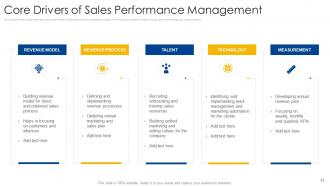
Slide 22: This slide provides a glimpse of the core drivers of the sales performance management plan which focuses on the revenue model, process, talent, technology, and measurements.
Slide 23: This is a table of contents slide showing the Implementation Plan.
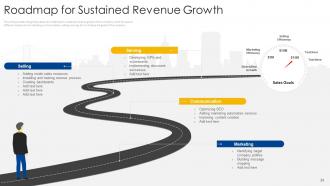
Slide 24: This slide provides a glimpse of the roadmap for sustained revenue growth of the company which focuses on different areas such as marketing, communication, selling, serving, etc. to achieve the goals of the company.
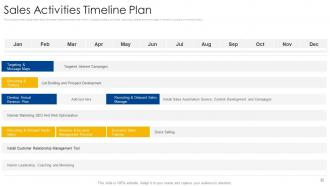
Slide 25: This slide provides a glimpse of the sales implementation plan which includes priorities, activities, resources, people, and technology involved in a project on monthly basis.
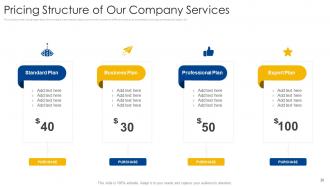
Slide 26: This slide provides a glimpse of the company’s services pricing structure which focuses on different plans such as standard, business, professional, expert, etc.
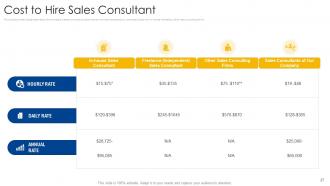
Slide 27: This slide provides a glimpse of the company’s sales consultant's costs.
Slide 28: This is a table of contents slide showing Why Our Company?
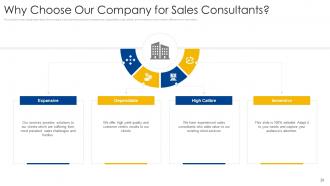
Slide 29: This slide provides a glimpse of the company’s exclusive features such as expansive, dependable, high caliber, and immersive, which make it different from the others.
Slide 30: This slide provides a glimpse of the company’s testimonials and what do the existing customers have to say about the company and their work.
Slide 31: This is the Icons Slide for B2B Sales Process Consulting.
Slide 32: This slide presents the Additional Slides.
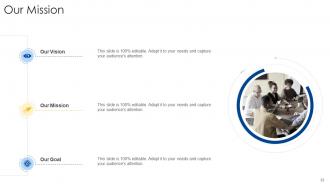
Slide 33: This slide provides the Mission for the entire company. This includes the vision, mission, and goal.
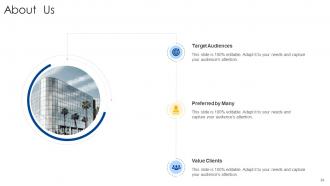
Slide 34: This slide contains the information about the company, aka the ‘About Us’ section. This includes the Value Clients, the Target Audience, and Preferred by Many.
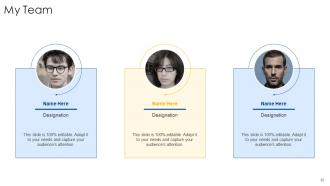
Slide 35: This slide shows the members of the company team with their name, designation, and photo.
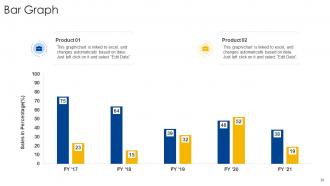
Slide 36: This slide presents a Bar Graph. It compares 2 products’ sales over a timeline of financial years.
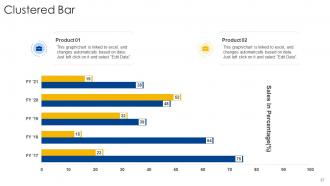
Slide 37: This slide presents the Clustered Bar. It allows direct comparison of multiple series in a given category.
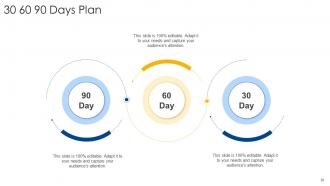
Slide 38: This is a slide with a 30-60-90-Days Plan to set goals for these important intervals.
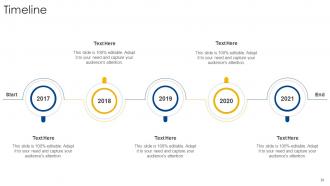
Slide 39: This slide is a Timeline template to showcase the progress of the steps of a project with time.
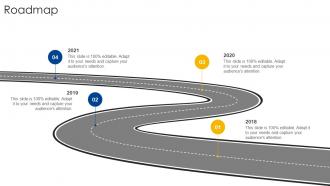
Slide 40: This slide is a Roadmap template to showcase the stages of a project, for example.
Slide 41: This is a Thank You slide where details such as the address, contact number, and email address are added.
B2b sales process consulting powerpoint presentation slides with all 41 slides:
Use our B2B Sales Process Consulting Powerpoint Presentation Slides to effectively help you save your valuable time. They are readymade to fit into any presentation structure.


FAQs for B2b sales process consulting
Honestly, start by mapping what you're already doing - then see where people usually bail out. Basic stages are prospecting, qualifying, discovery, proposal, handling pushback, and closing. But don't sleep on follow-up after closing, that's huge for repeat business. Discovery is where the magic happens though - that's when you actually figure out what's bugging them enough to spend money. Just qualify hard upfront because I've wasted so much time on prospects who were never serious buyers anyway. Oh, and set clear benchmarks for moving people through each stage. Makes everything way less messy.
Look, you can't talk to a CFO the same way you'd pitch an IT director - they care about totally different stuff. CFOs want ROI numbers and risk analysis. IT folks? They're stressed about implementation headaches and security holes. Same product, but you need different conversations for each. Honestly, most sales people mess this up and use the same boring pitch for everyone. Teams that actually customize their messaging see conversion rates spike 40-60% though. Worth the extra effort, right? Start simple - figure out your top 3 buyer types and write specific talking points for each one. Game changer.
Think of data analysis like having GPS for your sales process - shows you exactly where deals die and why. Track conversion rates at each stage and figure out which lead sources actually work (hint: probably not the expensive flashy ones). You'll start spotting patterns in what your best salespeople do differently. Plus you can predict which deals will probably close based on engagement and historical data. Honestly, without tracking this stuff you're just throwing darts blindfolded. Start simple - just measure your current pipeline metrics first, then add more from there.
So CRM tools are basically like having a personal assistant for your whole sales team. They track every conversation and interaction automatically, which is honestly a lifesaver. You can set them up to send follow-up emails when someone checks out your pricing page or downloads something. The coolest part? You'll actually see which activities make you money instead of just guessing. I'd probably start by writing down how you currently handle leads - like, the messy reality of it. Then pick a CRM that fixes whatever wastes the most time. Trust me, once you automate the boring stuff like updating contact info, you won't go back.
Here's what's worked for me - qualify way harder upfront. Seriously, tire-kickers will drain your soul. Figure out who actually makes decisions early on, not just your main contact. Those massive proposal decks? Total waste. Keep it short and focus on their specific pain points. I started creating urgency with implementation deadlines and it actually moves things along. Address the obvious objections before they even bring them up - saves weeks of back-and-forth emails. Oh, and track your cycle times by deal size. You'll start seeing patterns that'll help you get better at this whole thing.
Dude, B2B is ALL about relationships. Way more than just pitching your stuff. These deals take forever, you're dealing with like 5 different decision-makers, and they're dropping serious cash. Trust is everything - nobody's gonna risk their job on some vendor they barely know, right? Here's the thing though: those relationships stick around way longer than individual deals. Your contacts jump companies and suddenly you've got an in somewhere new. Skip the hard sell. Just be genuinely helpful first. Really dig into what problems they're actually facing before you even mention your solution. It's honestly the only approach that works long-term.
Honestly, the worst thing you can do is jump in with some cookie-cutter process without actually watching how they work first. I've seen way too many consultants create these insanely complicated 15-step workflows that everyone just ignores. Shadow a few sales calls before you do anything else - that's where you'll find the real problems. Don't forget about getting buy-in from the team either. The salespeople know exactly where things get stuck, so involve them in building whatever you come up with. Even brilliant processes flop if people hate using them. Oh, and keep it simple - complexity kills adoption every time.
Look, your team needs proper sales training for those messy B2B deals - the multi-stakeholder nightmare situations and endless cycles. I've watched so many reps just improvise their way through calls and bomb because they're using tactics from like 2015. But here's the thing - one-and-done training is useless. You'll want ongoing coaching, deal reviews, maybe some role-play stuff (I know, sounds cheesy but it works). The teams crushing it right now? They're getting constant feedback and can pivot fast when things change. First step though - figure out where your people are actually struggling, then focus your training there.
Honestly, conversion rates at each funnel stage are everything - that's where you'll catch the bottlenecks killing your deals. Sales cycle length matters too, especially when B2B stuff drags out for months (ugh). Track your average deal size and win rate obviously. But here's what people miss - lead response time can make or break you. Customer acquisition cost vs lifetime value shows if you're actually making money or just spinning wheels. Oh, and activity metrics like calls and emails? They tell you if your team's actually working or just looking busy. Pick maybe 3-5 metrics that hit your biggest problems right now.
Dude, you're sitting on a goldmine if you actually capture feedback from every prospect interaction. Most sales teams are terrible at this - they just move on to the next call without writing anything down. Start tracking objections, repeated questions, why deals go cold. Do post-mortems on lost deals too. Set up weekly team sessions to review what you're seeing. Maybe your messaging sucks, or your qualifying questions need work. Could be your whole sales process is off. I'd start simple - just make a feedback spreadsheet this week and actually use it.
Dude, you can't just use the same sales approach across different industries - it'll backfire hard. Healthcare has crazy compliance stuff that tech companies don't even think about. Manufacturing? Their decision process takes forever compared to startups. The whole thing changes - your timeline, how you talk to prospects, even how you structure your team. I'd start by figuring out the top 3 pain points that industry actually deals with daily, then craft your pitch around fixing those specific headaches. It's wild how different each sector operates once you dig into it.
Dude, personalization works because people can tell when you actually get their problems vs. just blasting the same pitch to everyone. I swear, even the coldest prospects will respond when you mention something specific about their company or industry challenges. Most salespeople are lazy about this - they send these cookie-cutter emails that scream "mass outreach." You'll stand out just by doing basic research. Try this: find one specific thing about their business and work it into your next few messages. Could be recent company news, their industry struggles, whatever. Your reply rates will jump, I promise.
Honestly, competitor analysis is like having a cheat sheet for your sales team. They'll figure out what messaging actually works and spot the pain points other companies are totally ignoring. Your reps can swipe their best tactics too. When prospects ask "how are you different from Company X?" - boom, you're ready. The pricing intel is where it gets really interesting though. You can use that stuff in negotiations all the time. Oh, and make sure your team writes down every competitor they hear mentioned on calls. That's pure gold right there.
Content marketing is like having a wingman for your sales team - it does half the heavy lifting before your reps even get on calls. You're building trust upfront by teaching prospects about their problems, then hitting them with case studies and expert insights while they're shopping around. The magic happens when you map different content to each funnel stage. Awareness stuff, consideration pieces, decision-making content. I'd honestly start by figuring out where your current content gaps are - that'll show you exactly what's missing. Multiple touchpoints keep you relevant and position you as the go-to expert. It's pretty brilliant when done right.
Honestly, the difference is night and day when sales and marketing actually work together. Your lead quality shoots up because marketing can write content that tackles the real objections salespeople deal with every day. Sales gives feedback on which leads actually turn into customers - finally, a feedback loop that works! Plus your deal cycles get way faster. Marketing figures out what messaging clicks in actual conversations, and sales gets leads who already know what to expect. Oh, and conversion rates go up too obviously. Just start with weekly meetings where both teams share what they're seeing out there.
-
Perfect template with attractive color combination.
-
Really like the color and design of the presentation.
-
Informative presentations that are easily editable.
-
Graphics are very appealing to eyes.
-
Amazing product with appealing content and design.
-
Excellent products for quick understanding.