


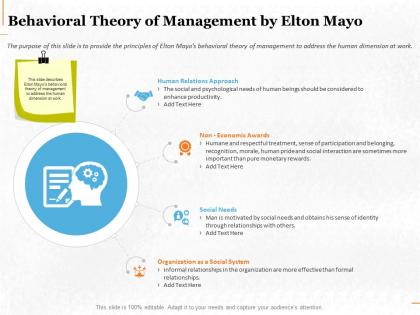
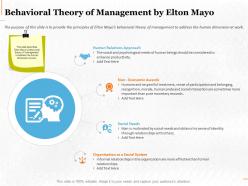
Behavioral theory of management by elton mayo ppt powerpoint professional




Try Before you Buy Download Free Sample Product
 Impress Your
 Audience
 100%
100% Editable
 Save Hours
 of Time


Folks feel like being agreeable with our Behavioral Theory Of Management By Elton Mayo Ppt Powerpoint Professional. They help differences come down.
People who downloaded this PowerPoint presentation also viewed the following :
Behavioral theory of management by elton mayo ppt powerpoint professional with all 2 slides:
Encourage folks to be more accepting with our Behavioral Theory Of Management By Elton Mayo Ppt Powerpoint Professional. Give them enough cause to agree.
FAQs for Behavioral theory of management by elton mayo
So basically it's about treating people like actual humans instead of machines. The Hawthorne effect is huge - workers perform way better when they feel seen and appreciated. Money isn't everything either (shocking, I know). Recognition and feeling like part of the team matter just as much. Social stuff drives tons of workplace behavior too - honestly, the office group chat probably gets more done than half the official meetings. Pay attention to how your team actually talks to each other when they think no one's watching. That's where you'll figure out what really makes them tick.
So basically classical management was all about making processes super efficient - treat workers like machines, optimize everything, boom, better productivity. But that approach kinda misses the whole human element. Behavioral theory flipped it around and said "wait, people have feelings and motivations that actually matter." Instead of just timing how long tasks take, you're figuring out what makes your team tick. Like, someone might work way harder if they feel valued versus just being micromanaged all day. It's honestly pretty obvious when you think about it - happy people perform better.
Honestly, just figure out what makes each person on your team tick - some love getting praised in meetings, others want quiet feedback or maybe just flexible hours. Different strokes for different folks, right? When someone crushes a goal, celebrate it immediately instead of waiting months for some formal review. The reward systems you set up need to actually mean something to them though. Watch how the group vibe affects everyone too. I'd start by just observing what gets each person going, then switch up your approach based on that. Way more effective than treating everyone the same.
Dude, motivation is literally the heart of Behavioral Management Theory. The whole idea is that people aren't robots - you can't just bark orders and expect results. Workers have psychological needs, social connections, all that stuff matters. Remember the Hawthorne Studies? Productivity shot up simply because employees felt noticed and valued. Pretty wild, right? So instead of assuming everyone wants the same rewards, you gotta figure out what actually drives each person on your team. Some want recognition, others need growth opportunities. Check in regularly. The old "one size fits all" approach is dead.
Honestly, timing is everything with this stuff. When someone nails a target, hit them with recognition right away - praise, bonuses, whatever works. Don't wait a week! Set consequences for slacking too, but the positive reinforcement is where the magic happens. People remember that way longer. Be consistent though, or you'll confuse everyone. I'd track the specific behaviors you want - like, write them down - then reward those exact things when they pop up. It's weirdly effective once you get into the habit of actually doing it consistently.
Recognition programs work way better than you'd expect - seriously, people eat that stuff up. Set clear expectations from day one, then use peer feedback to keep everyone accountable. Team-building that actually rewards collaboration helps too, and don't let conflicts fester. Regular check-ins about *how* the team worked together (not just what they got done) make a difference. Oh, and tackle conflicts right when they pop up. Pick whatever feels most natural for your team first - you don't need to overhaul everything at once.
Think of company culture as those unspoken rules everyone just "gets" - like how loud you can be in meetings or whether people actually take lunch breaks. Your team picks up on these vibes and copies what they see around them. It's wild how much this stuff shapes behavior without anyone realizing it. When the culture rewards teamwork, people naturally start collaborating more. But here's the thing - if you're trying to fix how people act at work, you can't just tell them to change. You've got to work on shifting the culture first, because that's what's really driving everything.
Look, your leadership style basically sets the tone for everything your team does. Autocratic managers get people to follow orders but creativity just dies. Democratic approaches? Way better for engagement since everyone feels like their voice matters. Laissez-faire works if your team's super motivated, but honestly most groups just end up confused without direction. People copy what they see from you - collaborate and they will too, micromanage and they'll wait for you to make every decision. You gotta read the room though. What works for one team might totally backfire with another.
Oh totally! Google's obviously the poster child for this - all those crazy perks and positive vibes stuff. Southwest Airlines basically built their reputation on happy employees = happy customers, which honestly makes sense. Zappos used to be amazing at this too (they've been kinda weird lately though). IBM's even jumped on the bandwagon now. The cool thing is you don't need Google money to copy their feedback systems. Just look at how they do recognition programs - most of it's pretty adaptable for smaller teams without going broke.
So group dynamics is really the core of behavioral management theory. People don't work alone - they're constantly influencing each other and feeding off the group's energy. You can't just look at individual numbers anymore. Pay attention to how your team communicates, what the unspoken rules are, and honestly? Figure out who the real influencers are (hint: it's not always who you think). Those informal leaders and little cliques actually shape how everyone performs. Team morale matters way more than most managers realize when you're making decisions.
Hey so basically the biggest issue is that Behavioral Management Theory treats people like they're all the same - which obviously we're not. It assumes everyone will react identically to rewards and punishments, but that's pretty unrealistic. The theory completely ignores things like company culture, personal motivation, and honestly just how different people think and feel about work. Critics say it's way too robotic and mechanical. Oh and it doesn't consider situational stuff either, which can totally change how someone behaves. If you're gonna use behavioral approaches, definitely mix them with other theories that actually see employees as complex humans.
Yeah, mixing Behavioral Management with other theories is smart - most good managers do this without thinking about it. Try pairing it with Systems Theory so you see how individual behavior ripples through the whole company. Contingency Theory works great too since you can adjust your behavioral tactics based on what's happening. I always think Scientific Management gives you the "what" while behavioral stuff handles the "how." Like, use data for goal-setting but behavioral tricks for actually motivating people to hit those goals. Honestly? Just figure out which behavioral tools click in your situation, then blend them with whatever framework you're already using.
So basically it's all about operant conditioning - people do more of what gets them rewarded and less of what gets them in trouble. Managers use this constantly with bonuses, shoutouts, whatever. There's also stimulus-response theory (your environment triggers certain behaviors) and social learning where people watch others get rewarded or punished. I mean, it makes total sense when you think about it. Oh, and if you're trying to change how your team acts? Just be super consistent about praising the stuff you want to see more of. Works way better than you'd expect.
Start with baselines before changing anything - that's huge. Pick 2-3 specific behaviors to track, like attendance or how fast people finish projects. Most HR systems already have this data sitting there. Weekly dashboards work way better than trying to track everything in real-time because people change slowly, not overnight. Focus on leading stuff too - did they complete training? Not just the final performance scores. Oh and peer feedback scores are gold if you can swing it. Don't go crazy tracking everything at once though, you'll burn out fast.
Honestly, positive reinforcement is your best bet here. When someone does something right, tell them right away - don't wait for the weekly meeting or whatever. Public shoutouts work crazy well too, like mentioning wins when everyone's together. Be specific with your feedback though, not just "hey good work" but actually say what they did. Oh and set super clear goals so people aren't guessing what you want. The weird part is your team copies you more than you think, so if you're doing the right stuff, they will too. Just pick one thing to work on first.
No Reviews