


Behavioral Theories Of Leadership Powerpoint Presentation Slides




Try Before you Buy Download Free Sample Product
 Impress Your
 Audience
 100%
100% Editable
 Save Hours
 of Time


Need to present types of behavior and personality traits associated with effective leadership? To help you out in presenting management theories, we have come up with content-ready behavioral theories of leadership PowerPoint presentation. This leadership behavioral approaches PPT design contains slides such as definition, who is a leader, quotes, difference between leaders and managers, qualities of good leader, formal and informal, styles of leadership, entrepreneurial and transactional, four components, trait, contingency and behavioral and situational theory, traits and skills, managerial grid, Fielder's contingency model, LPC scale, path goal theory, Hersey and Blanchard's, member exchange theory, normative decision model, participative process and participative decision making. Additionally, with this studies of leadership PowerPoint template, you can present topics like situation and trait based leadership, organizational behavior, business management, transformational leadership, contingency approaches, behavior learning theory, governance model, behaviors of manager, functional leadership etc. Download our 100 percent editable Leadership Powerpoint Presentation Slides based on needs.
People who downloaded this PowerPoint presentation also viewed the following :
Content of this Powerpoint Presentation
Slide 1: This slide introduces Behavioral Theories of LEADERSHIP. State company name here and get started.
Slide 2: This is an AGENDA slide. State your agenda here.
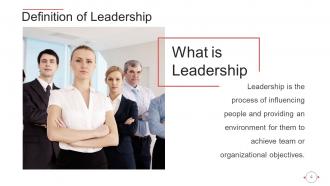
Slide 3: This slide defines What is Leadership in brief.
Slide 4: This slide presents the Definition of Leadership.
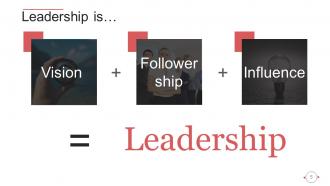
Slide 5: This slide continues to explain what Leadership is, with the combination of 3 characterstics as follows- Vision, Followership, Influence.
Slide 6: This slide provides a detailed explanation on Who is a Leader?
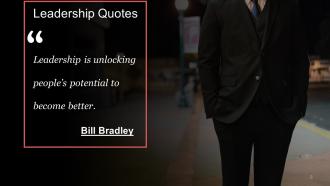
Slide 7: This slide states Leadership Quotes for inspiration, motivation etc. You may change the slide content as per need.
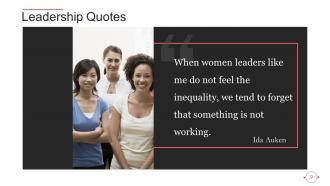
Slide 8: This is another Leadership Quotes slide. You may change the slide content as per need.
Slide 9: This too is a Leadership Quotes slide. You may change the slide content as per need.
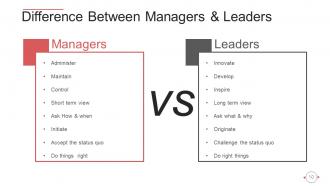
Slide 10: This slide explains Difference Between Managers & Leaders.
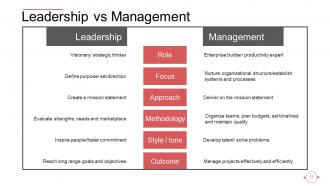
Slide 11: This is a Leadership vs Management slide with respect to- Role, Focus, Approach, Methodology, Style/tone, Outcome.
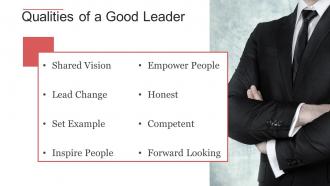
Slide 12: This slide states the Qualities of a Good Leader which include- Shared Vision, Lead Change, Set Example, Inspire People, Empower People, Honest, Competent, Forward Looking.
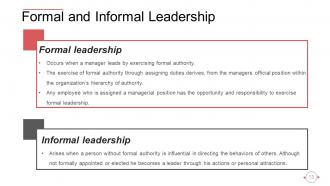
Slide 13: This slide defines Formal and Informal Leadership.
Slide 14: This slide is titled Styles of Leadership to proceed further.
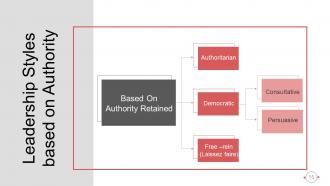
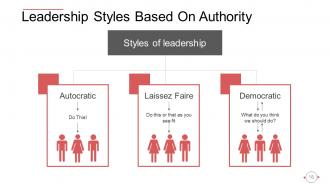
Slide 15: This slide presents the Leadership Styles based on Authority which include- Authoritarian, Democratic. Free–rein (Laissez faire).
Slide 16: This is another Leadership Styles Based On Authority slide.
Slide 17: This slide states Autocratic Leadership.
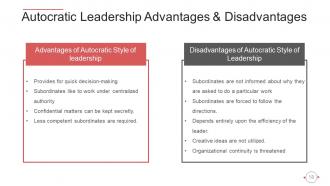
Slide 18: This is an Autocratic Leadership Advantages & Disadvantages slide. You can state yours on the basis of your requirements.
Slide 19: This slide states Democratic Leadership which is divided into- Consultative, Persuasive.
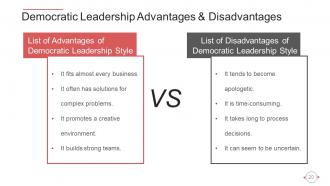
Slide 20: This slide presents a list of Democratic Leadership Advantages & Disadvantages.
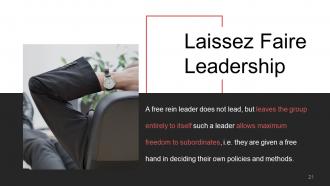
Slide 21: This slide provides information on Laissez Faire Leadership.
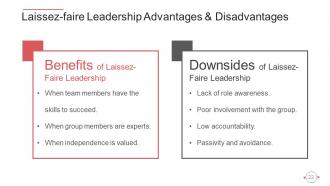
Slide 22: This slide states Laissez-faire Leadership Advantages & Disadvantages in points. You can refine them basis the requirements.
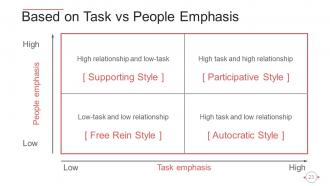
Slide 23: This is a Based on Task vs People Emphasis matrix slide with high and low parameters.
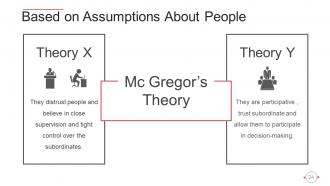
Slide 24: This is Based on Assumptions About People slide explaining Mc Gregor’s Theory.
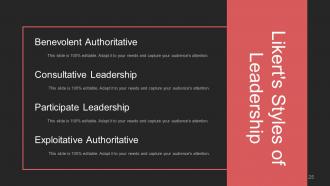
Slide 25: This slide presents Likert's Styles of Leadership which include the following- Benevolent Authoritative, Consultative Leadership, Participate Leadership, Exploitative Authoritative.
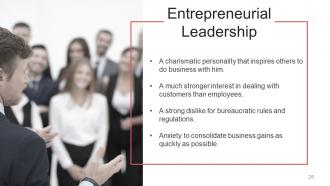
Slide 26: This slide states Entrepreneurial Leadership facts and information to be displayed.
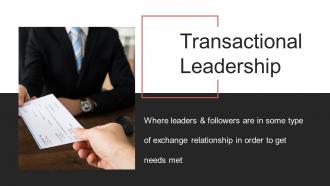
Slide 27: This slide provides a brief description of Transactional Leadership.
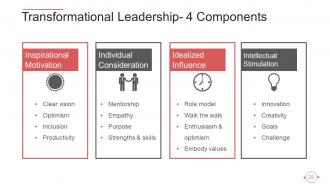
Slide 28: This is a Transformational Leadership slide explaining its 4 important components- Inspirational Motivation, Individual Consideration, Idealized Influence, Intellectual Stimulation.
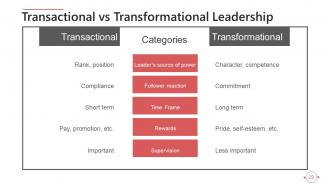
Slide 29: This slide distinguishes between Transactional vs Transformational Leadership with the following categories- Leader’s source of power, Follower reaction, Time Frame, Rewards, Supervision.
Slide 30: This slide is titled Theories of Leadership. You can alter/ change the image based on requirement.
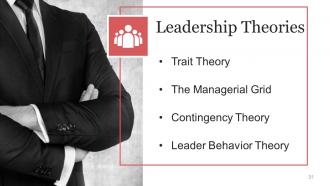
Slide 31: This slide presents various Leadership Theories which include- Trait Theory, The Managerial Grid, Contingency Theory, Leader Behavior Theory.
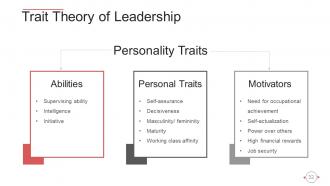
Slide 32: This is a Trait Theory of Leadership slide explaining various Personality Traits.
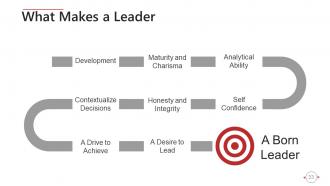
Slide 33: This is What Makes a Leader roadmap slide which shows- Development, Maturity and Charisma, Analytical Ability, Contextualize Decisions, Honesty and Integrity, Self Confidence, Honesty and Integrity, Contextualize Decisions, A Drive to Achieve, A Desire to Lead, A Born Leader.
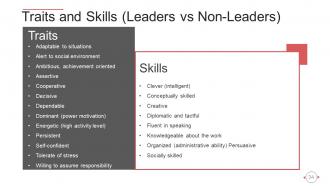
Slide 34: This slide showcases various Traits and Skills (Leaders vs Non-Leaders). Monitor them and change as per requirement.
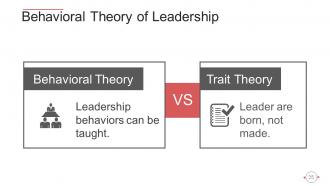
Slide 35: This is Behavioral Theory of Leadership slide to distinguish between Behavioural Theory and Trait Thory.
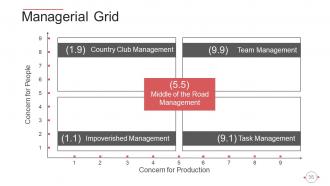
Slide 36: This is a Managerial Grid matrix slide containing- Team Management, Country Club Management, Task Management, Impoverished Management.
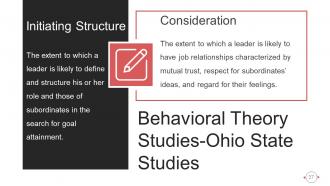
Slide 37: This slide presents Behavioral Theory Studies-Ohio State Studies with- Consideration, Initiating Structure.
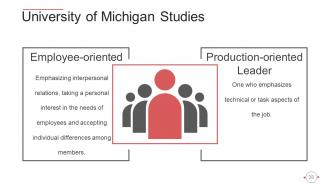
Slide 38: This slide states University of Michigan Studies with the following points- Employee-oriented, Production-oriented Leader.
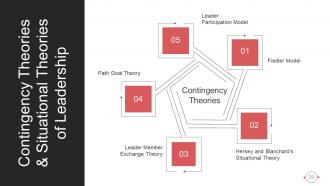
Slide 39: This slide presents Contingency Theories & Situational Theories of Leadership. The Contingency Theories are- Fiedler Model, Hersey and Blanchard's Situational Theory, Leader Member Exchange Theory, Leader Participation Model, Path Goal Theory.
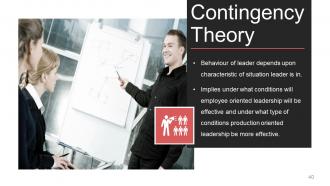
Slide 40: This slide states Contingency Theory.
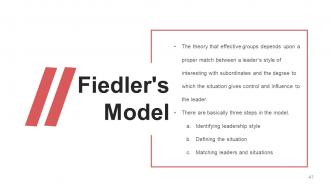
Slide 41: This is a Fiedler's Model slide consisting of 3 steps which are as follows- Identifying leadership style, Defining the situation, Matching leaders and situations.
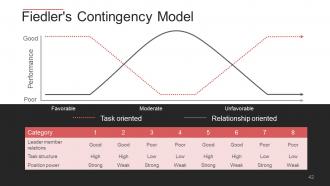
Slide 42: This is a Fiedler's Contingency Model slide.
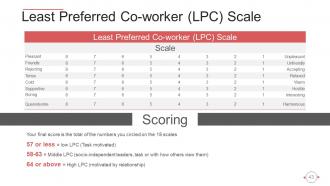
Slide 43: This slide prsents Least Preferred Co-worker (LPC) Scale with its Scoring.
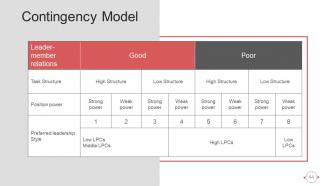
Slide 44: This slide presents Contingency Model.
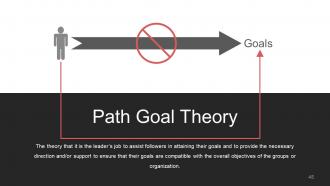
Slide 45: This slide presents the Path Goal Theory.
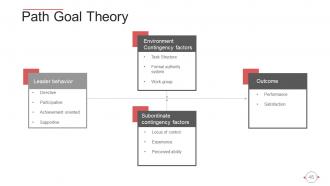
Slide 46: This is another Path Goal Theory slide divided into- Environment Contingency factors, Subordinate contingency factors, Outcome, Leader behavior.
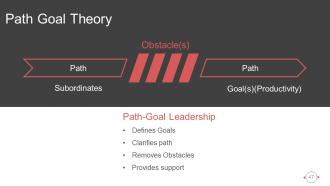
Slide 47: This slide presents Path-Goal Leadership
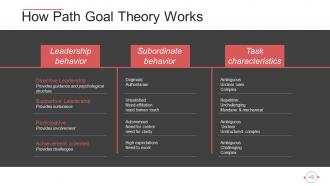
Slide 48: This slide states How Path Goal Theory Works with the following sub headings- Subordinate behavior, Task characteristics, Leadership behavior.
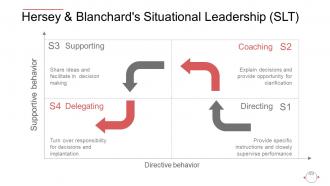
Slide 49: This is a Hersey & Blanchard's Situational Leadership (SLT) matrix slide. You can add or modify text as per need.
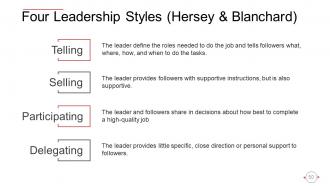
Slide 50: This slide states Four Leadership Styles (Hersey & Blanchard) which are- Telling, Selling, Participating, Delegating.
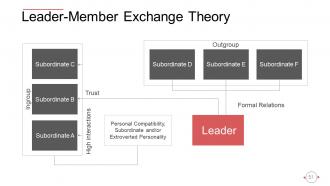
Slide 51: This slide presents Leader-Member Exchange Theory.
Slide 52: This is Coffee Time slide for a halt. You can chandge/ modify image on the basis of your requirement.
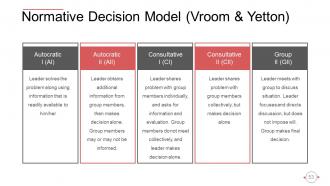
Slide 53: This slide presents the Normative Decision Model (Vroom & Yetton ).
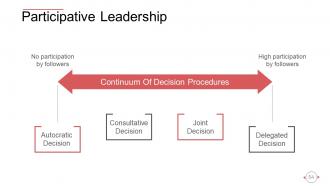
Slide 54: This slide presents Participative Leadership with No participation by followers and High participation by followers parameters.
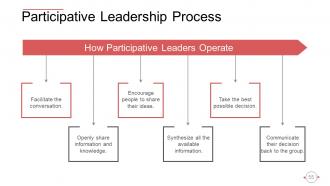
Slide 55: This slide presents Participative Leadership Process and explains How Participative Leaders Operate.
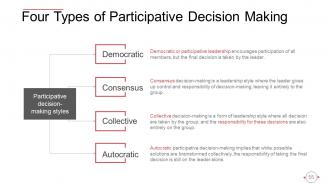
Slide 56: This slide states Four Types of Participative Decision Making which are- Democratic, Consensus, Collective, Autocratic.
Slide 57: This slide is titled Additional Slides to proceed further. You may alter the slide content as required.
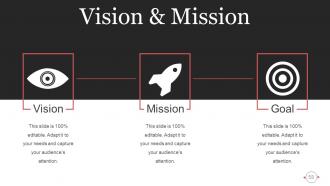
Slide 58: This is Vision & Mission slide. State company goals, mission, vision etc. here.
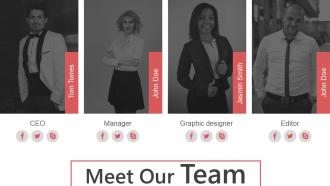
Slide 59: This slide depicts Meet Our Team with text boxes, name and designation.
Slide 60: This is an About Us slide with Professional, Creative and Talented parameters. Provide a brief introduction about company/team here.
Slide 61: This slide depicts Our Main Goals which are- Satisfaction, Communication, Values.
Slide 62: This slide presents Comparison between Positive Factors and Negative Factors. State comparison, specifications, information etc. here.
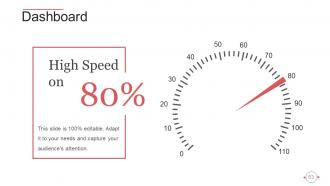
Slide 63: This is a Dashboard slide with respective imagery and text boxes.
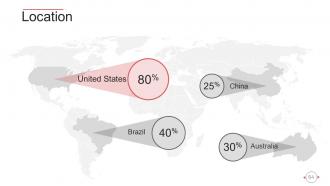
Slide 64: This slide shows Location/Global Presence with world map imagery to specify.
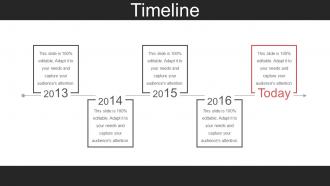
Slide 65: This slide shows Timeline in a creative format to illsutrate growth, highlights over the years etc.
Slide 66: This is a Post it slide to mark reminders, events, important information etc.
Slide 67: This is a NEWSPAPER slide to show news, events etc. You can change the slide contents as per requirement.
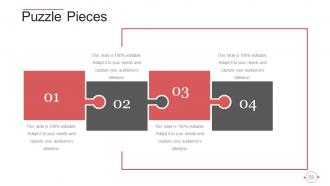
Slide 68: This is a Puzzle Pieces slide. State information, specifications here.
Slide 69: This is Target Achievement slide. State your achievements here.
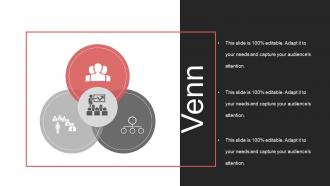
Slide 70: This slide displays Venn diagram to state product/ entity's information, specifications etc.
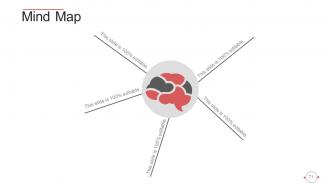
Slide 71: This is a Mind Map slide to show behavioral segmentation, information or anything relative.
Slide 72: This is a Lego image slide to show information, specifications etc.
Slide 73: This is a people's Silhouettes slide. Use it the way you want to show people specific information etc.
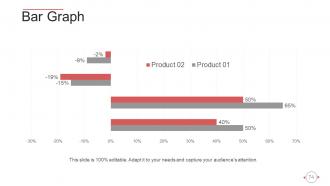
Slide 74: This is a Bar Graph image slide to show product/entity comparison, information etc.
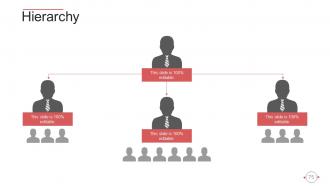
Slide 75: This slide presents a Hierarchy image to state information, specifications etc. You can easily add or remove the number of stages as per requirement.
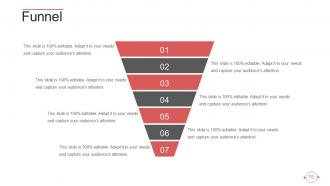
Slide 76: This is Funnel image slide to showcase funneling aspects etc.
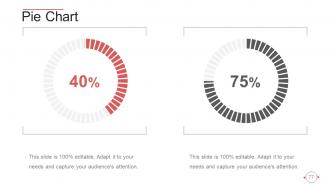
Slide 77: This slide presents Pie Chart to show product/ entity comparison, information etc.
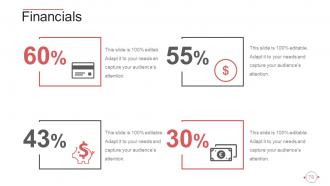
Slide 78: This slide displays Financials scores and text boxes to display financial aspects.
Slide 79: This is a THANK YOU slide for acknowledgement with Address# street number, city, state, Email Address, Contact Number.
Behavioral Theories Of Leadership Powerpoint Presentation Slides with all 79 slides:
Exhibit your skills on our Behavioral Theories Of Leadership Powerpoint Presentation Slides. Give the audience a dose of your artistry.

FAQs for Behavioral Theories Of Leadership
So basically, leadership isn't some magic trait you're born with - it's just behaviors you can actually learn. There are two main types: task stuff (like organizing work, setting goals) and people stuff (building trust, supporting your team). What's great about this theory is anyone can get better at leading by practicing these specific skills. I mean, think about it - way better than assuming you're either a "natural leader" or you're not, right? Instead of that fixed mindset, you can actually work on concrete things that'll make you more effective.
So trait theory is all about having the "right" personality - like you're either born with it or you're not. Situational theory says you gotta change your style based on what's happening around you. But behavioral theory? That's where it gets interesting. It focuses on what you actually *do* as a leader - the actions people can see and measure. Here's why I think behavioral is better: you can actually work on changing your behaviors. Can't really rewire your personality, right? And constantly adapting to every situation gets exhausting. But learning new leadership behaviors? Totally doable.
There are basically two main leadership styles - task-focused and people-focused. Task leaders care about deadlines and getting shit done. People leaders worry more about team morale and making sure everyone's happy. You'll also hear about participative leadership where you actually ask your team what they think before making decisions (wild concept, right?). Most good leaders switch between these depending on what's happening. Sometimes your team needs you to be the drill sergeant with clear directions. Other times they just need support and someone who listens. Read the room and adjust accordingly.
You gotta read the room with your team and switch up your style. When they're missing deadlines or seem lost, get more directive - set clear expectations and give specific feedback. Low morale or drama happening? That's when you go supportive instead. Honestly, I used to think consistency was everything, but the best managers I've seen are like behavioral chameleons. Watch for energy and performance cues, then adapt. Oh, and definitely track what works with each person - some need hand-holding while others just want you to leave them alone to do their thing.
Dude, emotional intelligence is everything in behavioral leadership. You know how the theory focuses on what leaders actually do, not just their personality? Well, your EI shows up in literally every interaction - team meetings, handling conflicts, even casual conversations. I've noticed the best leaders can read a room instantly and adjust their approach. When things get stressful with your team, that's actually the perfect time to watch your own emotional reactions. Are you staying calm? Picking up on others' stress signals? That self-awareness becomes the backbone of how you lead day-to-day.
Managing remote teams is honestly way trickier than people think. You can't just bump into someone by the coffee machine anymore, so everything has to be planned out. Set super clear expectations upfront and do regular check-ins - that's the basics covered. But here's what I've learned: the relationship stuff becomes absolutely crucial when everyone's scattered. Block out time each week for one-on-ones and team building activities. Even random virtual coffee chats help. You basically have to manufacture all those natural moments that used to just happen. Can't wing it remotely.
Look at Oprah and Bill Gates - they're perfect examples. Oprah's all about that relationship-focused style, genuinely caring for her people while keeping standards high. Gates? He nails both sides - pushes hard for innovation but also develops talent through mentoring. Satya Nadella's another good one, honestly. Completely flipped Microsoft's culture by focusing on collaboration and empathy without sacrificing results. The cool thing is watching how these leaders switch up their approach depending on the situation. They don't just rely on charm or their title - they actually adapt their behavior to what's needed.
So there's basically two main things to look at: how they handle tasks (setting goals, tracking work, that stuff) and how they deal with people (building trust, being supportive). Those old Ohio State studies from way back actually figured this out pretty well - we're still using their ideas today. Most people use 360-degree feedback or behavioral scales to measure it. You can also dig into specifics like how often they communicate or how they make decisions. Honestly though, don't just rely on self-reflection - get feedback from multiple people around them. It's way more accurate that way.
Dude, culture changes everything about how teams react to leadership styles. Direct feedback? Germans love it, but you'll probably offend someone from a more hierarchical Asian culture where saving face matters. Some cultures want that top-down, task-focused approach while others need you to build relationships first. I mean, the differences are pretty wild when you think about it. Don't assume what worked with your last team will work here. Just ask people straight up how they prefer to communicate and be led - honestly saves so much hassle.
Honestly, the biggest issue is that behavioral theory is way too simple - it only looks at what leaders do, not the situation they're dealing with. Like, you can't just use the same approach with every team and expect it to work. Plus it totally ignores personality and assumes anyone can become a great leader just by changing their behavior (which... yeah, good luck with that). The research is all over the place too - studies keep showing different results about which behaviors actually matter. I'd say use it as one piece of the puzzle, but don't rely on it completely.
Honestly, most leadership training gets this backwards. Start by figuring out where your people sit on task vs. relationship focus - then build from there. Task stuff covers the obvious: goal-setting, delegation, performance tracking. Relationship side is communication, team dynamics, conflict resolution. But here's what drives me crazy - programs always separate these when great leaders actually bounce between both depending on what their team needs in the moment. Your training has to include real scenarios where they practice blending both approaches. Otherwise you're just teaching theory that won't stick when things get messy.
Dude, positive reinforcement totally changes how teams work together. People start copying the good stuff when you actually notice what they're doing right. Trust builds up naturally, communication gets way better, and you don't get that weird backstabbing vibe anymore. Honestly, I think most managers just focus on fixing problems instead of celebrating wins. Your team starts wanting to help each other because they know someone's paying attention. Just try spotting people doing good work this week - seriously, the whole energy shifts. It's like this snowball effect where everyone gets more motivated.
Honestly, most leaders ask for feedback but then do absolutely nothing with it - which is worse than not asking at all. You've gotta be specific when you ask, like "how did I handle that meeting?" instead of generic "how am I doing?" stuff. Set up anonymous surveys or casual one-on-ones so people actually feel safe being real with you. Here's the hard part: don't get defensive when you hear criticism. Look for patterns in what people are saying and pick maybe one or two things to actually change. Then circle back and tell them what you're working on - people need to see their input mattered.
Look, it's pretty straightforward - how you act as a leader directly affects whether your team gives a damn about their work. Behavioral Leadership Theory backs this up. When you're genuinely supportive and actually communicate well, engagement goes up. Task stuff matters too, but honestly? The relationship side is where the magic happens. I mean, think about it - if someone treats you like you matter, you're way more likely to care about doing good work. My advice? Stop overthinking strategy and just focus on connecting with people day-to-day. Sounds simple, but it works.
So tech basically gives you way more ways to adapt how you lead different people. Data analytics helps you figure out what actually motivates each team member. Different communication platforms let you customize how you reach out to everyone. Real-time feedback through apps and dashboards is pretty clutch too. Remote work tools are great for watching team dynamics, though honestly reading the room on Zoom still feels weird to me. The main thing is using all this stuff to respond better to what your team needs instead of just doing the same approach for everyone. I'd start with personalized check-ins on whatever platform they actually use most.
-
Awesome use of colors and designs in product templates.
-
Innovative and attractive designs.
-
best theme
-
best theme