


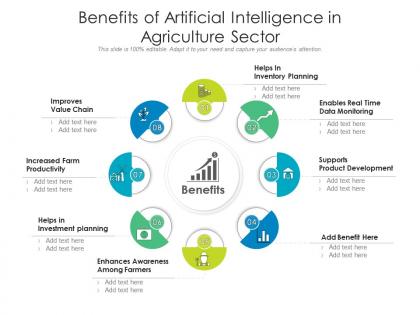
Benefits of artificial intelligence in agriculture sector




Try Before you Buy Download Free Sample Product
 Impress Your
 Audience
 100%
100% Editable
 Save Hours
 of Time


Our Benefits Of Artificial Intelligence In Agriculture Sector are topically designed to provide an attractive backdrop to any subject. Use them to look like a presentation pro.
People who downloaded this PowerPoint presentation also viewed the following :
Benefits of artificial intelligence in agriculture sector with all 2 slides:
Use our Benefits Of Artificial Intelligence In Agriculture Sector to effectively help you save your valuable time. They are readymade to fit into any presentation structure.
FAQs for Benefits of artificial intelligence
Dude, AI in farming is wild - you get precision control over water, fertilizer, everything down to individual plants. The predictive stuff might be the coolest part though, analyzing weather and soil to spot problems before they wreck your crops. Automation handles planting and harvesting so you're not burning through labor costs. Oh, and yield forecasting is huge for planning. If you're just starting out, drone monitoring or soil sensors won't break the bank. My uncle swears by his soil sensors - says they've cut his water waste by like 30%.
So basically AI can crunch through massive amounts of field data - soil conditions, weather, plant health from drones - and tell you exactly when to plant, water, and harvest. The precision is honestly insane. You'll catch diseases and pests way earlier before they wreck everything. Water usage gets optimized too, so no more overwatering or letting crops get thirsty. Timing your harvest becomes way more predictable, which cuts down on spoilage big time. My advice? Start with something small like a soil monitoring system on one field first - don't go crazy right out the gate.
So basically machine learning takes all your farm data and turns it into stuff you can actually use. Weather patterns, soil health, crop conditions - it crunches everything to tell you the best times to plant, water, and harvest. The crazy part is it can even predict when pests might show up or spot nutrient problems from satellite photos. Some systems will run your equipment automatically for perfect seed spacing too. Honestly, it's pretty nuts how tech-savvy farming's become. Most farmers I know are cutting waste and boosting yields big time. I'd say start with something simple like soil monitoring - see how the data changes your whole game.
So AI can predict demand and optimize your inventory - basically keeps you from dealing with rotting crops or empty storage. Weather patterns, yields, market trends - it tracks all that stuff in real time. Transportation gets way more efficient too. The algorithms crunch historical data to figure out what you'll need and when. Honestly, catching disruptions early is probably the biggest win since scrambling last-minute is the worst. I'd start with demand forecasting for whatever crops move the most volume. Makes the whole supply chain less of a nightmare.
So basically AI works like having a really good scout for your fields. Drones or sensors take tons of photos, then the software spots stuff like leaf discoloration or weird growth patterns before you'd even notice. It's honestly pretty impressive tech - catches things like aphids or fungal problems super early. You get alerts straight to your phone too, which is nice because then you only treat the actual problem areas instead of spraying everything. Way more efficient than the old-school approach of just hoping you catch issues in time.
So basically AI looks at your soil moisture sensors and weather data to figure out exactly when to water. Pretty wild how spot-on these systems are now. You can set up automatic irrigation that adjusts itself - saves me from constantly checking if my plants need water. Over time it learns your field's quirks and prevents you from drowning your crops or letting them get too dry. I've heard people cut their water bills by like 30%. CropX is solid if you want the full setup, but honestly you could start with just some basic soil sensors and a simple scheduling app.
Biggest thing is job displacement - you're basically automating away work that farm communities really depend on. Data privacy's another headache since these systems hoover up everything about your operations, and who knows where that info ends up. But honestly? The worst part is how this tech mostly benefits big operations who can actually afford it. Smaller farmers get squeezed out even more. Oh, and all that data you're collecting - make sure you actually own it and aren't just handing it over to some tech company. Just don't forget about the human cost while you're chasing those efficiency gains.
Dude, livestock tracking with AI is pretty wild these days. Smart sensors and wearables monitor your animals 24/7 - health, behavior, location, the works. You'll get alerts for illness detection and breeding cycles before you even notice anything's wrong. It's honestly like having a vet on call constantly. The tech can predict health problems early and auto-adjust feeding schedules too. Saves money while keeping animals healthier, which is the whole point really. I'd say start small - test one system on just a few animals first to see how it changes your routine.
Depends on your setup really. John Deere's Operations Center is solid for precision stuff, plus Climate FieldView and Trimble if you've got the gear already. Smaller farms should check out CropX for soil monitoring - that app saved my neighbor like $3K last season. aWhere's decent for weather data too. Got livestock? Allflex works great for herd management, though the interface is kinda clunky. Most of these sync with whatever farm software you're already using. Start with whatever's driving you crazy first, then add more later. Don't try to do everything at once or you'll hate it.
So AI is pretty game-changing for climate stuff. Weather prediction tools can tell you exactly when to plant and when drought's coming - way better than just guessing based on last year. It crunches massive amounts of climate data to figure out which crop varieties will actually survive in your area's changing conditions. Water optimization is huge too, especially since we're all gonna be dealing with shortages soon. The early warning thing is probably the best feature though - you get a heads up before extreme weather hits so you're not scrambling. I'd start with regional weather apps that are specific to farming.
Yeah, AI's changing farm work for sure, but it's not like robots are just stealing everyone's jobs. Most farms were already short-staffed anyway - nobody wants to do back-breaking seasonal work anymore. Automation's taking over the repetitive stuff like harvesting and planting, but now there's way more demand for people who can run drones and analyze crop data. The traditional farmhand jobs? Those are fading. But if you can learn the tech side - operating automated systems, interpreting analytics - there's actually good money there. Honestly, precision agriculture is where it's at now. I'd definitely brush up on digital tools if you're thinking about getting into farming.
Honestly, measuring AI ROI on farms is trickier than most people think. Start by tracking your baseline costs before you implement anything - that's crucial. Then focus on the obvious stuff: reduced input costs for seeds, fertilizer, pesticides, plus any labor savings. Yield improvements are huge too, but here's the annoying part - some benefits won't show up for multiple growing seasons. I'd also watch operational metrics like equipment downtime and how fast you're making decisions. Most operations hit positive ROI around 18-24 months if they don't go crazy with the use cases. Check your numbers quarterly though.
Honestly, the money part kills most people right off the bat - this stuff isn't cheap. Learning curve's pretty brutal too, especially if you're not already tech-savvy. Rural internet can be sketchy (trust me on this one), and without solid connectivity you're basically dead in the water. Privacy's another thing - nobody wants their farm data floating around with some random tech company. My advice? Pick one small thing to try first instead of going all-in. Way less overwhelming that way.
So basically, AI lets you be super precise with resources instead of just dumping chemicals everywhere. Sensors tell you exactly where to put water and fertilizer, which can cut runoff by like 30%. Pretty neat stuff. It'll also catch diseases early so you're not spraying whole fields "just in case" - honestly that always seemed wasteful to me. You get better timing for planting and harvesting too. Don't overthink it though - start with simple soil monitoring apps. They're cheap and you'll see lower fertilizer bills pretty quick.
Dude, the AI stuff coming to farming is insane. Drones will monitor individual plants and adjust water/nutrients automatically. Autonomous tractors handle planting to harvest without you even being there. The predictive analytics can spot crop diseases weeks before they actually hit - which honestly seems almost too good to be true but whatever. Computer vision tech is getting crazy good at pest detection too. IoT sensors give you real-time soil data. You should probably start looking into ag-tech partnerships now because the farmers who jump on this early are gonna crush everyone else.
-
Amazing product with appealing content and design.
-
Great experience, I would definitely use your services further.
-
Colors used are bright and distinctive.
-
Informative design.
-
Great quality product.