


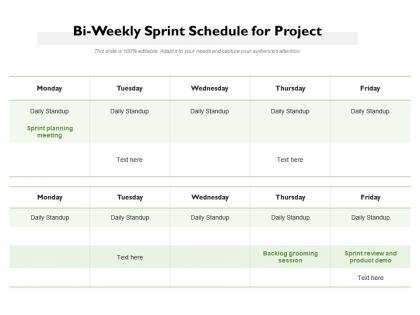
Bi weekly sprint schedule for project




Try Before you Buy Download Free Sample Product
 Impress Your
 Audience
 100%
100% Editable
 Save Hours
 of Time


Our Bi Weekly Sprint Schedule For Project add to the fizz. Bubbles of excitement begin to appear.
People who downloaded this PowerPoint presentation also viewed the following :
Bi weekly sprint schedule for project with all 2 slides:
Create bubbles of excitement with our Bi Weekly Sprint Schedule For Project. They will help add the fizz.
FAQs for Bi weekly sprint
So you'll need the basic stuff first - sprint planning to figure out what you're actually building, then daily standups (though honestly some teams go way overboard with these). Sprint reviews are where you show off what got done, and retros help you figure out what's broken in your process. Oh, and don't skip backlog refinement - trust me, your planning meetings will be a nightmare otherwise. Keep everything timeboxed or it drags on forever. I'd start with 2-week sprints. Way easier to manage when you're figuring things out, then tweak it based on how your team actually works.
Sprint schedules basically give your team a rhythm that actually works. You'll have clear deadlines and everyone knows what they're building. I've watched teams completely turn around just by getting their sprint timing right - like, from total mess to consistently shipping stuff. Two-week sprints are usually the sweet spot to start with. Don't get too hung up on what the textbooks say though. The predictability is huge for planning since you're working in those consistent chunks. Oh, and it kills scope creep dead, which honestly might be the best part.
Look at your team's actual velocity from previous sprints - don't just wing it or get crazy optimistic. Break stories into smaller chunks and get everyone involved in estimation (planning poker works great). I always add 20% padding because honestly, stuff always breaks when you least expect it. Account for holidays and PTO right away. Buffer time is crucial for random bugs and scope creep - trust me on this one. Your sprint goal should feel tough but doable. If you're constantly missing targets, you're probably biting off more than you can chew.
Look, officially you're supposed to check during retrospectives each sprint, but honestly? Don't wait if things are obviously going sideways. Missing deadlines constantly or team capacity shifts? Just adjust mid-sprint rather than pretending it's all good. Every 3-4 sprints I'd do a deeper dive into patterns and velocity stuff. Oh, and definitely track what keeps messing up your planning - you'll get way better at estimating upfront. The schedule works for you, not against you.
Honestly, go with whatever your stakeholders will actually use - that's way more important than fancy features. Jira sprint boards are decent if you're already using it, but they're pretty confusing for non-tech people. Trello's much cleaner for stakeholders. Monday.com too. You could even just use a Google Sheet with sprint dates and progress updates if you want something super basic. I'd probably ask your stakeholders what they're comfortable with first - no point picking the "best" tool if nobody opens it. Sometimes the simplest option wins.
Ugh, sprint changes are the worst with remote teams! You can't just assume people will see your Slack message - I made that mistake once and half the team showed up to the wrong meeting. Send it everywhere: main chat, then update calendars and shoot out an email summary. Tell them exactly what changed and why, plus what they need to do differently. Big changes? Just hop on a quick video call so people can actually ask questions instead of sitting there confused. And yeah, write it all down in your project docs after. Remote folks miss so much context otherwise.
Oh man, the classic mistake is thinking your team can handle way more than they actually can. I learned this the hard way - never fill your sprint to 100% because something random will always break. External dependencies are absolute sprint killers too, so avoid those like the plague. Mixed work types mess with everyone's focus, which is annoying but true. Here's what actually works: stick to 70-80% capacity and build in buffer time. You'll need it for testing, reviews, and whatever chaos Monday brings. Trust me on this one.
Go with 2-week sprints to start - works for most teams I've seen. Consider how experienced your team is and whether stakeholders need frequent updates. New teams might want 1-week sprints but honestly that gets exhausting fast. Complex projects? Shorter works better. If you've got experienced people doing straightforward stuff, maybe try 3 weeks max. Don't go longer or things drag. After a few cycles, you'll notice patterns - are you always rushing at the end or finishing too early? That's your cue to adjust. It's kinda like finding the right workout schedule, takes some trial and error.
Think of team capacity as your sprint speed limit - how much work you can actually handle without burning out. Factor in people's skill levels, vacation days, and all those meetings that chop up coding time. Three sprints in a row we totally overcommitted and it was brutal! Complex features eat way more time than quick bug fixes, obviously. Your team's expertise with different tech stacks matters too. Always leave buffer room because our estimates usually suck anyway. Track your actual velocity for a few sprints first - gives you real data instead of just hoping for the best.
Look, your sprints need to actually connect to those big project deadlines - otherwise you're just spinning wheels. I'd map each sprint goal so it builds toward your major milestones, not just whatever random features sound cool that week. Your product owner should be the one syncing sprint planning with critical dates and dependencies (assuming they're actually doing their job lol). Every few weeks, check if your velocity matches up with milestone timelines. Honestly, I've watched so many teams get blindsided because their sprint work wasn't moving the needle on what actually mattered. If you keep missing targets, either cut scope or push back hard on those unrealistic deadlines.
There are a few good ways to tackle this. MoSCoW method is probably the easiest - just bucket everything into Must have, Should have, Could have, Won't have. Value vs effort matrices work great too since you can quickly spot the low-hanging fruit. Kano model's more about customer satisfaction if that's your focus. Oh, and weighted scoring lets you juggle multiple factors like business value and risk at once. But here's the thing - I've watched teams get so caught up in perfect prioritization that they barely ship anything! Just pick whatever clicks with your team and don't overthink it. MoSCoW's a solid starting point.
So I've found that looking back at your last 6-8 sprints really helps with planning. Calculate your average velocity first - that's your starting point. Then dig into the patterns. Maybe you guys always nail the first week but crash in week two? Or holidays totally wreck your throughput? Track what you actually finished versus what you promised. That gap tells you everything about realistic commitments going forward. Honestly, most teams are way too optimistic in planning. External stuff like big releases will mess with your numbers too, so factor that in when you're estimating future sprints.
Ugh, yeah external stuff constantly messes up sprint timelines - client changes, waiting on other teams, random tech disasters. Super annoying. What I do now is pad my estimates with buffer time and call out dependencies during planning (learned this the hard way). Also keep a simple list tracking who you're waiting on for what - sounds boring but it actually saves your butt. Regular check-ins help too, don't wait for people to come to you. Oh and always have a Plan B for the must-have stuff, because something will definitely go sideways.
Daily standups are your lifeline - that's where you catch dependencies before they bite you. Get everyone using the same sprint board so designers, devs, and QA can actually see what's blocking what. During sprint planning, figure out those handoff moments early. Like when design needs to finish mockups before dev touches any code. Your product owner has to stay on top of priorities too, otherwise everything goes sideways fast. Oh, and don't just talk timing at the start of sprints - check in throughout. Quick sync meetings during handoffs save you from that awful "wait, I thought you were handling this" moment.
Just throw everything in Confluence or SharePoint - somewhere the whole team can see it. Don't just dump the timeline either. Write down why you moved stuff around, what blocked you, sprint goals, team capacity. Honestly, you think you'll remember but you won't. I always add a quick note at the end about what timing worked and what was a disaster. Oh and use the same naming system every time or good luck finding anything later. Seriously, start this habit now because hunting through old sprint notes when you can't find them is the worst.
No Reviews