

 0 Comment
 Customer Reviews

Gestalt therapy is a psychotherapy approach that helps clients focus on the present, understand what is happening in their lives and how it makes them feel in the moment rather than what they assume to be happening based on past experience. It is a primary form of humanistic therapy. The term “gestalt” has been derived from a German word that means “whole” or “put together. Its foundational premise is that people are thought as a whole entity consisting of body, emotions, mind and best understood when viewed through their own eyes.
The gestalt philosophy rejects the concept that any one particular trait could define a person. Instead, it believes that the complete self must be explored, discovered, and confronted. As people encounter and gain awareness of themselves, they take greater responsibility and gain a greater sense of what they can do for themselves and others. Gestalt therapy takes a practical and integrative approach.
Psychologists who use this form of therapy help patients focus on their present day thoughts, emotions, and behavior. This is designed to help in providing an in-depth understanding of how patients react to the world and people around them. Gestalt Therapy helps raise awareness so that the client is equipped to view problems from new perspectives, which can act as a catalyst for change.
SlideTeam has curated 100% editable, customizable, and content-ready presentations on Gestalt Therapy that will explain it all, in great detail.
Let’s explore!
Template 1: Gestalt Therapy in Humanistic Psychology PPT
This PPT covers foundational principles of Gestalt Therapy, its key concepts, techniques and methods, challenges, humanistic psychology overview, etc. Gestalt Therapy encourages clients to better understand themselves and their interactions with the environment. It is a kind of experiential therapy. It places strong value on the therapeutic relationship characterized by empathy and understanding between the therapist and client. The template gives a brief explanation about Gestalt therapy and how it views individuals as a unified whole, encompassing mind, emotions and body.
[product_image id=1381519]
Template 2: Exploring Gestalt Therapy Techniques and Benefits PPT Example
Gestalt therapy emphasizes on experiential learning and uses techniques, such as exaggeration, and body awareness exercises to promote personal growth, self-awareness and address emotional conflicts. This slide covers Gestalt Therapy principles, core techniques, role of awareness, etc. Gestalt therapy considers a person’s thoughts, feelings, and physical sensations and believes in learning through experience and engaging in activities that promote self-discovery. This template encourages clients to take ownership of thoughts, actions and feelings. The goal is to help individuals understand their emotions, behaviors and thoughts and how they impact their relationships and experiences.
[product_image id=1382056]
Template 3: Foundational Principles of Gestalt Therapy PowerPoint Slide
List eight principles of Gestalt therapy which are: Awareness, Self-Regulation, Here and Now, Experiential Techniques, Personal Responsibility, Gestalt Dialogue, Contact and Holistic Approach. Gestalt therapy follows these fundamental principles which separate it from the traditional approach used by therapists. Instead of using interpretation to help a person overcome issues, the therapist learns how the client perceives the world, honour their perception and use it to help patients reconstruct their life.

Template 4: Humanistic Psychology Overview Template
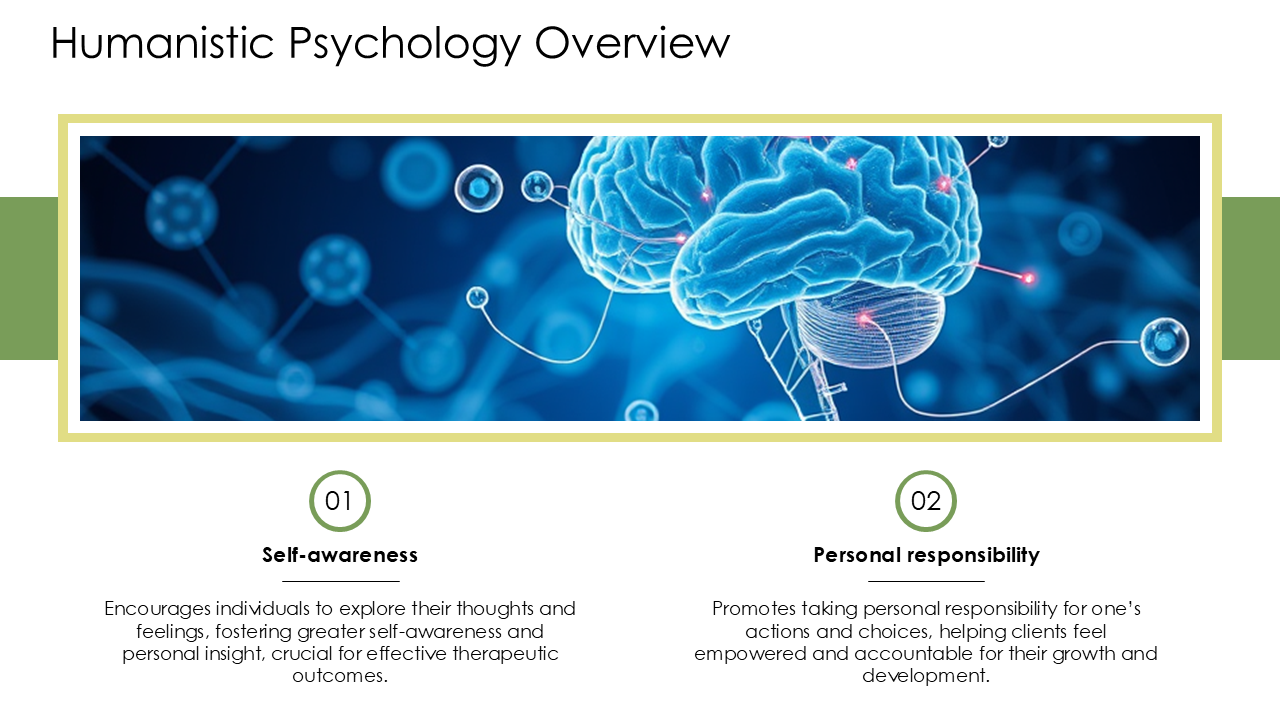
Humanistic psychology emphasizes our ability to create meaning and purpose in our lives. This PPT presents two concepts of humanistic psychology: Self-awareness and Personal responsibility. The concept focuses on the whole person, rather than their internal thoughts and desires, believes people can improve and change as needed, studies personality from the individual's point of view, considers how people perceive reality and gives people more credit for determining their mental health. The template can be used to understand Humanistic Psychology and apply it in their day to day lives by learning to accept themselves and others.
Template 5: Gestalt Therapy Key Concepts
This template presents a key concept of Gestalt therapy. Gestalt Therapy uses its modality of dialogue and experimentation to achieve self-awareness. The end point of that awareness is not only personal growth, but an experience of acceptance. Gestalt Therapy does not pick one concept or theme that is central to the person based on their storytelling nor does it look into parts of the past. The template is a complete guide about Gestalt Therapy and how it works to avoid typecasting a situation and explores a spectrum of thoughts and feelings.

Template 6: Gestalt Therapy Techniques and Methods PPT Template
In this template, we have presented a list of techniques and methods used in Gestalt therapy. The techniques are: Awareness, Gestalt Dialogue, Here and Now, Body Awareness, Empty Chair and Creative Expression. Gestalt therapy techniques help clients gain self awareness by focusing on the present moment and exploring thoughts, feelings, and behaviors through active engagement. This widely used method as given in the template helps clients imagine someone important (like a parent, partner, or themselves) engaging in a dialogue, allowing for exploring unresolved issues.

Template 7: Challenges in Practicing Gestalt Therapy PowerPoint Slide
This PPT presents a comparison of the pros and cons of Gestalt therapy. Practicing Gestalt therapy presents challenges stemming from the present arising due to intense emotions, and lack of a rigid structured framework. This includes client suitability, maintaining appropriate boundaries and therapist self-awareness. Gestalt therapy can lead to emotional experiences which may be difficult to process, especially those with mental health issues. Some clients may be resistant to engage with uncomfortable emotions or explore their personal patterns and behaviors.

Template 8: Understanding Gestalt Therapy Principles PPT Template
The slide explains key principles of Gestalt therapy: Awareness, Contact, Experimentation, Self-Responsibility, Authenticity and Holism. Gestalt therapy focuses on encouraging clients to engage with their experiences and feelings rather than dwelling on the past. Gestalt therapy helps to increase awareness of thoughts, feelings, behaviors, and bodily sensations and understand motivations and patterns. Gestalt therapy addresses unfinished "gestalts", unresolved issues or experiences from the past that manifest as problems in the present. This template showcases how to take ownership of one's actions, feelings, and experiences moving towards autonomy and self reliance.

Template 9: Core Techniques of Gestalt Therapy PPT Template
This powerpoint presentation presents core techniques used in Gestalt therapy: Here and Now, Empty Chair, Awareness Raising, Experiential Exercises, Reality Testing, Body Awareness and Gestalt Dialogue. This technique facilitates self-awareness, helps to resolve conflicts and emphasizes the importance of being present in the moment and aware of one’s feelings, thoughts and sensations. The therapy allows the client to tell their own story paying attention to the person’s feelings and emotions. The template can be used to foster self awareness, make choices and take responsibility for one’s actions and feelings. The slide stresses the importance of understanding the context of a person’s life.

Template 10: Role of Awareness in Gestalt Therapy PowerPoint Therapy
This PPT presents four key aspects of awareness in Gestalt therapy: Heightened Perception, Self-Reflection, Mindfulness Practices and Emotional Expression. Gestalt therapy places strong emphasis on the concept of awareness, self-understanding and emotional well-being. The PPT guides clients to focus on their experiences and project into the future. The goal is making informed choices. Facilitate the process of becoming more aware and create an environment where people are comfortable exploring their thoughts and feelings using the therapy.

GESTALT THERAPY - BRIDGING THOUGHTS AND EMOTIONS
Gestalt therapy emphasizes personal responsibility and focuses on the individual’s experience in the present moment, the environmental and social contexts of a person’s life and the therapist-client relationship. It prioritizes holistic understanding and integration of thoughts, actions and feelings. Gestalt techniques are also used in combination with dance, drama, art, body work, and other therapies.
There are many conditions that are treated using gestalt therapy such as :Anxiety, Depression. Low self-efficacy, Low self-esteem and Relationship problems. Its benefits are improved sense of self-control, better awareness of your needs, ability to monitor and regulate mental states, tolerance for negative emotions, improved communication skills, increased emotional understanding and improved mindfulness.