

 0 Comment
 Customer Reviews

We all face moments of emotional instability—with our minds racing, sleep being a distant dream, and even the tiniest things feeling overwhelming. Occasionally, worries related to career, family, or overthinking create mental strain, emotional tension, stress, and anxiety in individuals, which is something we all experience. While these issues can all go away if one voices one’s feelings, unfortunately, not many people feel comfortable or are willing to openly discuss their struggles with someone. Help can, however, still reach us if one knows how to mingle with the right crowd who have help to offer. At this juncture, SlideTeam’s stress and anxiety PPT Templates come in handy to dissipate help to those who need them the most.
Today, encouraging conversations around stress and anxiety goes beyond the classroom discussions; it has become a necessity. One of the best ways to spread awareness or educate others about stress and anxiety is through visual communication. Our team has designed the top 10 stress and anxiety templates with real-world examples that will help you talk about difficult emotions in a simple, visual, and professional way.
Whether for college projects, corporate sessions, or public awareness workshops, these stress and anxiety PPT Templates will connect, engage, and leave an impact on the audience. Further, you can also explore our blog on the top 10 stress management PowerPoint templates, which have examples and samples.
These stress and anxiety PPT Templates are not only visually appealing but also come with built-in content layouts, sample designs, calming colors, and thoughtful graphics—everything you need to make your message impactful and clear.
Now, let's dive in!
Template 1: Anxiety Sensitivity Introduction PPT Template
The PPT focuses on anxiety sensitivity, which means experiencing fear of anxiety symptoms or psychological sensations caused by anxiety and worry. The coping mechanism to these symptoms is that one must identify triggers or certain situations that increase anxiety sensitivity. A strong support system network is needed to improve emotional and mental health. Also, educating people about anxiety sensitivity leads to better support and awareness. Mindfulness and relaxation techniques are encouraged as effective coping strategies. Professional help is of great significance and is highly recommended to manage stress and anxiety. It helps in developing healthier responses to stress and anxiety.

Template 2: Measuring Anxiety Sensitivity
This presentation shows various ways to measure anxiety sensitivity to know how the person is affected by anxiety symptoms. The methods are as follows: First, questionnaires that ask individuals to express their thoughts and feelings help determine their anxiety sensitivity levels. Second, physiological measures, which include measuring heart rate, can also be used to determine how the body reacts to stress. Third, interviews can also be conducted to gain insights about personal experiences with anxiety sensitivity. All these methods must be valid and should work well with different ethnic groups so that they show accurate results for everyone.

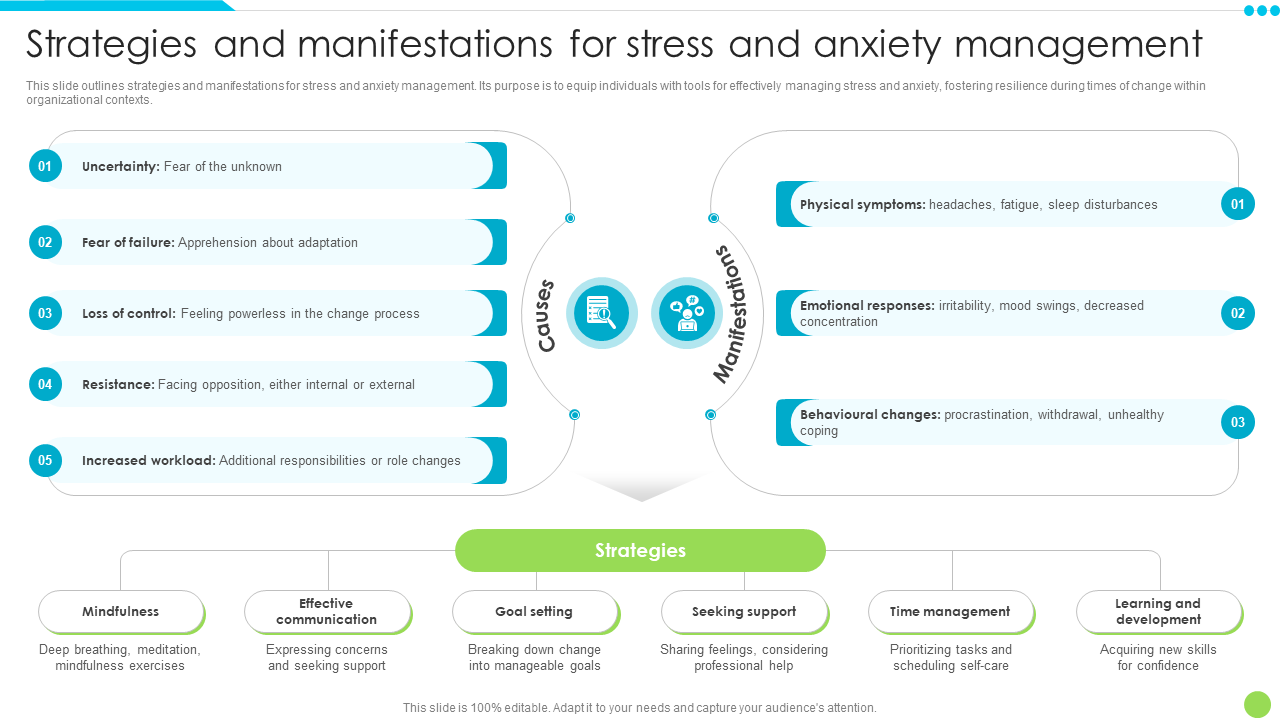
Template 3: Strategies and Manifestations for Stress and Anxiety Management
This presentation talks about how to manage stress and anxiety in professional and personal life. The common causes of stress are uncertainty, fear of failure, panic, psychological pressure, loss of control, resistance, and having too much workload. These causes have the following effects on your health: physical symptoms (headaches, tiredness, etc.), emotional responses such as mood swings, irritability, and behavioural changes (procrastination, unhealthy lifestyle). The template also includes coping strategies to fight stress and anxiety that include practicing mindfulness, goal setting, effective communication, time management, and learning new skills, and individuals can also seek professional help.
Template 4: Emotional Factors Stress and Anxiety
This PPT showcases how emotional factors like stress, nervousness, and anxiety can affect patients, especially if they have undergone any surgery. It highlights the important factors that can help patients cope with stress. Patients can seek help from their family members to speed up the recovery process and reduce isolation post-surgery. Clear communication about the surgical process can help patients avoid fear of uncertainty and stress. Follow-up with the patients is recommended to monitor the patient’s recovery. Pain management is of utmost importance, as physical pain can worsen stress and anxiety. Also, mindfulness programs should be encouraged pre- and post-surgery to calm the patients. Lastly, educational programs should be there that can help patients emotionally and mentally and help them have clear expectations post-surgery.

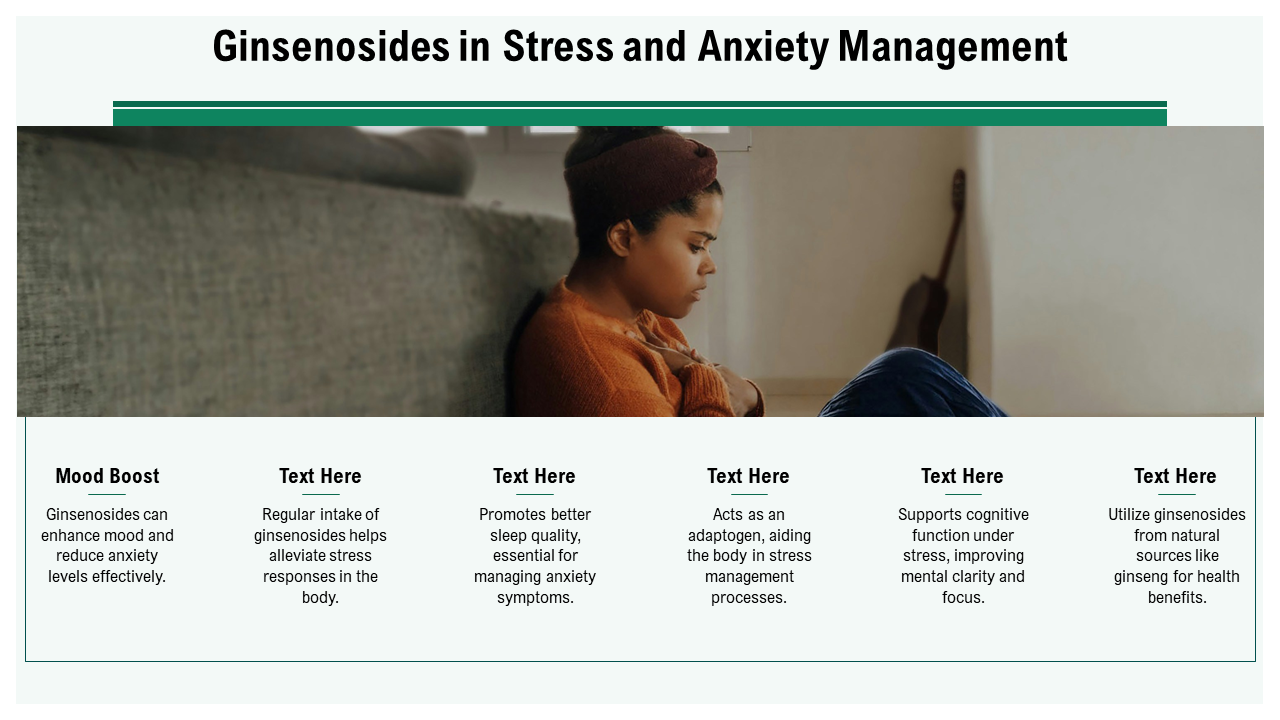
Template 5: Ginsenosides in Stress and Anxiety Management
You can use this PPT to showcase the benefits of Ginsenosides, an active component found in ginseng. Ginsenosides are believed to deal with stress and anxiety effectively. It acts as a natural stress buster and can help improve mood. It also improves sleep quality, which is directly linked to stress management. Acting as an adaptogen, it helps the body manage stress and anxiety. Ginsenosides during stressful situations lead to mental clarity and increased focus. These compounds are extracted from ginseng, which provides a variety of health benefits and improves overall well-being.
Template 6: Increase in Stress and Anxiety Among Staff and Patients
An increase in stress and anxiety among patients and healthcare workers has become a concern these days. It has negatively affected both the staff and patients; it has hampered workers' productivity and increased health concerns among patients, respectively. This PPT showcases a hospital survey that can be used to assess the hospital environment. It contains certain statements and a rating scale. The statements are made by taking workers and patients into consideration. Use this PPT to frame statements according to your business needs. The statements included in the template are regarding indoor lighting used in the wards, hospital environment, waiting areas, and green spaces within the hospital building.

Template 7: Interventions for Managing Anxiety Sensitivity
Anxiety sensitivity, meaning fear of anxiety-related sensations, often aggravates stress responses such as increased heart rate, release of hormones like cortisol, and breathing issues. Cognitive behaviour therapy helps fix this issue. This approach includes improved ways of dealing with issues leading to individuals’ overall well-being. This template shows a four-step approach to dealing with stress and anxiety. The first is to know about a person’s anxiety sensitivity levels and potential causes of stress. The second is to design strategies and coping techniques tailored to individuals’ needs. The third is to encourage the individual to get themselves exposed to anxiety-provoking situations in a controlled way over time. Finally, one must monitor one's progress and adjust one's treatment for better results.

Template 8: Role of Social Support in Reducing Stress
Building strong connections with supportive friends and family can reduce stress, foster emotional well-being, and reduce feelings of isolation. The next step is shared sharing. As shown in the template, freely sharing our emotions and experiences and letting them out in open communication with our trusted people will directly nurture empathy and mutual understanding. Also, it focuses on the art of receiving- welcoming help and advice from others, which improves coping power and lowers stress levels. Overall, use this template to understand the importance of social support in reducing stress.

Template 9: Therapeutic Approaches to Anxiety Sensitivity
This template presents a structured framework for understanding and addressing anxiety sensitivity through various therapeutic dimensions. People can indeed develop their coping skills and manage anxiety; sometimes, they have to be more aware and take responsibility as sensitive anxiety builds negative results like emotional breakdown and pain. The customer jobs section is accepted as reducing anxiety and improving emotional well-being. Moreover, other dimensions like value maps, pain relievers, key partners, and outlines products and services like specialized therapies and acupuncture tailored to those with heightened anxiety sensitivity.

Template 10: Best Practices in Mental Health Care
Use this SWOT analysis format to identify the key elements impacting mental health care—strengths, weaknesses, opportunities, and threats. This template highlights that effective interventions are already available to support individuals who are dealing with anxiety and stress. Also, it is clear that if people develop culturally tailored interventions, there are chances of improvement in patient engagement and outcomes. Lastly, the threat section warns that due to anxiety and stress, there are chances of health risk increases. This template provides a clear overview of the current state of mental health care and where improvement can be made.

Turn Awareness into Impact
Stress and anxiety are common yet complex emotional challenges faced by people in various walks of life. Whether a student, working professional, or any individual, everyone has to go through these feelings in their life. These 10 presentation templates are specifically designed for those who want to spread awareness or plan to support their loved ones. Stress and Anxiety PPT Templates by SlideTeam are not only slides; they are tools to make someone's life better. And if you're looking to go one step further, don't miss our blog on the top 10 workplace stress management presentation templates—it's packed with practical slides for real-life work stress situations. Begin transforming one aspect at a time.
PS: Stress can also trigger overeating, leading to a plethora of other problems. Avoid it at once by spreading awareness with our eating disorders PPT Templates.
FAQs on the Stress and Anxiety
1. What’s the Difference Between Stress and Anxiety?
Stress is usually a response to an external trigger, like a deadline, an argument, or a busy schedule. It often goes away once the situation is resolved. On the other hand, anxiety is more internal and can stick with people even when there's no clear reason. In short, stress comes from outside pressures, while anxiety comes from within and lasts longer.
2. How To Handle Stress and Anxiety?
Handling stress and anxiety starts with taking care of your body and mind. Start doing meditation and breathing exercises that calm your mind. Regular exercise, such as walking, helps release built-up tension. Engaging in conversation with someone you trust can often alleviate stress. Also, keep a routine, get enough sleep, and avoid too much caffeine and alcohol. Moreover, don't hesitate to reach out to a mental health professional.
3. What Are 5 Warning Signs of Stress?
Irritability or mood swings
Sleep problems
Body pain or headaches
Loss of focus
Feeling overwhelmed
4. How To Reduce Anxiety and Stress?
The best way to reduce anxiety and stress is by making small, positive changes in your life. Start by talking about your anxiety—whether it is to a friend, partner, or any family member. Even physical activities help release negative emotions, like going to the gym, doing yoga, or just walking. Meditation and deep breathing exercises can calm your mind instantly. In short, take time out for yourself. Do things that make you happy, whether listening to music, spending time in nature, or working out.