


Business Model Of Marriott Powerpoint PPT Template Bundles BMC





Try Before you Buy Download Free Sample Product
 Impress Your
 Audience
 100%
100% Editable
 Save Hours
 of Time


Embark on a journey through the sophisticated business model of Marriott in our enriching PowerPoint presentation. Explore the intricate landscape of the hotel business, emphasizing Marriotts commitment to delivering unparalleled luxury resort experiences. Uncover the nuances of their exceptional hospitality service, providing guests with a premium accommodation experience that exceeds expectations. This presentation delves into the global success of Marriott as a franchise hotel chain, showcasing the strategic expansion that has made it a household name. Gain insights into the meticulous details that define Marriotts position as a leader in the hospitality industry, offering a blend of opulence and exceptional service.
People who downloaded this PowerPoint presentation also viewed the following :
Business Model Of Marriott Powerpoint PPT Template Bundles BMC with all 32 slides:
Use our Business Model Of Marriott Powerpoint PPT Template Bundles BMC to effectively help you save your valuable time. They are readymade to fit into any presentation structure.















FAQs for Business Model Of Marriott Powerpoint PPT
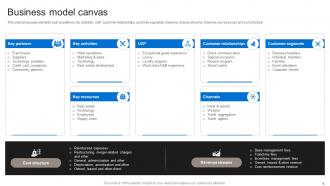
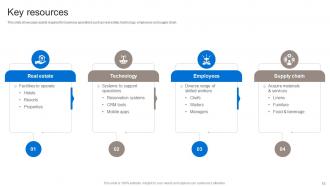
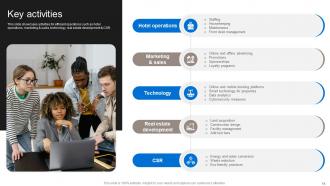
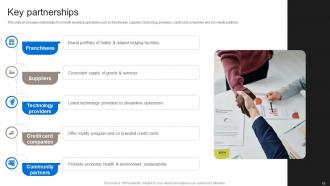
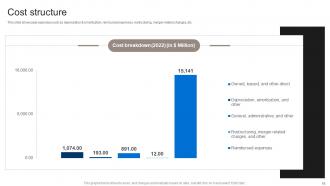
The Business Model Canvas comprises nine interconnected components: value propositions, customer segments, channels, customer relationships, revenue streams, key resources, key activities, key partnerships, and cost structure. These elements interact systematically, with value propositions connecting customer segments to revenue streams through specific channels, while key resources and activities enable delivery, ultimately creating sustainable competitive advantage for organizations across industries.
Businesses can effectively utilize the Business Model Canvas by systematically analyzing each of the nine building blocks to reveal inconsistencies, missing connections, and strategic blind spots. Through regular canvas reviews, companies in sectors like retail and healthcare identify misaligned value propositions, underutilized customer segments, and revenue stream opportunities, ultimately strengthening their competitive positioning and operational efficiency.
The Business Model Canvas fosters innovation by encouraging systematic exploration of new revenue streams, customer segments, value propositions, and operational approaches within existing frameworks. This structured methodology enables established companies to identify untapped market opportunities, experiment with digital transformation initiatives, and pivot traditional business models, while maintaining operational stability and leveraging existing resources for competitive advantage.
The Business Model Canvas can be effectively adapted for non-profit organizations by replacing "Revenue Streams" with "Funding Sources" and redefining "Value Propositions" to focus on social impact rather than commercial benefits. Non-profits modify key sections to emphasize donor relationships, volunteer engagement, and mission-driven outcomes, with many organizations finding that this adaptation streamlines strategic planning and enhances stakeholder communication.
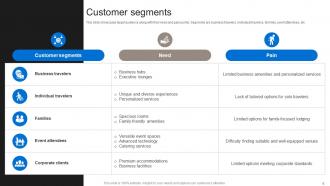
Customer segments serve as the foundational anchor of the Business Model Canvas, directly influencing value propositions, revenue streams, channels, and customer relationships across the entire framework. This customer-centric approach proves critical because understanding distinct segment needs, behaviors, and preferences enables organizations to tailor their offerings strategically, optimize resource allocation, and ultimately deliver targeted solutions that drive sustainable competitive advantage.
Startups can leverage the Business Model Canvas to attract investors by clearly visualizing their value proposition, revenue streams, customer segments, and cost structure in one comprehensive framework. This strategic tool demonstrates market understanding, operational planning, and scalability potential, with many venture capitalists finding that well-constructed canvases indicate thorough business planning and reduced investment risk.
Popular Business Model Canvas tools include Canvanizer, Strategyzer, Miro, Lucidchart, and Creately, offering digital templates with collaborative features. These platforms streamline strategic planning by enabling real-time team collaboration, visual mapping, and iterative refinement, with many organizations finding that digital canvases enhance workshop productivity and strategic alignment across departments.
The Business Model Canvas facilitates communication by providing a shared visual language that translates complex business concepts into clear, accessible components across departments. This standardized framework enables marketing, finance, operations, and product teams to align on value propositions, customer segments, and revenue streams, ultimately streamlining strategic discussions and ensuring all stakeholders understand interconnected business elements.
Common pitfalls include oversimplifying complex business relationships, focusing too heavily on initial assumptions without validation, neglecting regular updates as markets evolve, and treating the canvas as a one-time exercise rather than an iterative tool. Companies can avoid these by conducting thorough customer interviews, regularly testing value propositions in real markets, scheduling quarterly canvas reviews, and encouraging cross-functional team collaboration, ultimately ensuring their business model remains responsive to changing customer needs and competitive dynamics.
The Business Model Canvas integrates with Agile methodologies through iterative validation, sprint-based hypothesis testing, continuous customer feedback loops, and rapid pivoting based on market insights. This strategic combination enables startups and established organizations to streamline product development cycles, minimize resource waste, and accelerate time-to-market, with many tech companies finding that regular canvas updates enhance both strategic clarity and operational agility.
The Business Model Canvas offers a more visual, collaborative approach compared to lengthy traditional business plans, enabling teams to map key components like value propositions, customer segments, and revenue streams on one page. While traditional planning focuses on detailed financial projections and extensive documentation, the Canvas facilitates rapid iteration and strategic discussions, with many startups and established companies finding it streamlines planning processes and enhances cross-functional understanding.
Businesses should track revenue growth, customer acquisition cost, customer lifetime value, operational efficiency metrics, and market penetration rates when implementing Business Model Canvas changes. These metrics enable organizations to measure the effectiveness of strategic pivots, resource allocation adjustments, and value proposition refinements, with many companies finding that systematic tracking ultimately delivers competitive advantage and sustainable growth.
Businesses can effectively communicate value propositions within the canvas by using clear, customer-focused language, quantifying benefits with specific metrics, and ensuring alignment between value propositions and customer segments. Through strategic positioning and regular validation testing, organizations streamline their messaging, enhance customer understanding, and ultimately deliver stronger market differentiation and improved conversion rates.
Companies like Netflix, Airbnb, Uber, and Spotify successfully leveraged the Business Model Canvas to transform their operations, shifting from traditional models to digital-first approaches that revolutionized their respective industries. These organizations used the framework to identify new value propositions, streamline customer relationships, and optimize revenue streams, ultimately delivering enhanced customer experiences and significant competitive advantages in increasingly dynamic markets.
The Business Model Canvas evolves through market feedback, customer insights, competitive pressures, and operational learnings that reveal gaps or opportunities in value propositions, revenue streams, or key partnerships. Strategic pivots, technology disruptions, regulatory changes, and scaling challenges trigger adaptations, with many startups and established companies finding that regular canvas reviews enable faster market responsiveness, improved resource allocation, and sustained competitive advantage.
-
“I required a slide for a board meeting and was so satisfied with the final result !! So much went into designing the slide and the communication was amazing! Can’t wait to have my next slide!”
-
“You have the structure in place that are easy to explore new opportunities.I will be recommending your services to other people.”