


Business Model of Mc Donalds PowerPoint PPT Template Bundles BMC





Try Before you Buy Download Free Sample Product
 Impress Your
 Audience
 100%
100% Editable
 Save Hours
 of Time


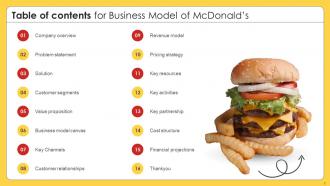
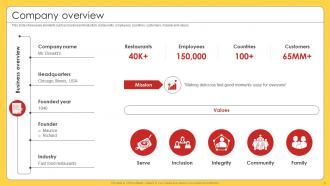
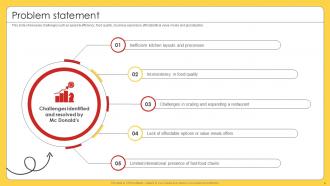
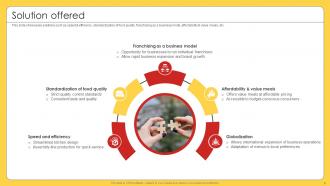
Explore the robust business model of McDonalds in our engaging PowerPoint presentation titled, Business Model of McDonalds. Dive into the world of this fast-food restaurant giant, examining its innovative strategies in the food service industry. Additionally, our Fast Food Restaurant PPT uncovers the dynamics of McDonalds role as a franchise operator, driving its global expansion and local presence. It further provides insights into the seamless operations of this retail chain, known for its iconic menu and efficient quick-service food model. Moreover, our Retail Chain Presentation unravels the key elements that have propelled McDonalds to its status as a leading player in the fast-food industry. Lastly, our Quick Service Food Module provides a comprehensive overview of its enduring success and widespread appeal. Get access now.
People who downloaded this PowerPoint presentation also viewed the following :
Business Model of Mc Donalds PowerPoint PPT Template Bundles BMC with all 33 slides:
Use our Business Model of Mc Donalds PowerPoint PPT Template Bundles BMC to effectively help you save your valuable time. They are readymade to fit into any presentation structure.











FAQs for Business Model of Mc Donalds PowerPoint PPT
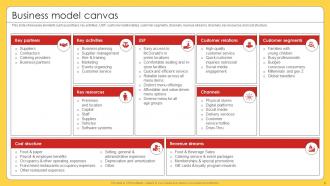
The Business Model Canvas breaks down into 9 building blocks. Customer stuff goes on one side - segments, value props, channels, relationships, revenue streams. Operations fill the other side with key resources, activities, partnerships, plus cost structure. Honestly beats writing those monster business plans that sit in drawers forever. Everything fits on one page and you can actually see how pieces connect. My advice? Tackle value propositions and customer segments first. Those two anchor the whole thing. Once you nail what you're offering and who wants it, the rest falls into place way easier. Trust me on this one.
Honestly, the Business Model Canvas is a lifesaver because it forces you to get all your business pieces onto one page. No more 40-page plans that just sit there collecting dust. You map out the 9 core things that actually matter - customers, how you'll reach them, revenue streams, all that stuff. What I love about it is how the visual layout makes it obvious when you're missing something or just guessing without real data. My cousin tried building her app without one and got totally lost in the weeds. Start messy and clean it up as you test your ideas.
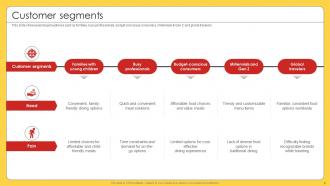
Your customer segments are literally the heart of the whole thing - everything else flows from there. So you're grouping people by their needs, behaviors, whatever makes them tick differently. Then you build your value props and channels around each group specifically. I mean, you can't sell to everyone the same way, right? Each segment needs its own angle. Honestly, I'd stick to maybe 2-3 segments max or you'll go crazy trying to manage it all. Once you've got those nailed down, just map how the rest of your canvas shifts for each one.
Think of your value prop as the foundation everything else sits on. Get that wrong and your whole business model falls apart. Once you figure out what makes you different, all the other pieces - who you're targeting, how you reach them, what you charge - they start making sense. I've seen so many startups skip this step and wonder why nothing clicks. Your value prop is basically your compass. Without it, you're just throwing stuff at the wall. Nail that first, then worry about channels and revenue streams. Trust me on this one.
Honestly, just grab some sticky notes or use Miro if you're feeling digital. Color-code everything so it doesn't look like a boring mess - trust me on this one. Go big with your canvas since you'll have people crowding around it later. Write stuff that's clear enough for outsiders to get your business idea without you explaining every detail. The cool part? When you see all nine sections together, patterns start jumping out at you. Don't stress about making it perfect right away - dump everything out first, then organize. Moving pieces around is half the fun anyway.
Honestly, start by tweaking your value props - push the cost savings angle instead of fancy features. Revenue streams are huge too because putting all your eggs in one basket? Bad move during recessions (trust me on this one). Look at your costs and cut anything that's not absolutely critical. Maybe pivot toward customers who won't disappear when things get tight. Oh, and partnerships become way more valuable when everyone's trying to share resources. The biggest thing though - don't just review this stuff once a year anymore. Monthly checks keep you from getting blindsided.
Get everyone around a big whiteboard or jump on Miro/Mural. Split up the work - have different people research specific sections like customer segments or revenue streams. Everyone throws ideas on sticky notes for each block, then you hash it out together. That's honestly where the best stuff happens, when people disagree and you start connecting the dots between sections. Block out 2-3 hours minimum for round one. Oh, and definitely pick someone to keep things on track. Trust me, you'll spend forever arguing about customer types otherwise and never get anywhere.
Track your acquisition costs, lifetime value, and conversion rates - that's the meat of it. Customer segment revenue too. But honestly? The validation part matters most. Are your assumptions actually playing out when you test them? There's nothing better than seeing real numbers back up what looked promising on the canvas. Monthly check-ins work well for 3-5 core metrics tied to your value props. Oh, and if you're not updating the canvas regularly, something's wrong. A dusty business model usually means you're not learning from what the market's telling you.
So the Business Model Canvas basically forces you to dump your whole business onto one page - and honestly, that's when you start seeing stuff you completely missed. Map out all your pieces and suddenly gaps become obvious. What I love is you can sketch out "what if" scenarios without messing with your actual operations. Try different revenue streams, new customer segments, whatever. Getting different departments in the same room with this thing works surprisingly well too. Everyone's looking at the same visual, so conversations actually go somewhere. I'd definitely run a workshop with your team soon - you'll probably find some weird blind spots nobody thought about before.
Honestly, the worst thing you can do is get too detailed right off the bat - you'll waste hours on specifics instead of seeing the bigger picture. Get other people involved early too, like your team or even potential customers. I've seen so many entrepreneurs fall head over heels for their first draft, which is a recipe for disaster. Your canvas needs to change as you figure out what actually works in your market. Oh, and don't just do it once and forget about it - that's probably the most common mistake. Keep updating it when things shift, because trust me, they will.
Honestly, just build on top of the Business Model Canvas instead of starting over. SWOT analysis works great for spotting weaknesses in each section - or finding strengths you didn't think about. That value proposition block in the middle? That's usually where things get messy anyway, so dig deeper there with specialized tools. Porter's Five Forces helps you figure out the competitive stuff around your customers and channels. Lean Canvas is solid if you're doing the startup thing. Don't try cramming everything together though - do your Canvas first, then pick what else you actually need.
So Airbnb totally nailed this - they mapped out their whole "belonging anywhere" concept and figured out how to work with hosts. Uber did something similar when they were connecting drivers with riders. The Netflix pivot though? That's the real winner here. Going from mailing DVDs to streaming was brilliant, and I bet the canvas helped them see how all the pieces fit together. Spotify used it too for their free vs premium thing. You should definitely grab Alexander Osterwalder's book "Business Model Generation" - it's got all these examples broken down with templates you can actually use.
Digital tools are a total game changer for Business Model Canvas work. Miro and Figma let everyone jump in and edit together - no more sticky note chaos (seriously, why did we ever think that was efficient?). Try connecting your customer segments to real user data or pull metrics straight into the canvas. Some AI tools can brainstorm revenue ideas you might've missed. Don't overthink it though. Just get your current canvas online first, then add the cooler features once you're used to it.
Look, market research is what stops your Business Model Canvas from being total wishful thinking. Most of our first guesses about customers are way off anyway - I learned this the hard way. You've got to actually talk to people to see if they care about your value prop or if your target segments even exist. Interview potential customers before you lock down any part of your canvas. The data will show you if they'll actually pay what you're thinking, help you pick better channels, maybe even force you to completely change your revenue model. Keep validating as you go - it's the difference between building something people want versus something that sounds good on paper.
Honestly, the Business Model Canvas is a lifesaver when you're pivoting. You can literally see which parts of your business are broken and which are fine. Like, maybe your product is solid but you're targeting the wrong customers - the canvas shows you that super clearly. I've watched so many founders panic and try to change everything at once (which is exhausting and expensive). Instead, just fix one section at a time. Test it. See if it works. Then move on to the next piece that needs tweaking. Way less stressful than starting from scratch every time something isn't clicking.
-
You know what? I'm so glad I opted for this PPT design. It has been a total game-changer for me and my presentations. Thank you!
-
I am not the best at presentations but using SlideTeam’s PPT template made it easier for me. Thank you SlideTeam!