


Business Plan For Shoe Retail Store Powerpoint Presentation Slides




Try Before you Buy Download Free Sample Product
 Impress Your
 Audience
 100%
100% Editable
 Save Hours
 of Time


Grab our insightfully designed template on Business Plan for Shoe Retail Store that explains the business goals and strategy for reaching them. It integrates market research to support your goals, including the target market, growth or revenue drivers, competitive environment, industry insights, and industry trends. Additionally, our shoe industry business deck discusses Porters framework and its relation to the shoe sector. It further showcases market gaps, opportunities, and market sizing details, including TAM, SAM, and SOM. It also exhibits go to marketing tactics, sales funnels, and other topics. Our shoe retail module also includes a financial summary, guaranteeing a thoughtful proposal. Lastly, it comprises the profit and loss statement, balance sheet, cash flow statement, and break-even analysis. Download this 100 percent editable presentation and get access to our highly researched and skillfully designed product.
People who downloaded this PowerPoint presentation also viewed the following :
Content of this Powerpoint Presentation
Slide 1: This slide introduces Business Plan for Shoe Retail Store. Commence by stating Your Company Name.
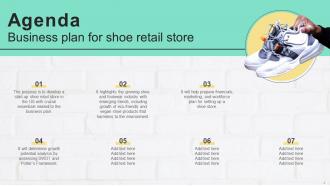
Slide 2: This slide depicts the Agenda of the presentation.
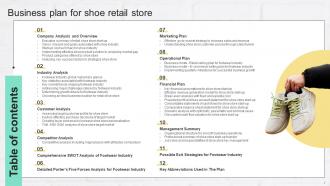
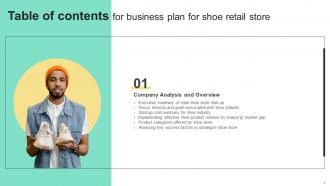
Slide 3: This slide elucidates the Table of contents.
Slide 4: This slide mentions the Title for the Topics to be covred in the upcoming template.
Slide 5: This slide provides a glimpse of key highlights of the shoe retail store including a quick pitch that describes the current market status of the industry and how the company will take leverage of the growth opportunities present in the market.
Slide 6: This slide covers the shoe industry's vision, mission, and goals to ensure that it will deliver a diverse selection of eco-friendly shoes that are meant to treat, rejuvenate, and improve the skin and enhance the customer's appearance.
Slide 7: This slide provides information about start-up expenditures that incur during the process of establishing a shoe store, such as start-up ownership, legalities, and other expenses associated with the store.
Slide 8: This slide deals with the problem associated with the shoe/footwear industry and how the company will implement an effective product solution to overcome the existing gap.
Slide 9: The purpose of this slide is to provide a glimpse of the wide range of comfortable and latest-designed shoes from top manufacturing brands to service a wide range of clients.
Slide 10: This slide deals with Analyzing key success factors to strategize shoe store.
Slide 11: This slide mentions the Heading for the Contents to be covered in the upcoming template.
Slide 12: This slide focuses on the Footwear industry global market at a glance.
Slide 13: This slide illustrates the Key statistics associated with footwear industry.
Slide 14: This slide continues the statistics of the footwear industry.
Slide 15: This slide highlights the key market trends that have the potential to change the current market scenario, as well as ways that the company can stay ahead of competitors.
Slide 16: This slide portrays details about various challenges catered by the footwear industry such as modifications in consumer preferences, administration policy, etc.
Slide 17: This slide caters to details about various growth drivers resulting in footwear industry progress and gives confidence in the organization to achieve business goals.
Slide 18: This slide portrays an ideal business location for footwear products that minimize the risk of failure.
Slide 19: This slide indicates the Title for the Ideas to be covered in the following template.
Slide 20: This slide covers an assessment of how the company's products will fit into a particular market and where they will acquire the most traction with customers.
Slide 21: This slide showcases the important factors that people consider when buying a pair of shoes.
Slide 22: This slide provides a glimpse of how to better understand the target audience, to fine-tune marketing campaigns, and increase shoe store personalization.
Slide 23: The purpose of this slide is to depict the market potential of footwear in terms of TAM, SAM, and SOM.
Slide 24: This slide reveals the Heading for the Components to be discussed further.
Slide 25: The purpose of this slide is to provide a glimpse of major participants and key competitors of the industry to gain insight into their products, sales, and marketing tactic.
Slide 26: This slide highlights the Heading for the Ideas to be covered next.
Slide 27: The purpose of this slide is to identify the industry' strengths, weaknesses, opportunities, and threats related to the business.
Slide 28: This slide elucidates the Title for the Topics to be covered further.
Slide 29: The slide highlights porter’s five forces model and its implications in the US footwear industry.
Slide 30: This slide states the Heading for the Contents to be discussed in the upcoming template.
Slide 31: The purpose of this slide is to implement an effective go-to-market strategy for bringing the company's products or services to an end customer taking various elements into consideration.
Slide 32: This is yet another slide continuing the go-to-market strategy.
Slide 33: This slide further continues the Effective go-to-market strategy.
Slide 34: This is an extension of the market strategy.
Slide 35: This slide provides information regarding the shoe store customer journey mapping to track users' actions and key touch points across various levels.
Slide 36: This slide indicates the Title for the Components to be further discussed.
Slide 37: This slide shows the shoe store's retail selling plan.
Slide 38: This slide covers the e-commerce selling plan for the shoe business.
Slide 39: This slide deals with Implementing quarterly milestones for successful business growth.
Slide 40: This slide showcases the Heading for the Topics to be covered in the following template.
Slide 41: This slide provides a glimpse of important financial assumptions that are to be made while setting shoe store in terms of income, expense, and balance sheet.
Slide 42: This slide shows the Effective revenue generation model for shoe store start-up.
Slide 43: This slide highlights the break-even analysis of the firm with fixed and variable cost.
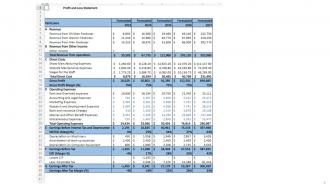
Slide 44: This slide reveals the Projected profit and loss account statement for shoe store start-up.
Slide 45: This slide continues the Projected profit and loss account statement.
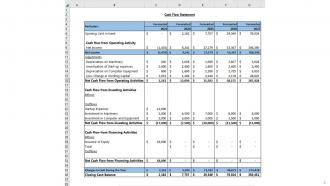
Slide 46: This slide reveals the company's cash flow statement to provide a detailed picture of what happened to a business's cash during a specified period.
Slide 47: This is the continuation of the Consolidated statements of cash flows.
Slide 48: This slide covers the snapshot of the company's financial position at a specific time by showing the details of the assets of the company along with its liabilities.
Slide 49: This is yet another slide continuing the Comparative balance sheet statement.
Slide 50: This slide elucidates Scenario analysis with optimistic, pessimistic and nominal cases.
Slide 51: This slide is the continuation of the Scenario analysis.
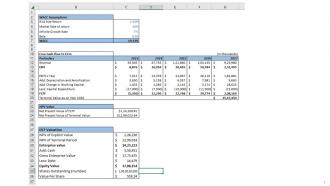
Slide 52: This slide illustrates the Discounted cash flow valuation for shoe store start-up.
Slide 53: This slide mentions the Title for the Topics to be discussed next.
Slide 54: This slide presents the Organizational structure for smooth business operations.
Slide 55: This slide highlights the founder’s biggest professional achievements and most valuable skills and the proven ways in which he will use those skills to achieve valuable results.
Slide 56: This slide states the Job roles and responsibilities of shoe store key management.
Slide 57: This slide continues the Job roles and responsibilities.
Slide 58: This slide depicts the Heading for the Components to be covered further.
Slide 59: This slide represents exit strategies such as sell-offs, IPOs, mergers, and acquisitions that enable the entrepreneur to liquidate their position in a financial asset upon meeting specific criteria, limit the company’s losses, and take a step back from day-to-day operations.
Slide 60: This slide exhibits the Title for the Ideas to be covered in the upcoming template.
Slide 61: This slide incorporates the Key abbreviations used in the plan.
Slide 62: This is the Icons slide containing all the Icons used in the plan.
Slide 63: This slide is used for showcasing additional information.
Slide 64: This slide includes the 30 60 90 days plan for efficient planning.
Slide 65: This slide represents the Bar chart.
Slide 66: This slide elucidates the Line chart.
Slide 67: This is Meet our team slide. State the information related to your team members here.
Slide 68: This slide elucidates the Company Roadmap.
Slide 69: This is the Venn diagram slide with related imagery.
Slide 70: This is the Idea generation slide for encouraging fresh ideas.
Slide 71: This slide portrays the Organization's Timeline.
Slide 72: This is the Thank You slide for acknowledgement.
Business Plan For Shoe Retail Store Powerpoint Presentation Slides with all 77 slides:
Use our Business Plan For Shoe Retail Store Powerpoint Presentation Slides to effectively help you save your valuable time. They are readymade to fit into any presentation structure.





FAQs for Business Plan For Shoe Retail Store
Okay so first figure out what kind of shoes you're selling - athletic, fashion, work boots, whatever. Then crunch the numbers on startup costs, inventory, monthly expenses. Location is honestly make-or-break for retail, way more than most people think. Map out your supplier connections and how you'll compete with other stores. The operational stuff matters too - staffing, inventory systems, all that. Oh and definitely scope out your competition first, like actually visit their stores. You might spot opportunities they're missing. Start with solid market research in your area before diving into the fancy business plan stuff.
Market research saves you from just throwing stuff at the wall and hoping it sticks. Figure out who's actually buying - budget families, trendy millennials, or people who just want comfy shoes for work. Surveys help but they're honestly kind of a hassle to set up. The cool part is learning where people shop, what they'll pay, and which features they care about. Then you can stock the right stuff and price it smart. I'd skip the generic marketing and speak directly to whoever's most likely to buy from you.
For your shoe store business plan, you'll need five main financial projections. Sales forecasts are huge - break those down by product type and seasons since shoes are crazy seasonal. Map out your startup costs too (inventory, fixtures, marketing budget). Monthly cash flow projections for the first two years are essential, plus income statements and balance sheets. Break-even analysis shows when you'll actually make money. Honestly, be pessimistic with sales estimates and overestimate expenses. Way better to be pleasantly surprised than panicking when cash runs low!
Dude, location is everything with shoe stores. High foot traffic spots like shopping centers or downtown areas are worth the extra rent - trust me on this. I've watched awesome concepts totally bomb because they chose some hidden spot thinking they'd save money. Sure, rent's cheaper, but then you're blowing way more cash on ads just getting people to notice you exist. Check out foot traffic patterns first, plus parking situation and who actually lives around there. That slightly pricier spot with good visibility? It'll pay for itself through better sales every time.
Dude, branding is literally everything in shoe retail. Look at how people drop $200 on Jordans but won't touch the exact same looking shoe for $50 - that's just brand power being insane. You gotta figure out your target first though. Budget families? Sneaker heads? Professional women? Pick your lane early. Then your store design, what you stock, how you market, even training your staff - it all needs to match that vibe. That's what gets people through the door and keeps them coming back instead of just buying once. Without solid branding, you're just another shoe store competing on price, which sucks.
Dude, you gotta get online - it's like having your store open 24/7 without paying anyone overtime. Your whole inventory can be up there, and people buy stuff while you're asleep (which is honestly the best kind of sale). Plus you'll reach customers who'd never drive to your actual location. The data you get is super helpful too - shows you what people actually want vs. what you think they want. Even if people end up buying in-store, they're definitely checking you out online first. Just start with something basic, then maybe add those weird virtual try-on things later if you're feeling fancy.
Start with your story - people need to connect with *why* you're making shoes, not just the shoes themselves. Instagram and TikTok are your best friends for showing them in action. Find local micro-influencers who actually get your brand (follower count doesn't mean everything). Pop-ups are clutch since nobody wants to buy shoes online without trying them first. Email marketing from day one is non-negotiable. Launch with some kind of event to get buzz going, then push hard for user reviews and content from customers. Honestly, word of mouth still beats everything else in this industry.
Honestly, start with your size data from last year - that'll show you which ones fly off the shelves. Most stores get crushed on size 9s for men and 8s for women, so stock heavier there. I'd do seasonal buys too - boots before fall hits, sandals for spring (obvious but people forget). Try sorting your shoes into fast/medium/slow sellers. The fast ones need automatic reorder points so you don't get caught empty-handed. Also, random tip - keep an eye on your size 10.5s, they sell better than you'd think but everyone under-orders them.
Look for partnerships that either boost your customer base or help with supply chain stuff. Local gyms, dance studios, sports teams - they're perfect for cross-promotion deals. You give their members discounts, they send people your way. The weirdest partnerships sometimes work best though. Like partnering with podiatrists or physical therapists who can refer patients needing special shoes - that's actually genius. Also check out exclusive deals with up-and-coming brands or local manufacturers. Map out which businesses around you serve similar customers but aren't competing directly with you.
Honestly, start with sourcing - find suppliers using recycled rubber or organic cotton, plus check their labor practices aren't sketchy. A shoe recycling program is gold too. Customers drop off old pairs and they genuinely eat that stuff up. Builds crazy loyalty. For packaging, go biodegradable and don't use massive boxes for tiny orders (pet peeve of mine). Partner with local cobblers for repairs - extends the life cycle. Oh, and don't try everything at once. Pick one or two things that actually fit your brand, then build from there.
Dude, AR and VR are game-changers for shoe retail. Customers can point their phone at their feet and see how different styles look - no more guessing. VR stations let people "walk" through your store from their couch, which honestly feels weird to say but it's real now. The try-on thing cuts down returns big time since people actually know what they're getting. I saw this Nike store that had crazy immersive experiences that made regular online shopping look boring. Way better than scrolling through static photos, you know?
Start by hitting up other shoe stores nearby - check their prices, what they're selling, how they treat customers. Mystery shopping is honestly pretty entertaining if you ask me. Online research matters huge since everyone buys shoes online now. Stalk their social media and read through Google reviews to find what they're missing. Department stores count as competition too, not just other shoe shops. Make a basic spreadsheet tracking their strong points, weak spots, and who they're targeting. Set Google alerts so you know when they make moves. Check their websites monthly. You'll get solid info to make your store stand out.
Honestly, customer feedback is like your business GPS - it shows you exactly where to pivot. I'd set up surveys, watch social media, and just chat with people in your store to spot trends early. When everyone's asking for bigger sizes or sustainable stuff, that's your cue to shift your inventory game. Made this mistake myself actually - totally ignored people wanting athletic-casual combo pieces and man, I missed out big time. Use what you're hearing to tweak your products, pricing, even how you lay out the store. Just focus on the patterns, not random one-off complaints. I update my plan every quarter based on this stuff.
Honestly, footwear trends are brutal because they change so fast. You might order a bunch of chunky sneakers and then boom - suddenly everyone wants minimalist styles instead. Athletic stuff is big right now, but even comfort trends flip quickly. Sizing alone will drive you crazy since every brand fits differently. Oh, and you definitely need some sustainable options or customers will think you're behind the times. My advice? Start small with trendy pieces, keep basic styles as your main money-makers, and build solid supplier relationships. That way you can actually pivot when the next weird trend hits.
Dude, shoes are perfect for social media! Instagram and TikTok are your best friends here - people are obsessed with posting their footwear. I'd focus on styling videos and behind-the-scenes stuff from your store. When customers tag you wearing their new kicks, repost that content immediately. Facebook ads work really well for retargeting too, especially people who already visited your site. Honestly, fashion influencers can be hit or miss, but the local style bloggers in your area are usually more genuine. Don't spread yourself too thin though - pick like 2-3 platforms and actually post consistently instead of half-assing everything.
-
Thrilled to see several customizable templates catering various verticals and industries.
-
Their templates are super easy to edit and use even for the one like me who is not familiar with PowerPoint. Great customer support.