


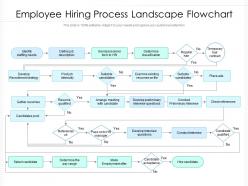
Employee hiring process landscape flowchart





Try Before you Buy Download Free Sample Product
 Impress Your
 Audience
 100%
100% Editable
 Save Hours
 of Time


Find the ideal images to embellish your ideas with our Employee Hiring Process Landscape Flowchart. Go ahead and dig into the cupboard.
Employee hiring process landscape flowchart with all 2 slides:
Indulge in commercial activity with our Employee Hiring Process Landscape Flowchart. You will conjure up attractive bargains.
FAQs for Employee hiring
Start with a solid job description, then post it where good candidates actually look. Screen resumes fast - you don't want to get bogged down there. Do structured interviews so you're asking everyone the same stuff. Reference checks are boring but worth it, trust me. Salary talks can get weird, so prep for that. Get your team involved throughout because making hiring decisions solo is risky. Oh, and stay consistent with your process across all candidates - otherwise you'll end up comparing totally different things when it's decision time.
Honestly, just don't ghost people - that's the biggest one. Send updates even if it's just "hey, still reviewing applications." Keep your interview rounds reasonable (like 3 max, unless you're hiring a CEO or something). Give people realistic timelines upfront so they're not wondering if you forgot about them. When someone doesn't get the job, actually tell them why instead of that generic "we went with another candidate" nonsense. I know you're busy but candidates put real effort into this stuff. Set up some automated emails if you need to, just make them sound human. Treating people like actual people goes a long way.
Dude, employer branding is huge right now - like, you can't ignore it anymore. Think of it as your company's dating profile but for potential employees. What do people actually say about working there? Your Glassdoor reviews, social media, even random conversations at industry events all matter. The best candidates have options, so they're gonna pick places that seem cool to work at, not just whoever pays decent. Honestly, half the battle is just knowing what's already being said about you online. Then figure out what actually makes your workplace worth bragging about and start putting that stuff out there.
Honestly, just focus on the basics first. Time-to-fill is huge – nobody wants roles sitting empty forever. Then check if people you hire are actually good at their jobs after 6 months. Retention rates matter too because constantly replacing people sucks. Oh, and definitely survey candidates about their experience. Most companies skip this but it's gold for figuring out why people bail mid-process. Your offer acceptance rate tells you if you're lowballing everyone. Don't go crazy measuring everything though. Pick like 3 metrics that actually matter to your boss and start there. You can always add more later once you've got the hang of it.
Skip the boring bullet points and actually describe what someone will be doing on Tuesday at 2pm. Ditch corporate speak - "synergistic solutions" makes people roll their eyes. Be honest about the sucky parts too, not just the fun stuff. I always separate must-haves from nice-to-haves so people don't waste time applying for roles they're not qualified for. Show some personality about your team culture. Like, are you the type who does happy hours or more heads-down focused? The goal is getting people to think "hell yes, that's exactly what I want" instead of generic interest.
Oh man, ATS systems are a total game changer for hiring speed. You know how you usually spend forever going through resumes one by one? These things automatically scan for keywords and qualifications, which saves you hours. Everything gets centralized too - candidate emails, scheduling, feedback from your team. Trust me, without it you'll drown in spreadsheets and random email threads. Most platforms show you analytics on where people drop out of your process, so you can fix bottlenecks. Honestly, start with the automation stuff first - that's where you'll feel the difference right away.
Honestly, cultural fit matters way more than people think. Skills? You can teach those. But personality clashes will make everyone miserable and cost you big time down the road. I've seen it happen - it's messy. Look beyond their resume when interviewing. Ask behavioral questions to see how they actually work and communicate. What drives them? Have them chat with different team members too, not just you. Someone might click with you but totally clash with the rest of the crew. Trust me, it's worth the extra effort upfront.
Honestly, structured interviews are your best friend here. Same questions for everyone, plus a scoring rubric you make beforehand. Get other people involved too - they'll spot stuff you totally miss. Remove names from resumes when you can (I know, easier said than done sometimes). We're all biased whether we admit it or not, so you need systems that work around that. Document everything - like actually write down why you picked someone. Forces you to think harder about your reasoning instead of just going with your gut.
Oh man, where do I start? Don't ask anything illegal like if they're planning kids or their age - that's lawsuit territory. I used to talk way too much instead of actually listening, so watch out for that. Leading questions are the worst because you're basically feeding them the answer you want. Try using the same questions for everyone so you're not accidentally playing favorites. And honestly? Don't oversell how amazing everything is just to get them to say yes. Nobody wants to start a job that was totally misrepresented. Take actual notes too - your memory isn't as good as you think it is.
Honestly, behavioral interviews are so much better than those random brain teaser questions. You're basically asking people to walk through real situations they've handled - like "tell me about dealing with a difficult customer" - instead of made-up scenarios. Past behavior predicts future performance way better than hypothetical stuff. The trick is having consistent questions that actually relate to the job, then scoring everyone the same way. I still can't believe some places ask about ping pong balls in buses though... like what does that even tell you about someone?
Honestly, your team knows the day-to-day grind way better than you do - they'll catch technical issues or personality clashes you'd totally miss. When candidates meet their future teammates during interviews, it just feels more natural and welcoming too. Yeah, it slows things down (which sucks when you need someone yesterday), but the hires end up being so much stronger. They integrate faster since they've already built some rapport. I wouldn't throw your whole team at every candidate though. Just grab 1-2 people for the final rounds and you're golden.
Hit up Glassdoor and PayScale first - they'll give you a decent baseline. Your competitors are probably targeting the same people, so scope out what they're offering too. Focus on the actual skills you need rather than just the job title, because honestly, titles are all over the place these days. Base salary is just part of it though - think about your whole package with benefits and perks. Once you've got that research, pick a range that won't scare people off but also won't break your budget. Oh, and definitely put the salary range right in the job posting. People appreciate the transparency.
Build relationships way before you need to hire anyone. LinkedIn's your friend here - comment on posts, share stuff, send personal connection requests (not the generic ones, those suck). Employee referrals are honestly gold though. Your current people know others with similar skills. Hit up industry events too and keep lists from old searches. I probably spend like 20 minutes a week just reaching out to people. The whole point is staying on their radar so when they're ready to jump ship, you're the first person they text.
Get back to people within 48 hours - seriously, most companies just ghost candidates and it's awful. If you're rejecting someone, don't just say "we went with another candidate." Give them something specific they can actually work on. Quick responses help your company's reputation too. When you accept someone, be super clear about what happens next and when. Oh, and save yourself some headaches by writing a few template emails ahead of time. You'll thank me later when you're not staring at a blank screen trying to craft the perfect rejection at 6pm on a Friday.
So you'll want to track cost-per-hire, time-to-fill, and quality-of-hire for each channel. Quality's the tough one though - I'd measure it through performance ratings, how long people stick around (6-12 months), and whether hiring managers are actually happy with who you brought them. Don't forget application volume and conversion rates too. LinkedIn usually gives fewer apps but better candidates, while job boards can be a total resume dump that goes nowhere. Look at your whole pipeline, not just application numbers. Honestly, pull last quarter's data first and see which channels are bringing you people who actually work out long-term.
No Reviews