


Car Service Center Business Plan Powerpoint Presentation Slides





Try Before you Buy Download Free Sample Product
 Impress Your
 Audience
 100%
100% Editable
 Save Hours
 of Time


Our Car Service Center Business Plan Powerpoint Presentation Slides are topically designed to provide an attractive backdrop to any subject. Use them to look like a presentation pro.
People who downloaded this PowerPoint presentation also viewed the following :
Content of this Powerpoint Presentation
Slide 1: The slide represents Car Service Center Business Plan.
Slide 2: This is an Agenda slide. State your agendas here.
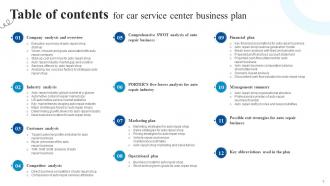
Slide 3: The slide displays Table of Contents for presentation.
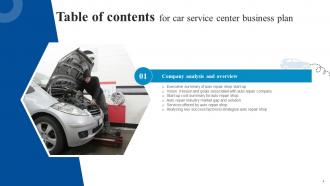
Slide 4: The slide continues Table of Contents.
Slide 5: The slide renders Table of Contents further.
Slide 6: This slide provides a glimpse of the auto repair company including a quick pitch that describes the current market status of the industry.
Slide 7: This slide covers the auto repair company vision, mission, and goals.
Slide 8: This slide provides information about start-up expenditures that incur during the process of establishing a auto repair company.
Slide 9: This slide covers the problem associated with the auto repair industry.
Slide 10: This slide highlights the services offered by auto repair shop.
Slide 11: This slide covers the essential points to be considered while offering auto repair services in the market.
Slide 12: The slide displays another title of Contents.
Slide 13: The purpose of this slide is to highlight the market size of the global auto repair shop industry.
Slide 14: The purpose of this slide is to highlight the automotive collision repair market size.
Slide 15: This slide highlights the United states automotive service market statistics.
Slide 16: This slide highlights the key market trends that have the potential to change the current market scenario.
Slide 17: This slide continues the key market trends that have the potential to change the current market scenario.
Slide 18: This slide portrays details about various challenges faced by the auto repair industry.
Slide 19: This slide continues details about various challenges faced by the auto repair industry.
Slide 20: This slide caters to details about various growth drivers for auto repair industry.
Slide 21: This slide portrays an ideal business location for a auto repair business.
Slide 22: The slide depicts title of Contents further.
Slide 23: This slide covers an assessment of how the company’s service will fit into a particular market.
Slide 24: This slide provides a glimpse of how to better understand the target audience, to fine-tune marketing campaigns, and increase e-commerce personalization.
Slide 25: The purpose of this slide is to depict the market potential of auto repair shop industry in terms of TAM, SAM, and SOM.
Slide 26: The slide renders title of Contents which is to be discussed further.
Slide 27: The slide is to provide a glimpse of major participants and key competitors of the industry.
Slide 28: The slide is to provide a glimpse of major participants and key competitors of the industry.
Slide 29: The slide displays Title of Contents further.
Slide 30: The slide is to identify the industry' strengths, weaknesses, opportunities, and threats related to the business.
Slide 31: The slide again renders title of Contents further.
Slide 32: The slide highlights porter’s five forces model and its implications in the US auto repair industry.
Slide 33: The slide shows title of Contents further.
Slide 34: This slide highlights the marketing strategies for auto repair shop.
Slide 35: This slide renders the top pricing strategies for auto repair shop.
Slide 36: This slide again illustrates the top pricing strategies for auto repair shop.
Slide 37: The slide shows car repair and service maintenance estimates which include standard service pricing, brake service, tire service and other services.
Slide 38: This slide highlights customer journey mapping to track users' actions and key touch points across levels.
Slide 39: The slide title of Contents further.
Slide 40: This slide highlights the business model for auto repair shop.
Slide 41: This slide renders the short-term and long-term milestones.
Slide 42: The slide displays title of Contents further.
Slide 43: This slide provides a glimpse of important financial assumptions in terms of income, expense, and balance sheet.
Slide 44: The slide shows the effective revenue model of the auto repair industry, which displays the cost incurred and the various sources of income.
Slide 45: The slides highlight the break-even analysis of the firm.
Slide 46: The slides provide a glimpse of the projected profit and loss statement.
Slide 47: The slides continues a glimpse of the projected profit and loss statement.
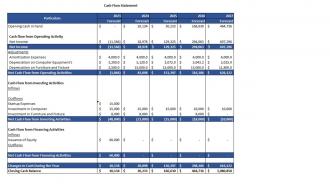
Slide 48: The slides highlight the company's cash flow statement to provide a detailed picture of what happened to a business's cash.
Slide 49: The slides continues the company's cash flow statement to provide a detailed picture of what happened to a business's cash.
Slide 50: The slides cover the snapshot of the company's financial position at a specific time by showing the details of the assets of the company.
Slide 51: The slides continues the snapshot of the company's financial position at a specific time by showing the details of the assets of the company.
Slide 52: The slide is to examine the effects of potential future events on the company’s performance.
Slide 53: The slide continues to examine the effects of potential future events on the company’s performance.
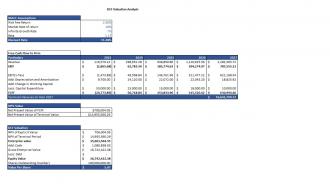
Slide 54: The purpose of this slide is to calculate the amount of money an investor would get from an investment after adjusting for the time value of money.
Slide 55: The slide renders title of Contents further.
Slide 56: The slide represents the organizational hierarchy in the company.
Slide 57: This slide highlights the founder’s biggest professional achievements and most valuable skills.
Slide 58: This slide covers the job roles and responsibilities of auto repair staff to determine what kind of job has to be done.
Slide 59: This slide continues the job roles and responsibilities of auto repair staff to determine what kind of job has to be done.
Slide 60: The slide covers title of Contents further.
Slide 61: This slide represents exit strategies such as sell-offs, IPOs, mergers, and acquisitions.
Slide 62: The slide depicts title of Contents which is to be discussed further.
Slide 63: The purpose of this slide is to highlight the shorter version of existing words to save time and take up less space.
Slide 64: This slide shows all the icons included in the presentation.
Slide 65: This slide is titled as Additional Slides for moving forward.
Slide 66: This slide contains Puzzle with related icons and text.
Slide 67: This is Our Target slide. State your targets here.
Slide 68: This is a Financial slide. Show your finance related stuff here.
Slide 69: This is an Idea Generation slide to state a new idea or highlight information, specifications etc.
Slide 70: This is a Quotes slide to convey message, beliefs etc.
Slide 71: This is a Thank You slide with address, contact numbers and email address.
Car Service Center Business Plan Powerpoint Presentation Slides with all 79 slides:
Use our Car Service Center Business Plan Powerpoint Presentation Slides to effectively help you save your valuable time. They are readymade to fit into any presentation structure.










































































FAQs for Car Service Center Business Plan
Start with the basics - oil changes, brakes, tires, general maintenance. That's where you'll make consistent money. Diagnostic work is huge these days since cars are basically rolling computers. Add transmission and engine repair too. Seasonal stuff like AC repair? Total goldmine in summer. Don't sleep on extras like detailing if you've got room - my buddy makes bank on that. Oh, and definitely check what's actually needed in your area first. No point offering snow tire services in Florida, you know? Price everything so you're competitive but not bleeding money.
Dude, you gotta figure out where your customers actually hang out and what they need. Check traffic patterns, see where competitors are, look at who owns cars but doesn't have many service options nearby. My buddy learned this the hard way - opened right next to three other shops, total disaster. Income levels matter too, plus commute routes and how dense the neighborhoods are. Some areas want quick oil changes, others need full repairs. Honestly, just survey people in different spots and pick where there's demand but not crazy competition.
So you'll need revenue projections - figure out your service capacity and what you can charge. Operating costs are the usual suspects: rent, utilities, equipment, staff wages. Cash flow is huge here because you're buying tools and inventory before customers even show up. Seasonal stuff matters too - everyone wants their car ready for winter or that big summer road trip, right? Break-even usually hits around 12-18 months for service centers. Working capital for parts inventory will eat up cash faster than you think. Honestly, be conservative with customer estimates at first. You can always bump those numbers up later.
Honestly, just call around to like 5-7 shops nearby and ask for quotes on oil changes, brakes, diagnostics - the usual stuff. Most places will tell you their labor rates straight up. Check online reviews too since people love complaining about getting ripped off. Don't go cheapest though, that's just asking for trouble. Price yourself middle to upper range instead. Then you gotta give them a reason - better warranties, quicker service, whatever. Oh and make a spreadsheet to track everything. I know, I know, sounds boring but update it every few months since prices shift around seasonally. Trust me on this one.
Dude, customer service can literally make or break your shop. Car repairs already stress people out, so being upfront about pricing and timelines goes a huge way. When you actually explain what's broken instead of just throwing around technical terms, customers notice. The whole industry has this sleazy reputation anyway - which honestly isn't totally unfair - so decent service makes you stand out immediately. Happy customers will refer their friends and leave good reviews without you even asking. Just follow through on what you promise and don't BS people. It's really that simple.
Dude, start with shop management software - tracks everything from work orders to inventory in one spot. Those digital inspection tools are game changers too, honestly way easier showing customers photos/videos than trying to explain what's busted. Online scheduling cuts down on annoying phone tag and no-shows. Your techs will love diagnostic software since it spots problems faster. Oh, and automated texts keep customers in the loop without you having to call everyone. Don't go crazy though - pick one system first or you'll lose your mind trying to learn everything at once.
Dude, start with your basic business license from city hall - that's the easy part. Your state's DMV handles the automotive repair license, which is way more of a hassle than it should be honestly. EPA permits for oil/chemicals are mandatory too, no way around that bureaucratic nightmare. ASE certs for your workers in most states. Oh, and specialty stuff like AC or emissions testing needs separate licensing. Actually, just call the small business office first - they'll give you the full rundown for your specific area so you don't accidentally miss something and have to backtrack later.
Definitely start with Google My Business - that's where everyone looks first. Get customers to leave reviews after good service, post some before/after pics on social media. Honestly, word-of-mouth is still everything in auto repair though. People trust their neighbor's recommendation over fancy ads any day. Partner up with other local shops, maybe offer new customer deals. The "car repair near me" searches are gold, so make sure your online stuff is dialed in. Oh and always follow up after jobs - shows you actually care. Location matters way more than anything else in this business.
Dude, most regular shops won't touch EVs and hybrids, so you'd have way less competition. The market's growing fast too. EV owners usually have money and they're super loyal once they find a good mechanic - honestly some of the easiest customers to work with. Yeah, you'll need training and special equipment upfront, which isn't cheap. But here's what I'd do: start small with basic EV stuff first. Don't go crazy buying everything at once. Build up your skills gradually as more electric cars show up in your area.
Dude, getting tight with parts suppliers will seriously help your margins. You'll snag 15-30% better pricing when you buy in bulk or lock in exclusive deals - that's real money. Plus your cars won't be sitting around forever waiting for basic stuff like water pumps. Honestly, downtime is such a profit killer. I'd stick with maybe 2-3 reliable suppliers so you've got options when negotiating. Having backups is clutch too - you don't want to be stuck with just one guy who decides to jack up prices.
You'll definitely need certified mechanics - they're your bread and butter. Service advisors are crucial too since they handle all the customer stuff. Plus a manager to keep everything running smooth. Oh, and don't sleep on support staff like cashiers, maybe detailers if you're doing that. The real challenge? Not having mechanics twiddling their thumbs while customers aren't lined up around the block waiting. I'd honestly start small and hire as you see demand pick up those first few months. Training and certification costs add up fast, so budget for that when you're planning wages.
Honestly, great customer service is what'll set you apart from every other shop. Don't hit people with surprise charges - be upfront about pricing and actually explain what you're doing. I've watched so many places tank because of sketchy billing practices. Remember your regulars' preferences and their car's history. Maybe offer shuttle rides or online booking if you can swing it. Short sentences work too. A loyalty program with discounted oil changes is pretty smart. But here's the thing - none of this matters if your mechanics suck. Hire people who actually give a damn about doing good work. Oh, and track your customer retention monthly so you know if it's working.
Dude, cash flow problems will absolutely wreck you if you're not careful. Equipment breaking down is another killer - learned that one the hard way watching my buddy's shop. Finding good mechanics is honestly a nightmare right now, and you're competing against chains with way deeper pockets. Liability stuff keeps you up at night too. Oh, and cars are getting so complicated with all the tech updates. People are weirdly loyal to their current shops, so getting new customers takes forever. I'd say bank at least 6 months of expenses and spend real money training your guys early.
Dude, you HAVE to get online - seriously, it's like trying to run a business with your eyes closed these days. People are gonna Google your shop before they even think about calling. No website? They'll just pick the next guy. Google reviews can totally make or break you too. I literally can't remember the last time I hired anyone without stalking their online presence first lol. Get a basic website up with your services and number. Google My Business is huge for local stuff and it's free. Social media helps but honestly? Start with Google My Business if you're overwhelmed - it pops up in searches right away.
Start with revenue per customer and average ticket size - they'll show you if your pricing's on point. Customer retention is massive since repeats are where you make real money. Bay utilization matters too (how often those bays are actually busy). Labor efficiency and customer satisfaction scores are solid indicators. Oh, and profit margins by service type - way more important than people realize. Track inventory turnover for parts and compare actual job times vs your estimates. These basics will tell you what's broken pretty fast.
-
Great product with highly impressive and engaging designs.
-
The content is very helpful from business point of view.