


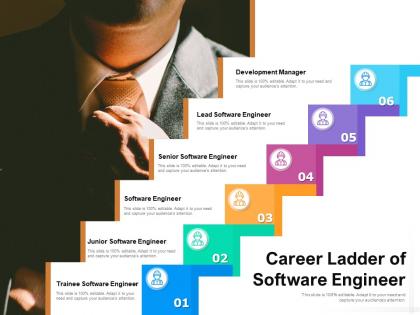
Career ladder of software engineer




Try Before you Buy Download Free Sample Product
 Impress Your
 Audience
 100%
100% Editable
 Save Hours
 of Time


Our Career Ladder Of Software Engineer are topically designed to provide an attractive backdrop to any subject. Use them to look like a presentation pro.
People who downloaded this PowerPoint presentation also viewed the following :
Career ladder of software engineer with all 2 slides:
Use our Career Ladder Of Software Engineer to effectively help you save your valuable time. They are readymade to fit into any presentation structure.

FAQs for Career ladder
You'll want technical skills for your field, obviously. But honestly? Communication and leadership matter just as much - maybe more. Problem-solving is huge too. I'm always trying to keep up with new tools and trends (it's kind of draining tbh). Project management helps, plus being good with people across different teams. Soft skills like emotional intelligence are underrated. Oh, and adaptability - things change so fast now. Here's what I'd do: find 2-3 people in jobs you want and just ask them what skills actually moved the needle for them. Way better than generic advice.
Honestly, figure out what your life actually looks like in 5-10 years first - not just career stuff but how you want to live day-to-day. What matters to you? Then work backwards from there. I used to set goals that looked good on paper but didn't excite me at all, total waste of time. Break it into chunks you can hit every 6 months or so. Write it down somewhere you'll see it - I put mine on my bathroom mirror which sounds weird but works. Check in quarterly because things change and that's fine.
Honestly, most jobs come from who you know, not job boards. Build real relationships though - don't just collect LinkedIn contacts like they're baseball cards or whatever. Help people out first, share stuff you know, make intros when it makes sense. And yeah, LinkedIn's useful but please don't be that guy who connects then immediately tries to sell me something. Don't forget about people at your own company either - grab coffee with someone from marketing or hop on those cross-team projects. Just aim for one good professional chat each week. Could be catching up with an old coworker or meeting someone new at a conference.
Figure out what you actually need help with first - like specific skills or just general career stuff. Then hunt for people who've done what you want to do, inside your company or out. Honestly, I used to think I needed some C-suite executive as a mentor, but someone just a few years ahead of you can be way more helpful and relatable. Most people are actually flattered when you ask - don't stress about it too much. Just be upfront about what you're hoping to get out of it and suggest grabbing coffee to see if you click.
Honestly, the worst part is probably imposter syndrome - you'll feel like a fraud even when you're not. Skill gaps are real too, but fixable. What helped me was doing informational interviews with people already in those roles. Way better than just reading job descriptions online. Maybe take on some side projects to build the skills you're missing? I mean, you can't eliminate every risk, but preparing enough to feel confident makes a huge difference. Oh, and start networking now even if you're not job hunting yet - sounds cheesy but it actually works.
Honestly, online courses can totally help your career but you gotta be smart about it. Pick stuff that actually relates to your job or where you want to end up - I made the mistake of collecting random certificates like Pokemon cards lol. LinkedIn Learning and Coursera are solid options. Here's the thing though: you have to actually USE what you learn at work and bring it up during reviews. I had like 10 certificates sitting there doing nothing because I never mentioned them. Also throw completed courses on your LinkedIn and resume. Just make sure you're going after certifications your industry actually cares about, not just whatever sounds cool.
Honestly, company culture is huge for career growth. Some places are total popularity contests where it's all about who you know - super frustrating. Others actually care about your work and results. Look for whether they promote from within or always hire externally (major red flag). Does leadership actually mentor people or just talk about it? I'd pay attention to how current employees describe their career paths when you're interviewing. Also notice if people share knowledge freely or hoard it like crazy. That tells you everything about whether you'll actually grow there or just stay stuck.
Dude, soft skills are huge. I've watched brilliant devs get stuck because they can't explain stuff or work with people. Technical chops only get you so far - you hit a wall fast if you can't communicate or handle conflict. The trick is showing both on your resume. When you talk about projects, mention how you dealt with stakeholders or helped newer team members. Honestly, some of the smartest people I know got passed over for promotions just because they couldn't translate tech concepts into normal human speak. Don't be that person.
Don't just ask "how am I doing?" - that's way too vague. Get specific instead. Like "what could I improve about my client presentations?" or "how should I prioritize my projects better?" If you don't already have regular one-on-ones, set them up yourself. Most managers actually love when you take the lead on this stuff. Come with examples and real situations you want input on. Oh, and this is key - when they give you feedback, circle back later to show you actually used it. That goes a long way. Honestly? Just book 15 minutes with them this week. Have one solid question ready to go.
Honestly, you've gotta be upfront with your manager about your limits from day one. I learned this the hard way - used to think grinding 70-hour weeks would fast-track my career, but it's actually about working smart. Focus your best energy on stuff that actually matters for moving up. Short bursts of focused work crush mindless busy work every time. Oh, and treat your personal time like it's sacred - literally block it in your calendar. Sounds weird but it works. Pick maybe 2-3 things that'll genuinely help your career and say no to everything else.
Honestly, AI integration is everywhere now - even roles that used to be totally non-tech need data skills. Remote work isn't going anywhere, and companies are finally caring more about what you can actually do versus your degree (which is refreshing tbh). The whole silo thing between departments is pretty much dead - everyone's collaborating across teams now. I'd mess around with some AI tools that could help your current job. Maybe update your LinkedIn too? Focus on skills you can transfer rather than just listing job titles. Oh, and continuous learning is kind of expected now instead of just knowing one thing really well.
Dude, job shadowing and internships are honestly game-changers. You get to see what the job's actually like - not just the fancy posting that makes everything sound amazing. Most people are surprisingly cool about letting you shadow them for a day if you just ask. The connections you make are huge too. I mean, networking beats sending out random applications any day. Companies love hiring people they've already worked with, so these things lead to real job offers pretty often. Plus your resume looks way better when you've got actual experience instead of just coursework. Definitely worth reaching out to people in fields you're interested in.
Honestly? When you've stopped picking up new skills or there's zero promotion path ahead - that's a huge warning sign. Your salary stuck while everyone else is getting raises? Red flag. Same goes if your boss keeps skipping over you for good opportunities or you feel bored out of your mind every day. And okay this sounds dramatic, but if you're genuinely dreading Sundays because Monday's coming... listen to that feeling. I'd start with updating your LinkedIn (ugh, I know) and see what people in similar roles are actually making. Maybe grab coffee with someone whose career you admire? Sometimes an outside perspective helps you see what you can't.
Numbers are your best friend here - stuff like "boosted sales 30%" or "cut processing time from 5 days to 2." But don't just throw stats around. Tell the actual story behind what you did. What mess did you inherit? How'd you fix it? Most resumes are just boring job duty lists that put people to sleep. You want to show how you actually moved the needle. Match your wins to what they're looking for in the new job. Action verbs help too. Make it dead obvious you'd crush it there.
Dude, EQ is seriously what makes or breaks careers. I've watched brilliant people hit walls because they can't read a room or take criticism without getting defensive. Moving up isn't just about being good at your job anymore - you've got to influence people, build real connections, stay cool under pressure. The technical stuff only gets you so far. Honestly, some of the most successful people I know aren't even the smartest in the room, but they know how to work with others. Start watching how people react when you talk to them. Practice not losing it when everything's on fire.
No Reviews