


Career powerpoint presentation





Try Before you Buy Download Free Sample Product
 Impress Your
 Audience
 100%
100% Editable
 Save Hours
 of Time


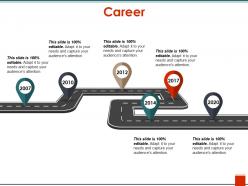
Plan your future using this Career PowerPoint Presentation. Know where you want to go in life by taking the assistance of this PPT slide. Showcase the yearly career progression in business by employing this slideshow. Explore various options in your career and make your presentation knowledgeable by incorporating this career ladder slide. Employ this career planning PPT graphic and mention your interests, personality, values, and skills which will help you to set your career goal. Make a list of work career options that will help you to choose a suitable career using this layout. Also, employ various factors that can affect your career choice using this template. Overcome all the obstacles that keep you from achieving your career goal with the help of this readily available PPT template. You can show the yearly achievements of your employees using this business timeline PPT layout. This career service theme can also be used in schools, colleges for class presentations and conducting career workshops. Find out the purpose of your life by downloading this ready to use business achievement PowerPoint presentation.
People who downloaded this PowerPoint presentation also viewed the following :
Career powerpoint presentation with all 5 slides:
Confidently endure adverse conditions with our Career Powerpoint Presentation. You will display grit and determination.
FAQs for
Honestly, I'd focus on digital stuff first - you gotta stay on top of new tech and AI tools or you'll get left behind. Communication is massive too, like being able to write decent emails and not bomb presentations. Critical thinking's always been important but feels even more crucial now with all the BS info floating around. Emotional intelligence helps a ton when you're dealing with difficult people (which is basically every job lol). Leadership skills are worth developing even if you're not managing anyone yet. Pick maybe 2-3 of these and actually work on them - online courses, side projects, whatever. Don't try to do everything at once though.
Honestly, networking is where the magic happens. Most good jobs never even hit the job boards - you hear about them through people first. Build real relationships and you'll get the inside scoop on openings, plus recommendations that actually mean something. Don't be that person who only texts when they need a favor though, that's annoying. Help others out first, check in regularly just to say hi. Oh and mentors are gold if you can find good ones. They'll steer you toward the right moves. Start simple - message three people from your network this week.
Honestly, getting a mentor is probably the best career move you can make. They'll give you the real insider scoop on your industry - stuff you'd never figure out on your own. Mine helped me dodge so many rookie mistakes. Plus they open doors through their connections and actually fight for you when good opportunities pop up. The feedback is brutal but necessary since your boss won't always be straight with you. I'd say find someone whose path you respect and just ask for 30 minutes monthly. Oh, and don't overthink the ask - most people are flattered when you want their advice.
Honestly, try doing a CliftonStrengths test first - or just ask coworkers what you're actually good at. We're terrible at seeing our own talents sometimes. My old manager had to tell me that spotting patterns was my "thing" because I thought everyone could do it lol. Once you figure out your superpowers, hunt for projects that use them every day. Keep track of your wins too - write down when these strengths helped you nail something. You'll want those examples for reviews and job interviews later. The trick is being smart about matching what you're good at with the right opportunities instead of waiting around hoping people notice.
First thing - be brutally honest about what you're actually good at, not what you wish you were good at. Research how long stuff really takes in your field because some people expect to be running companies after like two years lol. Break the big scary goals into chunks you can knock out in 6-12 months. Definitely talk to people already doing what you want - they'll tell you the truth about what it's really like. Your interests will probably shift too, so don't lock yourself into some rigid plan. I'd say check in every few months to see if you need to pivot based on what you're learning.
Dude, you've gotta keep learning or you'll get left behind - I've literally watched coworkers miss promotions because they got comfortable. The market moves crazy fast these days. Your skills become old news in like 2-3 years if you're not staying sharp. Look, I'm not saying become a student again, but pick something useful for where you want to be next. Maybe it's a certification, maybe leadership stuff, whatever fits your goals. Even dedicating a few hours each month makes a difference. The people who advance? They never stop growing, period.
Honestly, personal branding is like having someone constantly putting in a good word for you. Hiring managers notice when you share smart takes on industry stuff - I know someone who got called for an interview because a recruiter remembered their random LinkedIn post from ages ago. It's wild how that works. Your online presence shows personality too, which helps you stand out from all those cookie-cutter resumes. Don't overthink it though. Just pick one platform and start posting about wins at work or interesting insights you have. Consistency beats perfection every time.
Feedback is like having a GPS for your career - shows you what you're nailing and what needs work. Your coworkers will tell you how you actually come across day-to-day, while your boss can tie your performance to real advancement opportunities. Those uncomfortable "here's what you could improve" talks? They're gold, even though nobody wants them. Don't just wait around for annual reviews though. I'd set up monthly chats with your manager and grab input from teammates after projects wrap up. You'll catch your blind spots way quicker that way.
Match their keywords when you tailor each resume - recruiters love that stuff. Numbers beat boring job duties every time, so "boosted sales 30%" crushes "handled sales tasks." Keep it 1-2 pages max since they literally spend 6 seconds looking at it (which is honestly ridiculous but whatever). Clean formatting with white space works best. Most relevant experience goes up top, and ditch the objective statement - total waste of space. Add a skills section that mirrors what they want instead. Oh, and always save as PDF so it doesn't look weird when they open it.
Figure out what skills from your current job actually transfer over first. Then hit up people already doing what you want to do - most folks are surprisingly cool about chatting if you're genuine about it. Fill in the gaps with courses or volunteer stuff, whatever works. Don't try to make this huge leap all at once though. Look for roles that kinda bridge both worlds first. Oh, and apply even if you only tick like 70% of their boxes. I swear, enthusiasm counts for way more than people think. Network constantly - it's annoying but it works.
Dude, there's so much out there for figuring out your career path. LinkedIn Learning and Coursera are great for tech skills. O*NET Interest Profiler actually helps match careers to your personality - didn't know that existed until recently. Informational interviews are clutch though, way better than I thought they'd be. People genuinely love talking about what they do. GitHub's perfect for coding projects, Skillshare for creative stuff. YouTube has some surprisingly solid tutorials too. Pick one thing this week and actually finish it instead of saving everything for later like I always do.
Dude, emotional intelligence is like having a superpower at work. You start picking up on when your coworker's having a rough day or your boss is stressed about deadlines. Then you can actually adjust how you talk to them - maybe don't bug them about your project idea when they're clearly swamped, you know? People notice when you "get it" and they'll trust you way more. Honestly, just watch body language in your next meeting. You'll catch so much stuff you missed before. Makes teamwork actually... well, work.
Honestly, the job market's wild right now. Most companies are doing remote or hybrid work, so you really need to nail digital communication and managing yourself without a boss hovering. AI is wiping out some jobs but creating others too - it's kinda crazy how fast it's happening. Oh, and forget the traditional one-job thing. People are juggling multiple gigs and project work now. Your actual skills matter way more than your degree these days. You'll be learning new stuff constantly because tech changes so damn quickly. Seriously, start picking up digital tools in your field now.
Honestly, internships and volunteer work are total game-changers for your career. You get actual hands-on experience instead of just theory from classes. Building connections is huge too - I can't tell you how many people I know who got jobs through someone they met during an internship. It's also perfect for figuring out what you actually want to do before you're stuck somewhere. When you're job hunting later, having real experience beats just having good grades every time. Oh, and don't just go for the big fancy company names. Look for places where you'll actually do meaningful work and learn stuff that matters.
Honestly, try flipping your mindset on this stuff. Instead of seeing obstacles as pure hell, think about what skills you're accidentally building - negotiation, dealing with difficult people, patience (which is honestly the worst one to learn). Keep track of these moments and what you figured out. It's gold for performance reviews later. Don't just tough it out alone though. Find someone who's been there - a mentor or coworker you trust. They'll help you think through strategy. Oh, and start a quick journal of wins and lessons learned. Sounds cheesy but it actually works when you need examples of how you handle pressure.
-
Informative presentations that are easily editable.
-
Visually stunning presentation, love the content.