

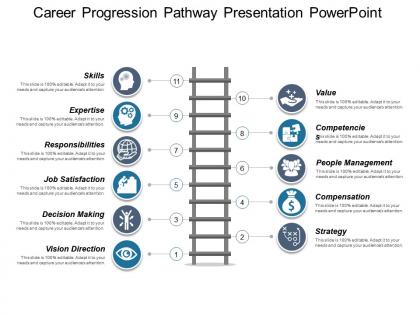
Career progression pathway presentation powerpoint





Try Before you Buy Download Free Sample Product
 Impress Your
 Audience
 100%
100% Editable
 Save Hours
 of Time


Highlight your career progression with our career progression pathway presentation PowerPoint in a well structured manner. Uniquely display your career development path along with an ongoing mechanism to enhance skills, knowledge that can lead you to new different positions or promotions. This career pathways presentation is ideal for students, working professionals for self introduction related presentations. On the other hand, business professionals, managers can use this design for encouraging their team members and developing employee career paths and ladders. PPT also provides help in the implementation of the career path, which has a direct impact on organizational productivity in meeting organizational objectives. Design can also be used by HR managers to provide professional support in career pathways to the employees working in the firm. Design is so perfect for training and development related presentations. So, without any wait, download this career path development presentation and create unique slideshows to encourage your team members. Attract your audience in the most comprehensive manner. Give an accurate account of conditions with our Career Progression Pathway Presentation Powerpoint. They help clear any confusion.
People who downloaded this PowerPoint presentation also viewed the following :
Career progression pathway presentation powerpoint with all 5 slides:
Change chauvinistic attitudes with our Career Progression Pathway Presentation Powerpoint. Advise folks against bigoted displays.

FAQs for Career progression
So basically your first couple years are all about nailing the fundamentals and showing you don't need babysitting. After that, you'll probably move up to senior level - bigger projects, maybe mentoring newbies (which is actually kinda fun). Then around year 4ish you hit this crossroads where you either go management or stay super technical. Both are solid honestly, just depends what you're into. My advice? Don't wait for your boss to magically read your mind - bring up your goals during reviews and ask for projects that'll get you there.
Seriously, get yourself a mentor if you can. They'll introduce you to people you'd never meet otherwise and give you the actual insider info on what skills companies really want. I've watched friends skip whole career levels because their mentors taught them how to position themselves for bigger roles. You'll dodge so many stupid mistakes too - like office politics drama that could tank your reputation. Honestly the networking alone is worth it. Start small though, just ask someone whose job you want for like 15 minutes once a month. Most people are flattered you asked.
Communication and emotional intelligence are probably the biggest ones - they matter whether you're in tech, healthcare, whatever. You'll need to influence people without having any real authority over them, which is honestly kind of an art form. Strategic thinking is huge too. Making decisions when you don't have all the info? That becomes your daily reality. Problem-solving skills are obvious but worth mentioning. Here's what's weird though - the higher you climb, the less your technical skills actually matter. Focus on coaching others and managing conflict now. Even as an individual contributor, you can start building that bigger-picture mindset.
Dude, workplace culture is HUGE for your career - way more than most people realize. Some places are all about teamwork and who you know, others reward the loudest self-promoters. You've got companies that make you wait your turn for years, then others that'll fast-track you if you're crushing it. Pay attention to the informal stuff too - like who gets the good mentors or hears about openings first. Honestly, I'd watch how people actually climb the ladder at your job, not what HR says in those fancy career guides. The real game is usually totally different.
Honestly, you've gotta keep learning if you want to move up. I found out the hard way when someone with a newer cert beat me out for a promotion - that stung! Your boss wants to know you're not gonna be outdated in six months. Pick something strategic though, not just any random course. What skill gap is actually holding you back right now? Start there. Companies feel way safer promoting people who stay current because there's less risk involved. Oh, and it shows you actually care about growing, which managers eat up. Focus on where you want to end up, then work backwards.
Honestly, skip the whole "meet everyone" approach - it's exhausting and doesn't work. Build real connections with people who actually get what you do. Industry associations are clutch for this, plus those smaller niche conferences where you can actually have conversations. LinkedIn's annoying but still worth it for finding specialists. Comment on their stuff, share your own insights, show you know what you're talking about. Oh, and here's something concrete: reach out to three people this week who have jobs you'd want in a couple years. Quality beats quantity every time.
Honestly, just grab coffee with people whose jobs look cool to you - most folks love talking shop when someone's genuinely curious. Check your company's job board religiously and peek at org charts to see how everything connects. Your manager's probably your best bet here (if they don't suck) since they know all the behind-the-scenes stuff. Oh, and definitely chat with HR or whoever does career development - they usually hear about openings before anyone else. The whole thing comes down to asking good questions and actually listening. People can tell when you're faking interest, so don't.
Honestly, three things usually trip people up: being invisible to higher-ups, falling behind on skills, and crappy networking. Document your wins constantly - I learned this the hard way. Industries change so fast that yesterday's skills won't cut it tomorrow, so stay curious about what's coming next. I know networking feels icky, but most good opportunities really do come through connections. Ask for stretch projects that put you in front of leadership. Build real relationships with people from different teams (not just your immediate circle). When the right opportunity pops up, you'll actually be ready for it.
Honestly, certs can be game-changers for your career. Companies use them as filters, especially in tech and project management where everything moves crazy fast. I've literally watched people bump up salary brackets after getting the right certification - though you obviously can't fake your way through interviews. Pick ones that match where you're headed, not just random stuff that looks impressive. Do your homework first on what jobs you want actually ask for. Oh, and hiring managers eat up that whole "staying current" thing when they see recent certs on your resume.
Look at what you're already good at - tons of those skills totally work in other industries. Hit up LinkedIn and try to chat with people who actually work where you want to be. Informational interviews are clutch for this. Maybe grab a course or two to fill gaps, but don't wait until you're perfect to start applying. Job descriptions are basically wishlists anyway lol. When you redo your resume, throw in some keywords from the field you're targeting. Oh and be nice to yourself during this whole process - career changes are messy and take time. You've got this though.
Dude, remote work totally changes the promotion game. No more being stuck with whatever opportunities exist in your local office - you can literally work anywhere now. The best part? All that "showing face around the office" BS doesn't matter anymore. Your actual work speaks for itself instead of how often Bob from accounting sees you at your desk. You'll probably end up talking directly with higher-ups more since we're all just floating heads on Zoom calls anyway. Just gotta be way more deliberate about showing off your wins and networking since you can't bump into people by the coffee machine anymore.
Dude, soft skills matter SO much more than people realize. I've watched crazy smart engineers get skipped over because they couldn't explain their ideas without confusing everyone. Companies want people who can actually talk to humans, you know? Once you hit a certain level, being able to handle drama and work with difficult people becomes way more valuable than knowing every programming language. It's weird but true. Pay attention to how you come across in meetings - maybe ask someone you trust how your communication style lands. Building relationships is basically half the job at higher levels.
Okay so performance reviews are actually super useful if you don't just sit there nodding. Come with your own agenda - ask what "promotion-ready" even means to them specifically. Talk about skill gaps you've noticed and what training they can hook you up with. I always push for stretch projects during these because honestly, when else are you gonna bring it up? Get them to commit to timelines for development stuff and follow up in writing after. Yeah they're awkward but it's literally the best time to discuss mentoring or moving to different teams. Don't waste it!
Dude, the job market is crazy now. You're competing with people from everywhere, but you can also snag remote gigs with companies in other countries. Some industries that used to tie you to one place? Now you can work from anywhere. Others are getting hit hard by outsourcing though. Honestly, it's been a mess since like 2020 - everything changed so fast. My take? Don't just focus on what's happening locally anymore. Learn skills that work internationally and keep up with global trends. Yeah, it's more competition, but way more opportunities too if you play it right.
Honestly, data can be super helpful here. You'll see which roles people usually jump to from your spot and how long promotions actually take. Plus it shows what skills help people move up faster. Lateral moves? They're way better for long-term growth than most people think. The data reveals which departments have better mobility and what credentials actually matter (not just what HR claims). Salary timelines become clearer too. I'd start with your company's internal numbers first, then check industry stuff to plan your next steps. Oh, and you can spot career dead-ends before walking into them.
-
Qualitative and comprehensive slides.
-
Out of the box and creative design.