


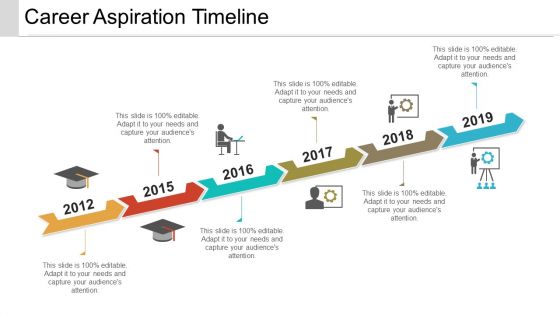
Career aspiration timeline powerpoint show




Try Before you Buy Download Free Sample Product
 Impress Your
 Audience
 100%
100% Editable
 Save Hours
 of Time


Get ready to give everyone a better picture of your business aspirations by using our career aspiration timeline PowerPoint show. The use of high resolution and premium quality slides while designing this work experience business slides will help you raise the standard of your presentation. Our business experts know that professionals do not always have time to actually design the entire slideshow themselves that is why we bring to you this ready made and predesigned set of self introductory PowerPoint presentation. It is highly recommended that you download and use this career aspiration PPT template when you wish to save your precious time as the slides are ready to use. So if you wish to get rid of all the stress and workload that you have been going through, simply hit the download button and use our self progression diagram model slideshow to work in a relaxed mode. All you have to do is download, edit and present it. Our Career Aspiration Timeline Powerpoint Show generate a harmonious atmosphere. Encourage the build up of congenial feeling.
People who downloaded this PowerPoint presentation also viewed the following :
Career aspiration timeline powerpoint show with all 5 slides:
Facilitate inventions with our Career Aspiration Timeline Powerpoint Show. Create an atmosphere that encourages ingenuity.
FAQs for Career aspiration
You gotta nail the technical stuff first - that's obvious. But honestly? I've watched so many smart people hit a wall because they can't explain things or play nice with teammates. Communication matters way more than people think. Oh, and get comfortable learning constantly since everything shifts every five minutes now. Project management and emotional intelligence are clutch too. Maybe I'm biased but those soft skills will carry you further than being a technical genius who can't collaborate. Start by figuring out what you suck at, then actually work on it.
Honestly, your work environment is huge for your career trajectory. It shapes skill development, networking opportunities, all of it. You'll perform way better when the place actually matches your values and work style. Plus you get access to mentors and cross-functional projects - or you don't, depending on the culture. Monday morning dread is real but shouldn't be permanent, you know? Short-sighted to only focus on job duties when you're interviewing. Really push on team dynamics and company vibe during those conversations. Trust me on this one.
Dude, networking and mentorship are total game-changers. I used to think networking meant awkward small talk at stuffy events, but it's actually about finding people who've been where you want to go. Mentors help you spot blind spots you didn't even know existed. Your network shows you what different roles actually look like day-to-day - not just the LinkedIn version. Plus mentors can turn those vague "I want to do something in tech" dreams into actual steps. Honestly, just start by reaching out to one person whose path seems cool. Ask for 15 minutes over coffee.
I'm big on three things for growing professionally. First, podcasts and newsletters keep me plugged into what's happening in our industry. Second, asking mentors and peers for feedback - used to hate this but honestly it's changed everything for me. Third, I chase projects that scare me a little, you know? Oh and I try to hit up at least two conferences or workshops yearly. Sometimes I get distracted by shiny new opportunities at work, but that's not always bad since I end up learning random skills. My advice? Pick one skill gap you want to fix this quarter and find a concrete way to tackle it.
Honestly, think of your values like your internal GPS for career stuff. If they don't match up, even a "great" job will make you want to crawl under a rock - trust me on this one. Figure out what actually drives you first. Money? Helping people? Creative freedom? Work-life balance? Then take a hard look at whether your current path supports that or fights against it. I had to learn this lesson the messy way at my old company. If there's a mismatch, you can either pivot your goals or find sneaky ways to work your values into what you're already doing. Just don't let yourself drift aimlessly.
Honestly, I'm really into healthcare tech and renewable energy lately. Healthcare tech is cool because you're actually solving real problems - helping people get better care or giving doctors smarter tools. Plus knowing your work saves lives? That hits different. The renewable energy space is wild right now too - so much happening with batteries and smart grids. Both have crazy growth potential. Oh, and look into companies doing both - like those sustainable health monitoring gadgets. That's where things get interesting.
Honestly, I think career success is way more about impact and growth than just chasing promotions. Find what actually energizes you - could be solving tough problems, mentoring people, whatever. The whole corner office dream? Pretty outdated if you ask me. You want to feel challenged without being completely fried, you know? Building skills that excite you while contributing to something bigger. Success looks different for everyone though. Just check in with yourself regularly - are you still on a path that makes sense? Don't be afraid to pivot when things shift.
Honestly? Skill gaps will hit you first - your industry's probably changing faster than you can learn. Competition's brutal too. Staying motivated when rejections pile up or work gets slow... that's the real test. Networking feels super awkward initially (cold LinkedIn messages are the worst). But here's what nobody tells you: everything takes way longer than expected. I always thought I'd be further along by now, you know? Build buffer time into whatever goals you set. Oh, and find someone who's already done this - a good mentor will save you from so many obvious mistakes.
Honestly, I think of short-term stuff as building blocks for the bigger picture. Write down where you want to be in 5 years first, then work backwards - sounds backwards but it actually works. Pick projects that teach you something useful or move you closer to that vision. Don't just grab whatever's available, you know? Even small wins should connect somehow. I do this weird quarterly check-in thing where I make sure my immediate goals still make sense with my long-term ones. Sometimes they drift apart without you noticing. But yeah, being intentional about it makes a huge difference.
Honestly, I'm tired of just pushing numbers around in Excel all day. What really gets me excited is fixing those annoying processes that make everyone's job harder than it needs to be. You know what I mean? Like when software is supposed to help but actually makes things worse. I focus on building stuff that genuinely saves people time and stress. The best feeling is when someone says "wow, this just saved me two hours." That's real impact right there. My advice? Start by actually asking people what's driving them crazy day-to-day. Those conversations usually reveal the problems worth solving.
Okay so feedback and self-reflection are like your career GPS - they show where you actually are vs where you think you are. I used to absolutely dread feedback sessions, but honestly they're basically free consulting now. Getting input from your manager, coworkers, even clients helps you catch blind spots you'd never see yourself. Then when you reflect on it all, patterns start emerging. Short version: it helps you figure out the gap between your current skills and where you want to be. I'd say aim for feedback every few months and maybe journal monthly about what's working (or totally isn't). Makes creating realistic development plans way easier.
Honestly, quarterly chunks are a game-changer for big career stuff. Way less overwhelming than staring at some massive 5-year plan. Pick specific milestones with real deadlines, then figure out what skills you'll need working backwards. Monthly check-ins are crucial - I literally calendar mine or it never happens. Your path probably won't be straight anyway, so don't stress about adjusting timelines when life gets weird. Start small though. Grab one goal for next quarter and just map out your first three moves. That's it.
Honestly, tracking industry trends is like having a crystal ball for your career. You'll spot which skills are about to blow up and where the money's moving before everyone else catches on. I totally used to think this stuff was boring - who has time to read trade magazines, right? But it's actually helped me dodge a few career dead ends. Even scrolling through industry Twitter for like 10 minutes while you're having coffee can be huge. You start noticing patterns, like when your field's getting crowded or some new area's opening up. Just pick a couple publications or LinkedIn people to follow and you're set.
Honestly, work-life balance is everything to me career-wise. I've watched too many people chase promotions and then wonder why they're burnt out and barely know their own kids. It's just not worth it. These days I'm super picky about companies that actually walk the walk on flexible schedules - not just the ones with fancy mission statements. During interviews, I ask really specific questions about their work culture because that tells you way more than any job posting ever will. Like, do people actually take their vacation days? Your career should make your life better, not completely take it over. That's my philosophy anyway.
Honestly, I check in with myself every 6 months or so - like, does this still feel right? I've already switched directions twice in five years because what I thought I'd love... didn't stick. Focus on skills that transfer everywhere instead of getting super niche too early. Keep your network weird and diverse - you never know where opportunities come from. Side projects are clutch too, they might turn into something bigger. Oh, and don't feel guilty about pivoting! Your career should work like GPS, not some ancient paper map you're stuck following forever.
-
Wonderful templates design to use in business meetings.
-
Top Quality presentations that are easily editable.