


Work experience career timeline presentation slide




Try Before you Buy Download Free Sample Product
 Impress Your
 Audience
 100%
100% Editable
 Save Hours
 of Time


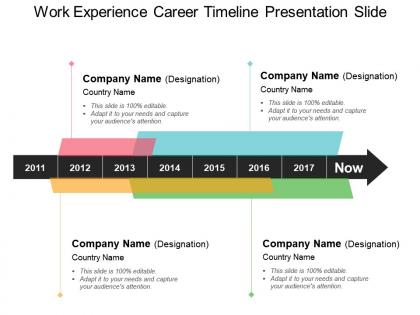
Download our work experience career timeline presentation slide. This PowerPoint template enables you to present the work related information to the business leaders in an innovative way. Today it is quite essential to deliver a statement about the kind of work you are doing and presenting it in such a way that your audience can show interest in it. Our PPT slide shows timeline from 2011 till date which you can amend and use it to share details about your business growth in which year you started and where you have reached today. This presentation layout gives you a great chance to share information about work experience, growth of an employee in the organization, career development process which is managing learning, work, leisure, and transitions, key achievements and milestones and many more. The PowerPoint visual is completely editable as you can replace the content as per your preference such as years can be replaced with dates, months or even weeks. So download and add it in your presentation for business communication. There may be gaps in understanding by your audience. Effectively bridge them with our Work Experience Career Timeline Presentation Slide.
People who downloaded this PowerPoint presentation also viewed the following :
Work experience career timeline presentation slide with all 5 slides:
Achievement is inevitable with our Work Experience Career Timeline Presentation Slide. You will definitely arrive at your goal.
FAQs for Work experience career
Definitely include job title, company, and dates for each position - that's basic stuff. For accomplishments, pick 2-3 that actually show impact, not just "managed this" or "responsible for that" (honestly those bullet points drive me crazy). If you got promoted within the same company, definitely call that out since it shows you're not just job-hopping randomly. Keep everything in reverse order, newest first. Oh, and don't get cute trying to hide employment gaps - just own them and have a quick explanation ready. Format your dates the same way throughout too.
Your timeline needs to tell a clear story - hiring managers literally spend seconds scanning it. Show progression between roles, whether that's bigger responsibilities or new skills. Honestly, I've watched recruiters toss resumes when they can't figure out the career flow. Always include months and years for everything. Gaps happen, just explain them briefly so nobody's left wondering. Short sentences work. But you also want some variety in how you structure things so it doesn't sound robotic. The goal? Make it obvious where you've been and where you're going next.
Honestly, I'd start with Canva - their timeline templates are pretty solid and you don't need to be a designer. Adobe Express works great too. PowerPoint's actually not bad if you're already used to it and need something fast. Want interactive stuff? Tiki-Toki's cool, though TimelineJS is better but has more of a learning curve. Lucidchart gives you that clean professional vibe. Oh, and Canva's free version will probably cover what you need - I swear you can bang out something decent in like half an hour. Start there and upgrade later if you need fancier features.
Dude, recruiters literally spend like 6 seconds scanning each resume - crazy right? So you need visuals to make yours pop. Icons next to company names, maybe some color coding for different industries, even simple progress bars for skills. Trust me, it works. Charts showing your wins hit way harder than walls of text too. I mean, anything that helps their eyes move through your career story faster is gold. The whole point is making it dead simple for them to see your progression and biggest accomplishments without having to dig for it.
Definitely hit the major stuff - promotions, role switches, big project wins, leadership gigs you landed. Numbers are your friend here, so throw in "boosted sales 30%" or "ran a 12-person team" whenever you can. Skip the boring day-to-day tasks nobody cares about. Add any training or certs that actually matter. Keep it chronological but honestly? Only include milestones that push your story toward where you're heading next. Think of it as your career highlight reel - each thing should show you're moving up, not just... existing at work.
Honestly, you're probably underselling yourself already. List *everything* - internships, part-time work, volunteering, even big class projects or freelance stuff. Don't just dump job duties though. Talk about what you actually accomplished and what skills you picked up. Leadership in clubs? Include it. Coursework that had real results? That counts too. Personal projects show you've got initiative - I'd definitely add those. Oh, and don't leave weird gaps in your timeline. If you were just studying full-time, say that and mention what you got done during those periods. Frame everything around impact, not just what you did.
Honestly, don't wait until you need it to update your resume. I set quarterly reminders because otherwise I'll totally blank on smaller wins. Keep a running doc of accomplishments throughout the year—way better than scrambling later trying to remember that project where you saved like 20% or whatever. When you get promoted or finish big projects, update everything while it's still fresh. Focus on actual results with numbers, not just boring job duties. As you move up, you can shrink down older roles but give more detail to recent stuff. Sounds tedious but it's saved me so much stress.
Oh absolutely - this stuff matters way more than people think! Americans want your latest job first with all your wins highlighted. Germans? They actually prefer starting from the beginning chronologically, which threw me off when I first learned that. Long company stays impress some cultures while others love seeing you've moved around. Asian companies usually want way more education details woven throughout. Nordic countries keep things super clean and minimal. I'd definitely find someone from that culture to look over your format - saves you from looking totally clueless about their norms.
Dude, seriously check your dates twice - recruiters spot inconsistencies right away and it looks sloppy. Don't leave random gaps unexplained either. Even short contracts are worth including if they show relevant skills. I see people just throwing job titles on there with zero context about what they actually did, which is pointless. Go chronological starting with your current job, and honestly? Cut anything older than 10-15 years unless it's directly relevant. Always explain career breaks or big transitions. Makes the whole thing way cleaner.
So for tech stuff, you'll want to get specific about your programming journey and leadership moments - like "migrated our entire app from React 15 to 16" sounds way more legit than boring project management fluff. Healthcare's totally different though. Show off your certifications, compliance wins, and actual patient outcomes. Both fields dig continuous learning, but here's the thing - tech companies want proof you're not falling behind on new frameworks and tools. Healthcare cares more about specialized training and staying on top of regulations. Honestly, just copy the exact language from job posts in whatever field you're targeting. Works every time.
Look, your work timeline is basically your personal brand story in action. It shows how you've built up your skills and where you're going next. Most people totally undersell this though - they just list jobs instead of showing growth. When you map it out strategically, employers see intentional career moves, not random job hopping. Connect the dots between each role. Find 2-3 themes that run through everything you've done. Honestly, the transferable skills part is where people miss the biggest opportunities. Start with your timeline and see what patterns emerge.
Turn each job into a little story with a problem, what you did, and the outcome. Like instead of "managed team of 5," try "Inherited a struggling team, started weekly check-ins, boosted productivity 30%." Way more interesting than boring bullet points, right? Focus on those moments where you actually changed something or solved a problem. Each role should show you growing toward where you want to be now. Honestly, transformation stories are what grab people. Start with one story per job and you'll see how much better it reads.
Honestly, I'd go digital all the way. You can update stuff instantly, add links to your actual work, and search through everything when you're blanking on dates (happens to me constantly). Sharing with hiring managers is just a click instead of dealing with printers and all that. Paper timelines look nice and polished, sure, but most places expect digital anyway these days. Keep a master digital version and only print when they specifically ask for it. Way less headache overall, plus you can actually link to your LinkedIn or portfolio samples - which is pretty clutch.
If you're going for entry-level stuff, stick to the last 5-7 years and really dig into recent work plus any internships that matter. Senior roles? You'll want to go back 10-15 years, but honestly just summarize the old stuff in a line or two. Entry-level candidates should focus on showing growth and potential. Meanwhile, senior people need to prove they can lead and make real impact. Look, if you're applying for VP positions, nobody cares that you delivered pizzas in college - though I probably kept that on mine way too long! Put your energy into the details that actually connect to what you want.
Honestly, chronological resume formats are getting pretty stale. People are switching to visual storytelling instead - think interactive timelines or skills-based sections that actually show your growth. LinkedIn's pushing everyone to be more creative too, which is cool but also means more pressure. Focus on progression rather than just listing job duties and dates. Like, show how you went from junior analyst to running entire teams. Group similar roles together or create themed sections - makes it way easier to scan but still tells your story. The whole point is showing impact, not just documenting where you've been.
-
Designs have enough space to add content.
-
Appreciate the research and its presentable format.