

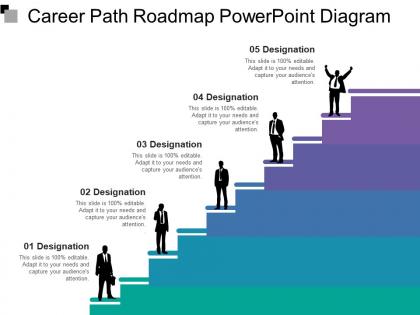
Career path roadmap powerpoint diagram 1
You must be logged in to download this presentation.




Try Before you Buy Download Free Sample Product
 Impress Your
 Audience
 100%
100% Editable
 Save Hours
 of Time


Be identified as a favorite with our Career Path Roadmap Powerpoint Diagram 1. Folks will gun for your advice.
People who downloaded this PowerPoint presentation also viewed the following :
Career path roadmap powerpoint diagram 1 with all 5 slides:
End absenteeism with our Career Path Roadmap Powerpoint Diagram 1. Create conditions that assure better attendance.
FAQs for Career path roadmap
Okay so first thing - figure out where you're at now vs where you wanna be in like 3-5 years. Map out what skills and experience you'd need to get there. Honestly, most people underestimate how long career changes actually take, so don't rush the timeline. I'd break it into smaller chunks - maybe 6-12 month goals so you're not just staring at this massive thing forever. Oh and don't treat your plan like it's set in stone! Check in every few months and tweak stuff based on what you're learning. Sometimes you discover things about an industry that totally change your approach.
Honestly, just write down what you're actually good at - not what you think you should be good at. Big difference there. Pay attention to what parts of your day make you feel energized vs completely drained. Those StrengthsFinder tests can be helpful but don't obsess over them. Ask people you work with what they think your strengths are - they'll notice stuff you don't. I'd also keep track for like a week of when you feel most engaged at work. Sounds nerdy but it works. The whole thing comes down to being really honest about what you can do well AND what you actually enjoy doing.
Think of short-term goals as your momentum builders - they keep you from getting stuck or burnt out. Long-term ones? That's your career GPS basically. I learned this the hard way when I was just checking boxes without any real direction. Super frustrating. The trick is making sure your smaller wins actually connect to where you're headed in 5 years. Otherwise you're busy but not really getting anywhere meaningful. Start with your big picture goal, then break it down into what you can tackle this quarter. Way less overwhelming that way.
Honestly? Good connections can totally change your career path. People will think of you when cool opportunities come up, and they'll share the real inside scoop on what's happening in your industry. Sometimes it really is who you know - I hate that it's true, but whatever. The trick is actually caring about people instead of just using them for jobs. Your contacts become like having advisors who give you heads up on changes before everyone else finds out. Oh, and don't overthink it. Just reach out to three people this week to see how they're doing.
Don't get too attached to your original plan - careers are messy and rarely go in straight lines. I've seen people stress way too much when things go sideways instead of up. Also, definitely reach out to people actually doing jobs you're considering (seriously, LinkedIn makes this painless now). Most folks underestimate how long career shifts take or think they'll pick up new skills way faster than reality. Oh, and balance thinking about your next step with where you want to end up in like 5-10 years. Check in on your goals every few months and tweak as needed.
Having a mentor is clutch - they've been where you want to go and can warn you about stuff you'd never think of. Skill gaps, timing, which moves actually matter. The networking aspect is huge too. I honestly think that's half the value right there. Find people both in your company and outside it. Multiple mentors isn't overkill either, especially if you're trying to figure out different parts of your career. Oh, and someone to actually hold you accountable when you're just talking about goals instead of doing anything about them.
LinkedIn's actually pretty good for this - check out their Career Advice section and you can creep on other people's career paths (in a professional way lol). MindMeister works great for mind mapping if you're into that, or just use Google Drawings for simple flowcharts. I'm weirdly nostalgic about whiteboards though - sometimes the best brainstorming happens analog. CareerOneStop has decent exploration tools, and O*NET's Interest Profiler will help you find roles that actually fit. Honestly, don't overthink which tool to pick. Start with whatever feels right and see what happens.
Honestly, don't get too attached to your original plan - things change way too fast these days. I check in on my goals every few months because what seemed important in January might be totally irrelevant by summer. Networking has been huge for me... people will literally tell you what skills are becoming hot before it hits the job boards. You'll want to start learning new stuff before everyone else catches on. I made the mistake of waiting too long to pick up certain skills and had to play catch-up. Just stay curious about trends in your field and be ready to switch directions when needed.
Honestly, adaptability and networking are what'll save your ass when things get tough. I used to get completely overwhelmed until I started breaking big problems into tiny pieces I could actually handle. Got stuck in a dead-end job once - that taught me real quick. Stay in touch with people regularly, not just when you're desperate for help. They hear about openings way before job boards do. Oh, and this sounds cheesy but it's true - think of setbacks as useful info, not total disasters. They're just showing you what needs tweaking.
Dude, you gotta keep learning or you'll get left behind. The stuff that got you this far won't cut it anymore - everything changes so fast now. I swear, half the tools I used two years ago are already outdated. Pick up certifications, hit some conferences, whatever works for your schedule. Even following smart people on LinkedIn helps (though some of those posts are pretty cringe). Block out a few hours each month minimum. It's literally the difference between people who stagnate and those who keep climbing.
Honestly, milestones are game-changers because they give you actual checkpoints instead of just hoping stuff works out. Break down those scary big goals into 3-6 month chunks - way less overwhelming that way. Each time you hit one, you'll get this confidence boost that keeps you going. Plus you can pivot if something's not working instead of realizing it way too late (learned that the hard way lol). Looking back, you'll actually see how far you've come instead of feeling like you're stuck. Trust me, your brain needs those wins to stay motivated.
Honestly, just start paying attention to what actually energizes you at work vs. what makes you want to hide under your desk. That's huge. Notice which tasks you don't procrastinate on - there's usually careers built around those things. I also creep on industries I'm curious about (LinkedIn's weirdly useful for this). Coffee chats with people doing jobs that sound cool? Game changer. They'll tell you the real deal about their day-to-day. Oh, and write down the skills you're picking up - you've got more transferable stuff than you think. Check in with yourself monthly about this. Career shifts take time but they start with tiny lightbulb moments.
Dude, work-life balance is seriously everything for long-term career happiness. I'm talking like, the difference between loving what you do versus wanting to quit every Monday. Burnout makes even cool jobs feel awful - you'll start hating stuff you used to be passionate about. Plus missing out on life outside work? That builds up fast. I've watched talented people leave great companies just because the hours were insane. My advice: when you're looking at career moves, dig into the actual culture and workload expectations. Find somewhere you can crush it professionally but still have time for, you know, actually living.
Honestly, feedback is like having someone hold up a mirror – you'll spot blind spots you never knew existed. Your coworkers can clue you in on which skills are actually hot right now or opportunities you're totally missing. When supervisors give you their take, that's the real scoop on what advancement looks like. Sure, sometimes it stings (usually that means it's hitting home). But here's the thing – don't just ask "how am I doing?" That gets you nowhere. Try something specific like "what skills do I need for X role in two years?" Way better intel that way.
Think of personal branding as your professional reputation but way more intentional. You're basically positioning yourself as THE person for certain skills or knowledge areas. This means better opportunities start coming to you - speaking gigs, job offers, all that good stuff. Plus you can demand higher pay because you're not just another resume in the pile anymore, you know? Honestly, getting headhunted beats job hunting any day. Figure out what you want to be known for first. Then consistently share content about that topic on LinkedIn or wherever your industry people actually spend time. It's pretty straightforward once you get rolling.
-
Good
-
The Designed Graphic are very professional and classic.
-
The Designed Graphic are very professional and classic.
-
Excellent work